All That Glitters. . .

The Delicious Appeal of Suncatchers

The gloomy rainy snowy sleety icy windy days this past winter must have finally gotten to daughter Susan. She’s up there in New Hampshire where winters are either cold or colder or frigid enough to freeze a soul. During one fierce snowstorm, she emailed me a picture of a glowing suncatcher she’d photographed in a garden on a bright sunny day last year. Wishful thinking? A summer dream to soothe the winter agony?

Susan'a lighthearted rendition of a suncatcher for a hot garden

Susan’a lighthearted rendition of a suncatcher for a hot garden

“What do you think? Would you like to make one of these?” she wrote. “Yeah, sure,” I joked back. I guess emails don’t convey humor well, because the next thing I knew she was calling me asking what color beads she should get. Are you serious? I asked. When next she emailed pictures of beads and mirrors she was considering, I knew that, yes, she was, and I was about to be hooked.

Black and silver, classy, understated, I blurted, to compliment the statue of Ariadne in our small pond with the marble edgers. You’ll probably need a little red in there to jazz it up, Susan suggested. Good idea. The crepe myrtle I’ll hang it from blooms watermelon red. The colors should play off each other nicely. Susan had already chosen lavender and green to play off the purple tuteurs her brother had crafted for her kitchen/cottage garden off the front porch of her house.

Samples of beads we purchased before we cut them apart to begin designing

Samples of beads we purchased before we cut them apart to begin designing

Minutes after I hopped off the plane (I know, I know, only fools go north in cold weather) we were off to gather supplies from A.C. Moore and her local Ace hardware store. Suncatchers can be as simple as one strand with a few beads and mirrors, or they can be strung with complex patterns of colors and shapes. Since we didn’t really know what we were doing, we decided to go all out and stretch our creativity, challenge our manual dexterity and have some fun.

Some of the supplies we used

Some of the supplies we used

Here’s a list of supplies we used:

Beads, crystals, mirrors,  tiny “go-betweens,” medallions 
Six-pound fishing line
Three or five-inch diameter ring Silicone glue, waterproof and flexible (We used GE Premium, which is also sun/freeze proof. A 2.8 ounce tube is more than enough for several sun catchers.)
¼ inch clear plastic tubing, about 17 inches for a 5-inch ring, 11 inches for a 3-inch ring
Chain, for hanging suncatcher
Other materials and tools: 8-1/2 x 11 paper, paper towel, masking tape, scissors, 2 pairs of pliers for opening and closing chain links, magnifiers if your eyes are old

Here’s how we made them:

The planning begins

The planning begins

1. First we determined how many dangles, or lines we wanted to hang from our rings. We opted for 4 from the larger ring, 3 from the smaller ring, with a center dangle which would attach to the chain instead of the ring and would end with a medallion.

2. Next we figured lengths. We went for about 15-inch-long dangles from the larger ring, about 12 from the smaller ring. We taped two pieces of paper together and marked off appropriate lengths. If we wanted a variety of lengths, we marked these on the paper. These marks were only guidelines, as our ideas kept changing, but they kept us in bounds, sort of. 

Here's a layout of dangles that will differ in length when hung

Here’s a layout of dangles that will differ in length when hung

3. For each dangle we cut a strand of fishing line about three times the length of our finished suncatcher. (Extra length would be trimmed later.) We found the midpoint of each line and tied it securely to the ring, creating a double strand for stringing. The double strand would provide extra insurance against breakage and bead loss. Stringing beads double-stranded was not a problem. Before stringing the center line, we measured 8 or 9 inches down from the top and marked it with tape and a knot. This length is set aside for tying the center line to the chain.

Playing. . .

Playing. . .

4. We had fun playing around with patterns of mirrors and beads. Stringing doubles and triples of beads in a row gave some sharp color effects, and putting tiny bright silver or glass beads between larger beads set them off nicely. Crystal beads especially reflect the light.

5. For variety, we used two different patterns for the outer lines and a unique pattern for the center line, with a medallion hanging from the bottom.
Work is well along. Dangles attached to rings and mirrors glued back to back in place

Work is proceeding. Lines were  attached to rings before stringing, and mirrors glued back to back in spaces we left

6. Mirrors and some large stones cannot be strung. These we glued back to back, sandwiching the fishing line between them. The glue takes a while to set, so instead of gluing them one at a time, we strung all beads first, then glued mirrors/stones in appropriate spaces we had left between beads.

We allowed a few hours for setting but waited over night before hanging. The bottom bead on each string had line woven through it, knotted several times, then dabbed generously with glue.

Nearly complete. . .

Nearly complete. . .

7. We tried to keep beads fairly taut on the line while working. Once mirrors or stones are glued in place there is no forgiveness, so we constantly checked spacing. Even then we had some surprises but nothing that would interfere with the overall picture. We also numbered our lines, so there would be no question of misplaced patterns on the ring. As we learned later, there is so much dancing and sparkle in a suncatcher, patterns are the last thing an observer will notice.

8. We spaced the 4 lines equally around the ring and glued them in place. This bond is only semi-permanent but will keep lines from shifting while working. The fifth, or center line, we set aside for the moment. This would be put in place last.

Even without sparkle from sunshine, the suncatcher is pretty. This could hang in a window

Even without sparkle from sunshine, the suncatcher is pretty. This could hang in a window

9. The chain we chose was dictated by the types and weights the hardware store carried. We happened to choose a fairly heavy chain, but any weight would work well. Using two pairs of pliers (one to hold link in place, one to twist link open or closed) we created three equal lengths of chain about 6 inches long (counted the links to be sure they were equal). Again using the pliers to open and close links, we attached each chain to the ring. We joined the tops of the three chains with another link, though you could use a key ring if your chain has small links.

10. We spaced the chains equally around the ring. The more accurate we were, the more level the suncatcher would hang. Glue will not hold the chains in place permanently, so while we worked, we snugged them in place with masking tape.

Red/black/crystal hanging above Ariadne in the pond

Red/black/crystal hanging above Ariadne and the pond

11. To keep the chains from shifting after the suncatcher is hung, we cut ¼-inch plastic tubing into a length that would fit around the ring, then cut the tubing into roughly equal lengths that would fit between the chains, trimming where necessary.

Then we slit each piece of tubing with scissors and wrapped it around the ring, catching the lines as we went to secure them in place.

12. Finally, we attached the fifth line to the link that held all the chains together. We tied it as securely as possible, (wishing we’d paid more attention  to instructions on knot-tying at Scout meetings). For good measure we dabbed some glue on the knot. The suncatcher was finished.

Sailing under a blue sky

Sailing under a blue sky

Voila! We hung our sparklers from a shepherd’s crook. . . . . . and from a bent up metal coat hanger looped on the branch of a tree. . . . . . and from a wrought-iron pot hanger attached to a porch railing.

They’ve been out in thunderstorms, tornadic windstorms, torrential rainstorms.

They’ve tossed and whirled but they survived.

And there is a bonus. At night, the dancing suncatchers reflect the shine from our garden lighting. On breezy evenings we are treated to psychedelic light shows indoors.

Hanging in the garden, beads glued back to back,, survived squirrel antics

Hanging in the garden, beads glued back to back,, survived squirrel antics

The only casualty occurred when I unthinkingly hung one in the general path that squirrels follow as they chase each other around our gazebo roof. Squirrels being squirrels, one of the fishing lines went missing for a while, later located in shrubs, its beadwork miraculously intact. (All that glue!)

Our conclusions: We love our creations, but there is something to be said for bigger and bolder and simpler. Big stones, big mirrors, big crystals for flambuoyant sparkle in the sun. Have we piqued your interest? We hope so.

(Thanks to Susan for taking step-by-step photos of our creations)
Posted in suncatchers, Uncategorized | Tagged , , , , , | Leave a comment

Turtles on the Log, All’s Well with Spring

Greetings from A Heron’s Garden on this, the first glorious spring day of 2014. There’s a brisk breeze, but a kind sun and clear blue skies. I am exuberant. The soil is still cold and water still pools in the bottoms of holes we dig, and the deer have turned azaleas into sticks.

But spring has been creeping round corners all this while, on mists and drizzles, waiting for such a day as this to remind us that calendars don’t lie and the promises of spring will yet unfold.

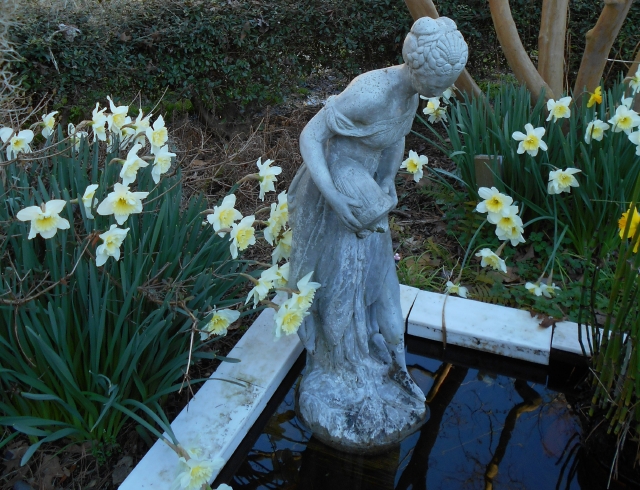
Ice Follies daffodils, a favorite, embrace Ariadne

Ice Follies daffodils, a favorite, embrace Ariadne

So it is that I spent the day in a frenzy of cleaning and mulching, fertilizing and transplanting, as though not another day like this would ever come. (Practically speaking, I want to beat the ticks and chiggers.)

What a year for daffodils! After playing hooky the past few warm winters, they exploded. I had big plans for excising non-bloomers this spring, but I couldn’t find any, except for some scattered seedlings that I blessed and left.

Still to come is a second wave of late bloomers I planted in February (yes, that late). We may have chafed at this long cold winter, but the daffodils loved it.

Lenten rose, or helleborus orientalis, delighted us through March doldrums

Lenten rose, or helleborus orientalis, delighted us through March doldrums

Lenten roses, huge bouquets of them bobbing up from green crowns, also carried us through dreary days. They had been our winter pride and joy for years until conditions in our garden changed after Hurricane Isabel in 2003.

Little by little we coaxed them back and today I revel in a range of colors from soft purples to creamy whites. The seedlings I painstakingly transplanted last spring aced the winter; handsome juveniles are now promising even more surprises.

Our Magnolia 'Leonard Messel' was a 2-foot twig eight years ago

Our Magnolia ‘Leonard Messel’ was a 2-foot twig eight years ago

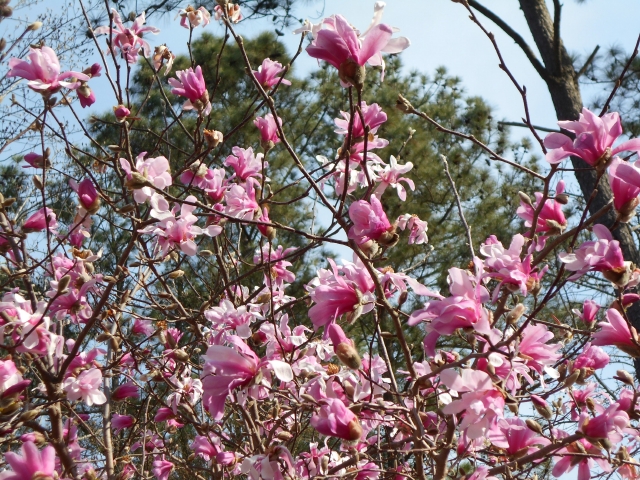
So what else is popping? Leonard Messel’s been showing off for more than a week, but it looks like Jane will be taking over (isn’t that just like a woman!) My two favorite magnolias, though Royal Star, still puny, a refugee until I found the right spot, is looking to pull rank.

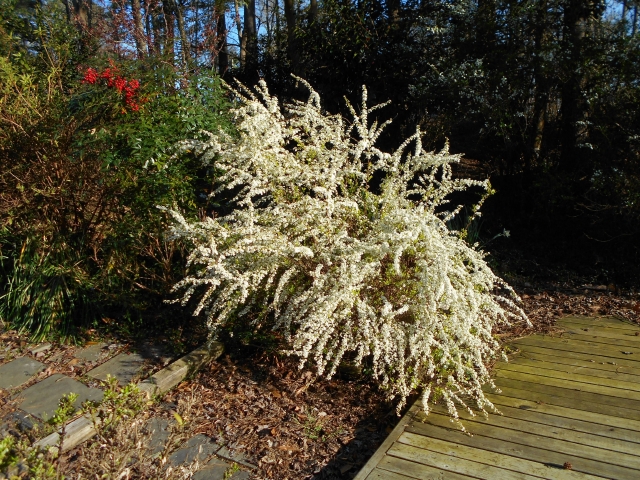
Spirea ogon takes my breath away each spring. It’s such a dependable carefree plant I want to cover the yard with it.

Everything except its bold bad hair is tiny about this plant–chartreuse leaves that never seem to falter and clouds of tiny white blossoms that give punch to a winter weary garden.

I don’t know why I can’t find it in nurseries. I’d like to divide the mother plant, it’s big enough now, but I can’t bring myself to ask Bob to put the axe to it.

Spirea thunbergii 'Ogon' here wll need a 25-cent shave and a haircut when it finishes blooming

Spirea thunbergii ‘Ogon’ here wll need a 50-cent shave and a haircut when it finishes blooming

Sigh… that lesser celandine is still popping up everywhere, where it doesn’t belong, bringing me to my knees, for the plant must be scooped out with a shovel for proper extirpation to be sure bulblets come with it.

I still smile at the cheery blooms and everyone else loves them, but. . . Those buttercup flowers may beguile, but I’m wiser now.

Meanwhile, tulip leaves are stabbing hopefully through the soil, quickly nibbled. By whom, I wonder. I sprinkle them with hardwood mulch to deter the varmints. (You can stop your laughing now.)

Vibrant spring buds on dwarf Viburnum carlesii foreshadow showy berries in fall

Vibrant spring buds on dwarf Viburnum carlesii foreshadow showy berries in fall

Buds on dwarf Viburnum carlesii are creating a mini- show before the blooms appear. Their fragrance will drift across the front paths on the slightest breeze. This is probably our finest viburnum; it’s a reliable bloomer and asks for little except maybe an occasional pruning to shape.

Nearby, edgeworthia, or paper bush, a fragrant winter winner, is finally tired after guarding our front door during the coldest months of winter. In summer its foliage gives a tropical feel to the garden so I can forgive the yawning.

Shy sweet violet this is-- until it pops up and blooms in unexpected spots

Shy sweet violet this is– until it pops up and blooms in unexpected spots

I look for epimedium. I know it is a late comer, but if everything isn’t up in our garden by March I start to worry. The dull sprouts are lollygagging, and I want to hurry them into dainty yellow blooms that float above mats of shiny green leaves, but not yet.

Till then I satisfy myself with small, pale lavendery-white blooms of violets. When rabbits camp out in our yard, they disappear; this year they are plentiful. They came from one small clump, a gift from an artist friend years ago. I think of her each spring.

Springtime in our roadside garden: forsythia, quince, spirea, daffodils, and, yes, the groundcover is lesser celandine

Springtime in our roadside garden: forsythia, quince, spirea, daffodils, and, yes, the groundcover is lesser celandine

I can’t forget to sing the praises of that dependable springtime triumvirate: bridal wreath spirea, forsythia and quince. It took a long time for them to come in this year, I thought they were lost, but they are blazing now.

Crabapple buds are plump, ready in another week or so, pretty much on time, but the Bradford pear across the way is already losing its blooms the same way they arrived, in waves, from the sunny side to the shady side of the tree.

A spring blue flutters by, seeming fragile against the garden tangle; the massive, grizzled forsythia next to the ruin on the way to town is reaching high and spreading wide; the pinks are blooming under the pine trees by the road; shiny long flower buds of amelanchier gleam in sunshine; and, yes, the stick-azaleas have buds.

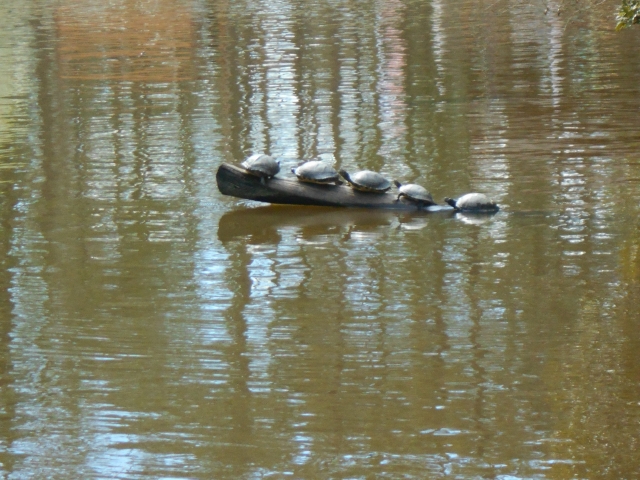
Turtles on the log, all’s well with spring.

Turtles on the log. All's well with Spring

Turtles on the log. All’s well with Spring

Epilogue: I wrote this on Tuesday, April 1st. By Friday, April 4th, Spring seemed to fade and summer had barreled in with high temperatures and dry winds.  Ticks, too. With rainy days and cool nights predicted, I’ve a suspicion that Spring will not be so easily pushed aside.

Posted in spring bloom, Spring shrubs, Uncategorized | Tagged , , , , , , , , , , , , , , | Leave a comment

What Is Killing the Honeybee? Part IV

Brinksmanship? Ignorance? Greed? Inertia?

“It is ironic to think that man might determine his own future by something so seemingly trivial as the choice of an insect spray.”– Rachel Carson, Silent Spring

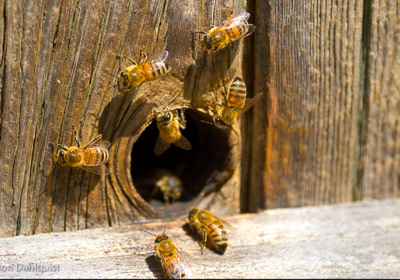
An example of the opening in the barn where bees exited and entered.

An example of the opening in the barn where bees exited and entered.

Back in the seventies, Bob and I helped care for a demonstration beehive at an environmental center. The “hive” consisted of a single frame on a stand set up in an unheated barn. The bees entered and exited via a plastic pipe. All activities, laying eggs, brooding larva, storing pollen and honey, took place on this one frame.

That hive told a wonderful story to the inquiring public. Looking at it from the honeybees’ point of view, it was nothing more than an over-crowded tenement, a tenth the size of a full-sized hive. It was impossible for the bees to grow their ranks and store enough honey to get them through cold weather. So we supplemented their stores with sugar water.

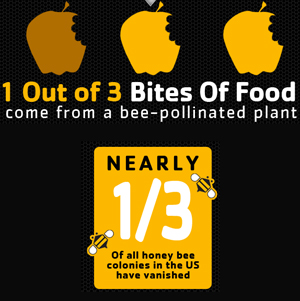
We can thank bees for many of our favorite fruits and veggies. beesfree.biz

We can thank bees for many of our favorite fruits and veggies. beesfree.biz

Despite cramped quarters, the bees were healthy. No mites, no parasites, no pathogens, no moths, no fungi. No treatments needed. Occasionally we had to send off for a new queen in early spring. Maybe the old queen was fed up with living conditions and took off with a few girlfriends to find some nicer digs, but disease was never an issue.

Now compare our recollections with lamentations of  today’s professional beekeepers whose livelihoods depend on healthy bees and strong hives and who are sustaining great losses.

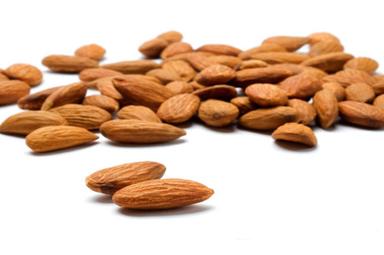
100 per cent of the almond crop is pollinated by honeybees. US production is the largest in the world

The almond crop depends entirely on pollination by honeybees. US production, the world’s largest, is economically significant

Bill Dahle, 50, owner of Big Sky Honey in Fairview, Montana: “They looked so healthy last spring. We were so proud of them. Then, about the first of September, they started to fall on their face, to die like crazy. We’ve been doing this 30 years, and we’ve never experienced this kind of loss before.”

Bret Adee, the nation’s largest beekeeper, owner, with father and brother, of Adee Honey Farms, South Dakota: “They looked beautiful in October, and in December they started falling apart, when it got cold. We lost 42 percent over the winter. But by the time we came around to pollinate almonds, it was a 55 percent loss.”

beelossMr. Bradshaw, 50, from an almond orchard beginning to bloom in California: “I have never seen anything like it. Box after box after box are just empty. There’s nobody home.”

Stunning losses like these have been going on since 2006. 2014 winter losses have yet to be tallied. Are honeybees living on the edge? And if they go, will they take us with them?

Bee hives in a Michigan apple orchard in full bloom ready for honeybees to pollinate superstock

Bee hives in a Michigan apple orchard in full bloom ready for honeybees to pollinate. Superstock

Let’s take a look at a day in the life of a honeybee. Perhaps she is gathering pollen from apple blossoms, or she may sip nectar from roadside weeds, or she may cross a farm field, visit a garden. Her travels may take her a mile or two from her hive.

The apple trees could have been sprayed with a combination of neonics and fungicide. Once thought to be safe for honeybees in small quantities, new research by the USDA and University of Maryland shows that small amounts of fungicides in pollen may make bees more susceptible to Nosema, a gut parasite that is implicated in Colony Collapse Disease (CCD). And cocktails of chemicals become even more deadly to the honeybee.

Dust from treated seeds can be fatal to honeybees. Shutterstock

Dust from treated seeds can be fatal to honeybees. Shutterstock

Perhaps the farm field is being planted with corn seeds coated by neonics to protect the new plants as they grow. Dust and talc from treated seed blows as the seed is drilled down. Neonics are supposed to be friendlier to bees, wildlife and people than traditional pesticides, but if she gets caught in this dusty bowl, she may never return to the hive and in turn poison scavengers that feed on her.

Is this aster safe to sip or take pollen from? wikicommons

Is this aster safe to sip or take pollen from? wikicommons

Or, if she stops at roadside plants near a treated field, she could pick up a sublethal dose of chemicals and have trouble flying or forget the way home. If she manages to return, she may not remember her pollen source well enough to dance directions to her hive mates. And the contaminated pollen she’s carrying can weaken the immune systems of larvae and adults that eat it. If she’s unlucky that day and stops at a parking lot with a feast of flowers while pesticides are being applied, well, that’s lights out.

Maybe this would help?

Maybe this would help? Organic Consumers Assn

Plants in the garden she visits may have been sprayed with neonics sold by nurseries. Or the soil may have been drenched with the pesticide. It’s a convenient way to keep plants cosmetically perfect, but quantities used by gardeners are many times greater than those allowed in farming. Neonics can last up to three years in soil and plants, in some cases as much as six years. She may be gathering pollen contaminated by multiple applications during years past, with the potential to make the hive susceptible to mites, pathogens, and CCD.

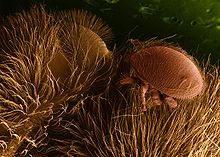
Varroa destructor on honeybee host,, greatly enlarged

Varroa destructor on honeybee host,, greatly enlarged. Wikipedia

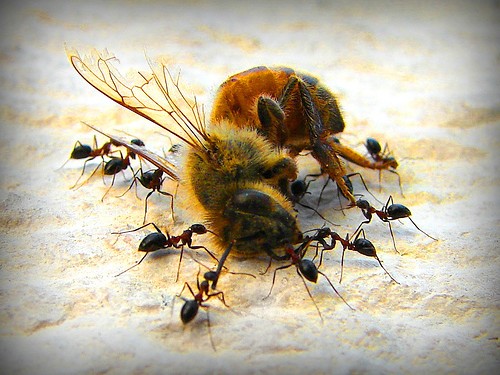
If she dodges hazards from collection she may go home to hazards from predators. The varroa mite is a nasty by-product of globalization, a hitchhiker from Asia arriving on the west coast in the late 1980’s, then crossing the country. It has proved deadly to bees in weak hives and has been fingered in CCD. And this is only one mite that attacks bees.

Well-meaning beekeepers treat hives with miticides and fungicides which can weaken bees. Even plant diseases can cross from pollen to bee. A 2010 survey found 98 different pesticides and deadly metabolites (by-products of pesticide breakdown) in combined samples of pollen. Each one of these can be hazardous to a bee’s health. In combination, they may be far more deadly. How halcyon was the bee’s life in the 1970’s compared to today’s barrage of parasites, predators and pathogens.

As Betty remarked in Part III, Houston, we have a problem.

Advocacy groups like Xerces Society, Friends of the Earth, SumOfUs, SierraRise, Center for Food Safety, and EarthJustice are working hard to publicize the plight of the honeybee. The campaign to curtail use of neonics is strong, and Home Depot is reconsidering its approach. Till now, Lowes has been silent.

A world of hazards awaits the honeybee. Snippit.snappits

A world of hazards awaits the honeybee. Snippit.snappits

What should be done: (1) Suspend conditional registration of pesticides until we know the risk to bees and native pollinators. (2) Adopt a cautious approach to approving pesticides only after thorough research. (3) Include clear warnings on labels about toxicity to bees and native pollinators. (4) Ban the use of neonics on ornamental plants.

What is being done: Ontario, Canada, has banned use of neonics on ornamental plants. This is the most immediate and beneficial action that could be taken.

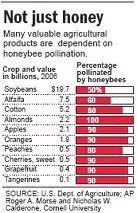
How much we owe the bees

How much we owe the bees

Beekeepers and farmers in France and Germany were so angry about crop losses that these countries have already initiated limited bans. The European Union is banning certain neonics produced by Bayer and Syngenta for two years. Bayer, for its part, is suing the European Union, claiming mites, disease, viruses, loss of habitat and bad beekeeping are the real issues. According to Bayer, it has “proudly dedicated 25 years to ensuring the protection of bees through its ‘Bee Care Program’.”

What is not being done: The United Kingdom is delaying a ban until Bayer explains holes in its studies.

And till now, only lip service in United States, with EPA claiming it needs more data, which will take another five years.

Do you think they have a right to be angry?

Do you think they have a right to be angry? foodandhealthrevolution.com

Some history: In 1994, despite incomplete studies, the EPA gave Imidacloprid unconditional registration, or full-steam ahead. In 2003 the EPA gave two other neonics “conditional registration,” putting them on a fast-track to market before studies were complete.

About 16,000 pesticides are registered with the EPA. Now we learn that the Government Accountability Office has been reproaching the agency since 1986 for confusing and virtually untrackable records on pesticides. The agency does not seem to know how many pesticides are “conditionally registered,” but it assures us that its handling of pesticide review is appropriate.

Beekeepers march against pesticides in London. theweek.co.uk

Beekeepers march against pesticides in London. theweek.co.uk

Yes, the agency has called for stricter labeling of neonics. But at the same time, it has approved Dow’s latest toxic entry in the field, Sulfoxaflor. Environmentalists and beekeepers are suing EPA for approving neonics based on incomplete studies. 50,000 citizen letters have been sent demanding a ban.

Somebody in Congress is trying. Last year the Save America’s Pollinators Act, HR 2692 was introduced by Rep. Eric Blumenauer (D-OR) and Conyers (D-MI). Both states depend on the honeybee to pollinate their food crops. The Act calls for suspending certain neonics until research shows they’re safe for honey bees and native pollinators.Unfortunately, the Act was not included in the recently passed Farm Bill and is still sitting in committee.

This cartoon says it all

This cartoon says it all. ahealthylifeforme.com

What we gardeners can do:  We can email our representatives asking them to support the Save America’s Pollinators Act, HR 2692. We can check out sites like Pollinator Partnerships on line for educational resources. An internet search will point the way to other resources. We can publicize the plight of honeybees on social media. And we can ban neonics from our gardens.


Who is Killing the Honeybee? Part I   Not I, says the Gardener

Who is Killing the Honeybee? Part II  Pesticides and Who? Us Gardeners?

Who is Killing the Honeybee? Part III  Two Beekeepers Tell their Stories

What is Killing the Honeybee? Part IV  Brinksmanship? Ignorance? Greed? Inertia?

The Bee Report (8/15)

A Pollinator’s Heaven

Posted in Honeybees, Neonicotinoids, Uncategorized | Tagged , , , , , , , , , , , , , | Leave a comment

Who is Killing the Honeybee? Part III

Two Beekeepers Tell Their Stories

Betty and Steve are neighbors of mine. Of course, in northeastern North Carolina, where farm fields stretch for miles, neighbors can be a half hour or more away. Like other beekeepers I’ve met, they are enthusiastic about keeping bees, and they were gracious enough to answer my request for their observations.

Industrious bees capping honeycomb, a beautiful site

Industrious bees capping honeycomb, a beautiful site

From Steve, whose hives are surrounded by woods, fields, and few dwellings.

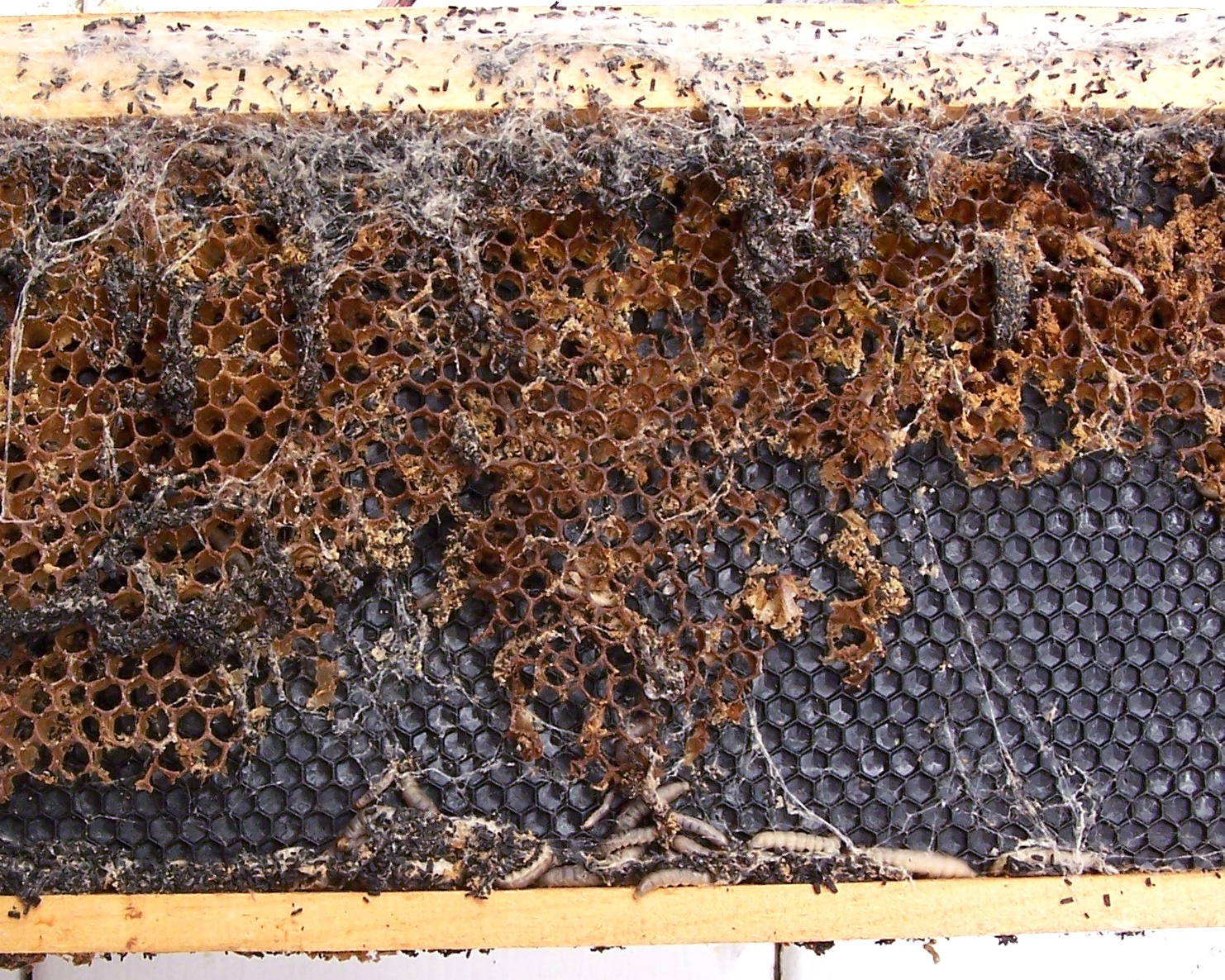
Glad you are talking about the bees. We usually keep 5-6 hives all the time. We also usually lose at least one each year to wax moths. If a hive gets a little weak in any of several ways, the moths will take over and web up everything. It’s a sickening sight to open a hive and see it all clogged up with webs, and bees and wax gone. I don’t really think the colony collapse has caused any problems for us so far.

Comb destroyed by wax moths, aka wax millers, web worms. peacebeefarm.blogspot.com

Comb destroyed by wax moths, aka wax millers, web worms. peacebeefarm.blogspot.com

And bears….Wow. They have really increased in NE NC. I’ve been seeing 4 in the field in front of my house for about a year now, never seen bears here before. And the neighborhood reports there are a lot of them around. We had one hive lost to a bear in the spring. I put an electric fence around the hive area and that stops them. I have seen the ground pawed up around the area right up to the fence, but he didn’t go through it.

And mites are a normal thing now. I would say that every beekeeper has mites. Some beekeepers constantly medicate the bees for mites, open the hives often to observe problems. They spend a lot of time trying to keep the bees in good condition. But actually, about the only time we go in the hives is to take honey once a year. I do not medicate my hives. And I don’t think I lose as many hives as most beekeepers. If they are strong, they can take care of themselves. They have done it for hundreds of years.

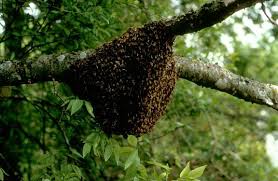
Another beautiful sight. Beekeepers will collect swarms for hives. Beneficial Bugs of NA

Another beautiful sight. Beekeepers will collect swarms and create new hives. Beneficial Bugs of NA

Pesticides don’t cause me as much of a problem as a lot of folks, due to the location of my hives. They are behind the dance barn, and there is no field within a 1/4 mile. When planes spray the field of course, the spray drifts and can cover a hive. But it won’t usually drift that far to get to mine. I’m sure I lose some bees that happen to be in the field when it gets sprayed, but haven’t noticed a big problem due to spraying yet. Some of my friends who have hives closer to a field have definitely lost hives to this.

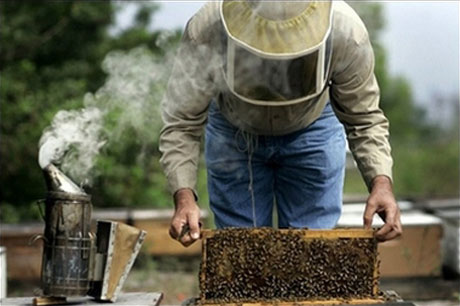
Smoking the bees calms them down, makes it possible to work with the hive. redicecreations.com

Smoking the bees calms them down, makes it possible to work with the hive and harvest honey. redicecreations.com

Most hives swarm in the spring, though you can do things to cut down on this, but you can’t completely stop it. We usually catch 1-2-3 swarms each spring, which replace any we lose. Spring of 2012 I caught 4 swarms here. This past spring, I only caught one.
BTW, each hive has a personality. The hive the bear got this past spring was our meanest hive…..good riddance! If you are interested, I’ll invite you out this spring when we take honey. You can watch from a distance, or I’ll suit you up and you can get up close…..

Update 2015 from Steve:  Since the bear finally got our bee hives last year, we haven’t been able to replace any hives. . .It’s the first year in a long time that someone hasn’t called me to remove a swarm, which I really was counting on to restock the lost hives. So, no honey this year.

From Betty whose hive is in a small, new development

Whew! Years of study and experience in a few words… not my years but the masters who patiently listen and willingly guide.

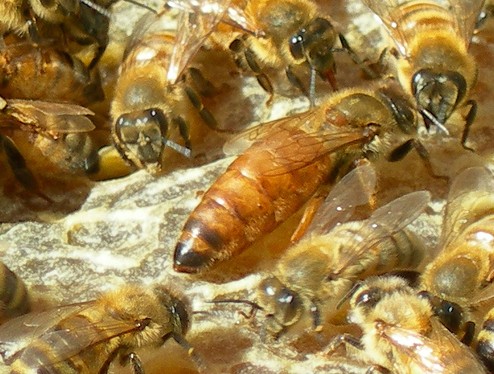
From left to right, the queen, the male drone who fertilizes the queen, and the female worker bee. ag.arizona.edu

From left to right, the queen,  the female worker bee and the male drone who fertilizes the queen. ag.arizona.edu

As a hobbyist, we keep one hive with 2 deep supers and a honey super (in late summer). It provides us with about 2 gallons of honey at harvest although my main quest is to offer increased pollination to our new development. So, I’m in it for more/better flowers, not the honey.
First off, maintaining a healthy hive and healthy bees is paramount to ward off diseases. Food, water, and a nice place to live are key ingredients for any species’ happiness. Same for bees. Since bees think of themselves as feral, they basically take care of themselves. They tolerate my inspections but prefer to be left alone.

The queen bee who lays all the eggs for the colony being tended to by worker bees. bees-on-the-net.com

The queen bee who lays all the eggs for the colony being tended to by worker bees. bees-on-the-net.com

My hive has had only a brief encounter with tracheal mite disease which was easily remedied by putting a mixture of Crisco and sugar on wax paper at the top of the bee frames. The bees ingest the mixture to get the sugar but the lard will kill the mites in their throats. Other beekeepers have not been as fortunate.

Winter bees are slightly bigger with a higher protein count than their summer counterparts. They tend to mimic couch potatoes when it’s cold outside and stay home. They spend their time clustered together around the queen and close to the food supply with the cluster becoming tighter as the temperature drops. However, a sunny day will bring them out briefly to defecate. There are no drones in a winter hive. Drones are served eviction notices in late October and are forced to leave or be killed. Some choice.

Comb with eggs and developing larvae. Wikipedia

Comb with eggs and developing larvae. Wikipedia

Soon after the winter solstice, the queen bee starts laying her eggs. This is a critical time for the hive. The new brood is beginning to hatch thus increasing the demand on their food supply…. and this is while pollen/nectar foraging is low leaving them unable to re-stock.

When we harvest in the fall, we leave them with at least 70 pounds of honey stored to help them make it through the winter. This is about what a healthy hive should produce and what it needs to survive. Beekeepers are wise to leave plenty of food for this when they harvest honey.

Honey bees catching some fresh air outside the hive. Celsias

Honey bees catching some fresh air outside the hive. Celsias

Spring accelerates the activity level of foraging, brood rearing, honey making, and swarming among others. Bees hate rain and will avoid droplet contact at all cost. I’ve played lifeguard to many poor swimmers caught in a birdbath.

Hot summers and the bees want to enjoy the cooler evening air (Meetcha on the rooftop!) with thousands covering the outside of the hive in a bee beard.At the peak of summer, my bees can number up to 70,000. That’s a lot of hummers!!

Varroa mites have researchers scratching their heads as to etiology resulting in beekeepers pointing accusatory fingers at pesticide manufacturers and manufacturers retorting that poor management by beekeepers is to blame.

Honey bees and native pollinators are at risk these days. See Part IV

Honey bees and native pollinators are at risk these days. See Part IV

Europe has banned some systemic pesticides while our own EPA has required labels to include application times (before 7 am and after 7 pm when bees are less likely to be foraging). My bees aren’t the best readers. And apparently pilots aren’t either because I tend to see planes spraying at all hours of the daytime. New pesticides have a staying capacity that continues to coat and kill insects days after the application. This would include foraging bees.

Houston, we have a problem!


Who is Killing the Honeybee? Part I   Not I, says the Gardener

Who is Killing the Honeybee? Part II  Pesticides and Who? Us Gardeners?

Who is Killing the Honeybee? Part III  Two Beekeepers Tell their Stories

What is Killing the Honeybee? Part IV  Brinksmanship? Ignorance? Greed? Inertia?

Plight of the Honeybee

Posted in Hobby Beekeeping, Honeybees, Uncategorized | Tagged , , , , , , , , , , , , , | Leave a comment

Who Is Killing the Honeybee? Part II

Pesticides and Who? Us Gardeners?

Have you ever wondered why some nursery plants you buy look so perfect and stay that way all season? (Assuming they live through the season in your garden — they don’t always make it in mine.)

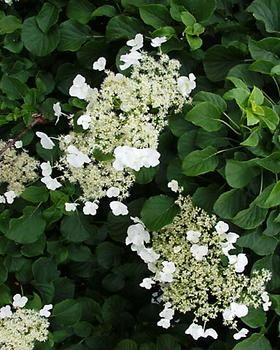
Climbing hydrangea: Perfect blooms, perfect leaves

Climbing hydrangea: Perfect blooms, perfect leaves

Many years ago we were successfully coaxing a climbing hydrangea to bloom. About the time it was finally performing, the Daily Insect Gazette telegraphed the news, probably gave directions, too. Japanese beetles descended to skeletonize the plant.

An ag supply friend told us he had a great new product, a panacea, it seemed, and best of all, it was safe. Try it, he said. Just sprinkle some around. It’ll be taken up by the plant and you won’t have any more problems. He was right. We used it only once on that plant. The beetles jumped ship and must have ratted us out to the Gazette, because they’ve not been back. The product we used was a systemic insecticide called Merit.

You know the old adage, There’s no free lunch. Keep this thought in mind.

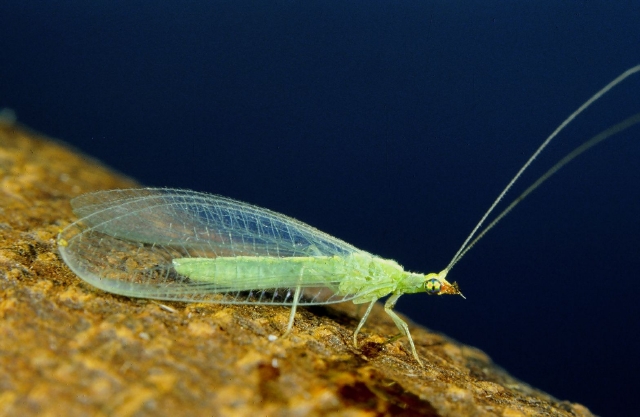
Low-dose neonics adversely affects native pollinators like this adult lacewing, Peter J. Bryant

Low-dose neonics adversely affects native pollinators like this adult lacewing. Photo by Peter J. Bryant

Now we’re hearing about neonicotinoids, neonics for short. They’re synthetic pesticides that target the central nervous systems of insects. They were developed to be less toxic to mammals than their natural relative, nicotine. Large doses kill insects on contact. Sublethal doses  can cause disorientation and damage to the immune system. Was this the stuff we used many years ago? Yup, the main ingredient in Merit is imidacloprid, a potent, commonly sold neonicotinoid.

Today, after debut in the 1990’s, at least eight neonicotinoids are marketed, creating a multi-billion-dollar business in more than 120 countries, enriching their producers, Bayer CropScience, Syngenta, Dow Agrosciences, and others.

Active ingredient in these products for lawns, flowers and vegetables is imidacloprid

Active ingredient in neonicotinoids for lawns, flowers and vegetables is imidacloprid

Neonics are applied to cereals, cotton, grain, legumes, including soybeans, potatoes, corn, pome fruits, rice, turf, vegetables. They are found in greenhouse, garden and farm field. They are an ingredient in treatments for fleas. Widow and Wrangler are used by farmers. Bayer Advanced, (trade name for imidacloprid) in the bright blue containers that you see on nursery shelves, is marketed for homeowners, and Premise targets termites.

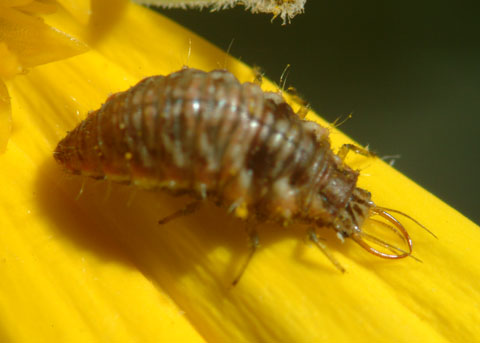
Lacewing larva, aka the "aphid lion" is a voracious feeder on pests. Peter J. Bryant

Lacewing larva, aka the “aphid lion” is a voracious feeder on pests, great for the garden but it doesn’t like pesticides. Photo by Peter J. Bryant

Here’s how they work. The pesticide can be applied in granular form, as a foliar spray, a wettable powder, a foam, or as a coating on seeds. It is water soluble, so roots absorb it readily and it travels easily through every part of the plant: leaves, stems, flowers, pollen, nectar. Traces can even be found in guttation, droplets exuded from leaves in early morning. It lasts through a growing season, and if re-applied annually, it can linger in soil and irrigation channels for years.

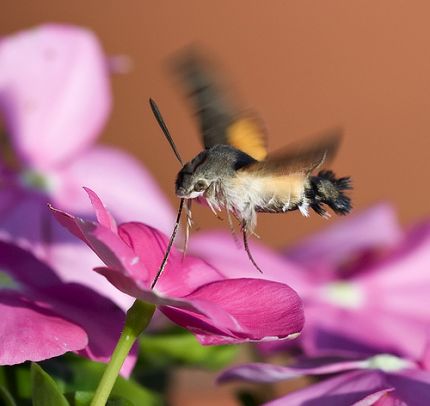
Another great pollinator, the sphinx moth, aka the hummingbird moth, sensitive to pesticides. Kaibera87

Another great pollinator, the sphinx moth, or hummingbird moth, sensitive to pesticides. Kaibera87

That perfect nursery plant? May very well have sipped neonic cocktails in a commercial greenhouse. A recent limited study of plants purchased from Lowe’s and Home Depot finds that at least half contain neurotoxic pesticides known to kill bees. Once in a garden, these plants continue to supply insect visitors – pollinators and nectar-sippers, and bees that may forage those guttation droplets — with trace amounts of pesticide all season long.

Apparently nobody thought about how bees might react to low doses of neonics. One effect is disorientation, ominous for a bee that must find its way back to the hive and then dance and waggle to show its sisters where the flower prizes are. If bees can’t forage flowers effciently. . . well, you can guess the rest of the story.

Osmia ribifloris, an efficient blueberry pollinator, will ingest systemic pesticides from pollen. USDA

Osmia ribifloris, the blueberry bee, an efficient blueberry pollinator, will ingest systemic pesticides from pollen. USDA

In one Twilight Zone scenario known as Colony Collapse Disorder (CCD), honeybees disappear from the hive, deserting, honey, queen, brood comb and whatever mites are hanging around. Although the cause is unknown, studies point to a weakening of honeybees’ immune systems by exposure to neonicotinoids that makes them more susceptible to disease that can lead to hive collapse. For more, see Part IV.

Unfortunately, pesticide application does not stop when the plant leaves the greenhouse. Independent garden centers are the largest single group of pesticide distributors in the world. Pesticides are money-makers because gardeners buy them. Gardeners buy them because they want perfect gardens. Kudos go to Lowe’s and Home Depot who are phasing out sales of neonicotinides to home gardeners.

It’s not just Bayer products that contain neonicotinoids. Here’s a partial list of others you can find on nursery shelves: Ortho products; Green Light products; Aloft; Arena; Safari; Transect; Zylem for turf; Fertilome; DIY Tree Care Products; Hunter; Knockout; Lesco Bandit; Marathon; Merit; Monterey Once a Year Insect Control; Surrender; Flagship; Maxide; Meridian.

Active neonicotinoid ingredients, depending on product, are: acetamiprid; clothianidin; dinotefuran; imidacloprid; thiacloprid; thiamethoxam, and lately, sulfoxaflor. Disturbingly, these  chemicals have been pushing other, less toxic alternatives off nursery shelves. Hopefully that will change soon.

Tachinid fly. Yes, flies are great pollinators, too

Tachinid fly. Yes, some flies are great pollinators, too. Flagstaffotos

Once upon a time I was going to have the perfect garden. Those pictures of perfectly coifed plants in catalogues and magazines seduced me. No one ever talked about disarray or devastation. Every plant was a winner.

Except in our garden. I figured I was doing something wrong but I had no idea what. Hmph, I said, more from sour grapes than plain ole common sense. I’ll just look the other way. Perfection is not worth fretting over. At the same time I was discovering that we were only caretakers of our plot. The garden didn’t really belong to us. Mammals, birds, insects, none of them recognize property lines. Nor is tidiness high on their priority list.

A whole family of flies that pollinate plants, this brightly colored hoverfly is susceptible to systemic pesticides

A whole family of flies that pollinate plants, this brightly colored hoverfly is susceptible to systemic pesticides

So we shifted our priorities from perfection to co-existence. Immediately gardening became more relaxed. We began to tolerate insect damage. Occasionally we might hand-pick pests like scales. Or we let insect life cycles run their course. During our long growing season, leaves damaged in spring are often replaced by new leaves when the insect is gone.

Sometimes we become ogres. If a plant is victimized, we prune it or purge it. That’s drastic treatment for an innocent plant. ‘Cleopatra’ camellia pruned to ground level because of fungal leaf gall came back with vigor the next year, a success story. An established cedar relentlessly attacked by bagworms had to be terminated. Ditto for euonymus attacked by scale. Too bad.

Another family of pollinators, the beeflies

The beefly, another  family of great  pollinators,  here greatly enlarged

Healthy plants are usually unpalatable to insects. (It’s a chemical thing.) But a totterer that never asked to be part of any garden becomes easy prey. We spend a lot of time choosing plants that should thrive, and even more time figuring out where they will be happiest.

Now, when I buy plants, I will also have to spend time finding out how they’ve been treated in the nursery. This is not some weird idea. Friends of the Earth, Center for Food Safety, SumOfUs, The Xerces Society and several other non-profits have mounted huge campaigns to convince nurseries to stop selling pre-treated plants and bee-killing pesticides. Visit their web sites to find out how you can participate. Or talk to your local garden center about your concerns.

Who is Killing the Honeybee? Part I   Not I, says the Gardener

Who is Killing the Honeybee? Part II  Pesticides and Who? Us Gardeners?

Who is Killing the Honeybee? Part III  Two Beekeepers Tell their Stories

What is Killing the Honeybee? Part IV  Brinksmanship? Ignorance? Greed? Inertia?

The Bee Report  (8/15)

A Pollinator’s Heaven

Posted in Honeybees, Native pollinators, Neonicotinoids, Uncategorized | Tagged , , , , , , , , , , , , , , , , , | Leave a comment

Who Is Killing the Honeybee? Part I

Not I, says the gardener.

Not I, says the farmer. Not I, says the Pesticide Maker. Not I, says the Garden Center. Certainly not I, says the EPA. Is there a problem? asks Congress.

...To dust

…To dust, with poisons in its body?

In the past six years an estimated ten million beehives worth $2 billion have been wiped out. Beekeepers worry that one bad winter (this one?) could decimate an already weakened bee population. Pretty scary. I like my apples, blueberries, cherries and almonds.

Environmentalists and many scientists claim pesticides are killing bees outright or weakening their immune systems and making them more susceptible to stress. Chemical companies blame bad weather, poor nutrition, disease, parasites, and loss of habitat. The EPA wobbles and Congress is not expected to take any action on proposed legislation.

Immigrant honeybees lost no time establishing their own feral colonies in the new world. Bob Horn

Immigrant honeybees lost no time establishing their own feral colonies in the new world.  Photo by Bob Horn

This is sad because these immigrant honeybees have been faithful partners to colonists since Jamestown was settled. Despite harsh climate and forbidding landscape, settlers and honeybees embarked on a grand American experiment that stretched from coast to coast, enriching our food supply and creating a thriving agricultural economy.

Ah, but then there was Progress. Great cities, green chemlawns, highways and  high rises, fracked wastelands and mountaintop mining, efficient monocultures, and imported exotics with anemic bee-appeal. Today, honeybees and other pollinators have to ferret out fly-in cafes for nectar and pollen. Is this any way to treat a partner?

Neat, nice choices, but not honeybee magnets

Neat, nice choices, but not honeybee magnets

And what role have I as a gardener played? Ally? Adversary? Maybe a little of both?

Certainly not partner because I never thought much about honeybees in my garden. My goals (if I had any) did not include banquets for honeybees.

Our property was originally a wild Hansel-and-Gretel dark woods, not at all a bee cafe, though I hardly missed bees in the face of ravenous chiggers. We longed for visual order. Isn’t that part of what gardening is about? So we planted old favorites that were orderly: azaleas, camellias, hydrangeas. No bee magnets here. But these plants didn’t die and they were tidy. And that was important to me.

Bumblebee working native Summersweet

Bumblebee working native Summersweet

Other plants we chose happened to be discos for the bees. They were exuberant growers and bloomers and needed gardener-control. Dwarf-not-so-dwarf burford holly bloomed in spring, glossy abelia all summer, and native summersweet in late summer. We always knew when bees clustered on a plant they liked because the plants buzzed.

What buzzing! (Comfortable bee-chatter? Is that what’s behind the term “quilting bee?”) We liked hearing the chatter. We developed great affection for these plants, even accepted their untamed joie de vivre, as we followed the buzzing around our garden. It became white noise that signaled, “All’s well in the garden.”

Honeybee with pollen basket filled trying just one more blossom. Michigan State University

Honeybee with pollen basket filled trying just one more blossom. Michigan State University

The story should end on this triumphant note. But it does not.

In Spring, 1999 we heard no bee buzz. Must be they’re a little late this year, we said when the holly was silent. You’ll see, they’ll catch the glossy abelia in a couple of months. But they did not. As seasons moved on and honeybees did not greet their blooms, we had to conclude that they were gone. We missed the hum.

Ironically, instead of silence, we should have been hearing wild bee choruses because we had begun to plant what bees like. It’s not that we were so smart; we simply wanted more variety in the garden. Serendipitously, we began to carve out niches for salvia, black-eyed Susan, aster, verbena, penstemon, obedient plant, mistflower, monarda, catmint, joepyeweed.

Rudbeckia, a veritable avenue of nectar and pollen

Rudbeckia, here an avenue of nectar and pollen

You know them, the kinds of plants that are positively joyful. But they are not particularly shipshape. They topple, sprawl, invade, seed in, disappear on a whim, send invitations to weeds to join them, or, surprise! succumb to furry marauders in a day. The kinds that encourage neighborly comments about declining property values.

But they are the kinds of plants that honeybees love. They are fly-in cafes, sunny patches of meadow, maybe combined with some woody plants, that offer a smorgasbord of nectar and pollen that keeps bees healthy and promotes strong, thriving hives. High contrast to that honeybee desert, the green lawn.

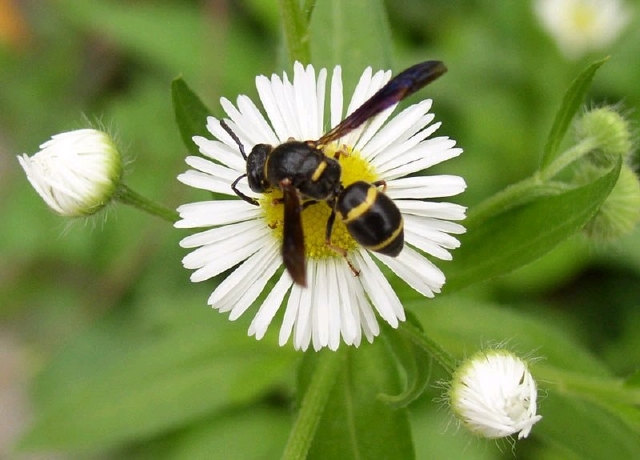
Yes, wasps are fine native pollinators, too, most of them docile

Larvae of potter wasps eat caterpillars and beetle larvae stashed in their mud “pots.” Non-aggressive adults sip nectar. Beatriz Moisset

Native pollinators love these plants even more than the bees do. We may have lost our festive honeybee parties, but today bumblebees, solitary bees, flies, wasps, butterflies and moths, and sometimes lacewings are quietly working our flowers for nectar and pollinating plants as they work.

Many of them have spent their youth as larvae feeding on trees in those Hansel-and-Gretel woods we could never bring ourselves to cut down.

Our handsome native sweat bee is attracted to. . .but he gathers pollen and nectar, too. Michigan State

Our handsome native sweat bee is attracted to. . .well, you know, but he picks up pollen and sips nectar, too. Michigan State U

What gifts these creatures bring. Our garden is alive in summer with quiet humming and antic mating. In fall and winter, wild blueberries, holly berries and crabapples feed our resident birds. And all this comes with a bonus: the larvae of many of these pollinators attack insect pests.

I can’t promise that bee cafes are as easy to manage as hydrangeas. There are no rigid formulas for maintenance, but that mystery becomes part of the game. Whenever I visit these little, whirring worlds to work, or just to get a closer look, I feel like I’m uncovering secrets that I could never find in a book. My weeding becomes a path to discovery.

Hardworking bumble bee, its "pile" covered with pollen, makes one more stop. Wikipedia

Hardworking bumblebee, its “pile” covered with pollen, makes one more stop. Wikipedia

Wouldn’t it be wonderful if a lot of us gardeners set aside a piece of our yard for our native pollinators. Fortunately, there’s good information available from university and botanical garden websites, and county cooperative extension agents have good resources.

But there is more to the story than creating new habitat for pollinators. Pesticides are taking a toll. Are we gardeners accomplices?

Who is Killing the Honeybee? Part I   Not I, says the Gardener

Who is Killing the Honeybee? Part II  Pesticides and Who? Us Gardeners?

Who is Killing the Honeybee? Part III  Two Beekeepers Tell their Stories

What is Killing the Honeybee? Part IV  Brinksmanship? Ignorance? Greed? Inertia?

The Bee Report (8/15)

A Pollinator’s Heaven

Posted in Honeybees, Native pollinators, Uncategorized | Tagged , , , , , , , | 1 Comment

Christmas Tulips

Twas the day before Christmas and all through the yard

We were setting out bulbs ere the ground got too hard

When from down on my knees I saw, slowing en route,

A rosy-cheeked elf in a natty red suit

He seemed quite astonished to see me a-muck

And asked, kindly, if I were down on my luck

No, I’m planting for spring said the believer in me,

Would you like some, dozens and dozens, all free!

Surveying his pack, bulging, tied tight,

He pondered. Thank you, said he, most polite,

But I think I would much prefer tea.

Before I could blink he was back on the wing

Merry Christmas he called, Have a magical spring.

Apologies to Clement Moore, but it’s our best excuse yet for why holiday gifts aren’t wrapped, cards not sent, baking put aside. As for the flower bulbs, hundreds, most free, they have been duly planted and await demolition now and later, during that magical spring, by deer and squirrels.

Visions of tulips next spring

Visions of tulips in Holland’s fields

Mostly tulips, some daffodils, they were an unexpected Master Gardener perc. How could I resist these homeless waifs being passed over by practical people who were smart enough to know they would not enjoy cultivating backaches on nasty, wet wintry days for the privilege of providing fodder for wild animals.

Kids might have visions of sugar plums dancing in their heads (more probably Ipods these days) but I see waves of tulips adrift in my beds come spring. Vibrant reds, yellows and purples, soft pinks, pure whites. But pulling off that magical spring performance? That will require due diligence and wily strategy.

Tulips at Hershey Gardens in Pennsylvania

Hershey Gardens in Pennsylvania, georgeweigel.net

I was reasonably careful about collecting chaff and paper skins left from the bulbs after planting. There would be no advertisements for subterranean platters of bulbs, and, for added insurance, I hid disturbed patches of soil under compost or blankets of fluffy moist leaves. But no wire baskets and no wire embedded in the soil. Much too much work for a poke-and-plant gardener. Nor did I fertilize. I will soon, preferably timed before a rain that will wash chemicals down in.

Tulips at Keukenhof Gardens in the Netherlands

Tulips at Keukenhof Gardens in the Netherlands

I think some fertilizers lure squirrels with siren songs (or odors): Soft Ground, Good eats, they promise. Or maybe it’s just easier for squirrels to bury the nuts they’ll never find again in soil that has been conveniently loosened by a serf in sweats. Even the occasional distasteful daffodil, probably planted in good soil in haste by the tired serf, has been discovered tossed out of its berth.

Tulips at Longwood Gardens, Pennsylvania

Longwood Gardens, Pennsylvania, their photo

Am I kidding myself with all these do’s and don’ts? Note the word occasional above. Mostly, these bulbs went slam-dunk between roots into pried-up muck that was then slapped back down in place. (Remember, I said I took pity on the waifs; that does not mean they get royal treatment during mass planting.) 

Tulips in our garden in 2012

Tulips in our garden in 2012

To accomplish this with relative ease Bob ground a point on a narrow trowel. Delighted with the modification, I’ve poked, sliced, slapped and levered that tool into the ground up to its hilt so efficiently I managed to break the weld on the trowel. Now I will have to plead with our local automotive genius to reweld it in his shop.

The point is, if the ground is so packed and muddy, will any self-respecting squirrel dirty his paws for a tulip bulb? Probably not, and I’ve got garden proof. Not two days after planting, I found my carefully deposited compost combed through by paws as far down as the muck but no further. The bulbs were not disturbed.

Charlie Crayfish has built his "castle" not 20 feet from my tulips, reminds me of what our soil is like beneath the compost

Charlie Crayfish has built his “castle” not 20 feet from my tulips, reminding me of what our soil is like beneath the compost

So I can still dream my dreams. Now, if my dreams begin to flower I’ll have to be sharp-eyed as Brer Fox and canny as Brer Rabbit. Bars of Irish Spring soap cut in half and poked on a stick in the ground seem to steer deer away from favorite spots, though I think squirrels like to gnaw the soap. If I’m thinking funky-country I tout the bars (tongue in cheek) as the latest in garden décor. Otherwise, I tuck them low in the foliage of shrubs and perennials.
Pretty but retiring tulipa clusiana, photo from John Grimshaw's Garden Journal

Pretty but retiring tulipa clusiana, photo from John Grimshaw’s Garden Journal

For added ammunition I use Imustgarden animal repellent. These products have a fresh, minty appeal that can almost pass for pleasant. Unlike other deer repellents I have used, the flies don’t follow me around during application. What, exactly, I will do next spring is still a mystery to me.

Sigh…All this work for a passing parade. None of these Dutch hybridized varieties are long lasting here. More practical to try the smaller, less showy tulips that stick around, which I have done, and yes, they are smaller and less showy. I can’t help it. This year bigtime tulip-mania caught up with me. What a show they will put on. Won’t they?

Posted in Planting Tulip bulbs | Tagged , , , | Leave a comment

The Gentlest of Seasons

Fall is settling in. I can feel it as I walk through the garden. The sun’s light is still sharp but it has lost its ferocious heat. On this bright day insects bob from daisy to daisy to find a final, quick meal of nectar. I disturb them as I pass and they explode, startled, not exactly in swarms, but busy enough so I think I must dodge them. They are so quick they beat me to the dodge.

Butterflies crowd a late blooming Sheffield chrysathemum

American painted ladies crowd a late blooming Sheffield chrysathemum

Not so with butterflies. They are not such good dodgers. Near collisions still surprise me. Butterflies are everywhere this year. On chrysanthemums, late sunflowers, asters, salvias, camellias. What a feast for the eyes.

Two months ago, about the time the tulip tree was littering our lawn with big, burnt, crusty–and untidy– leaves, I made a solemn vow to quit gardening. The heat had wiped me and the plants out. Vines were scraggling, leaves hung brown, and some plants had been eaten to death.

One of the busy bees on a full blown chrysanthemum

One of the busy bees on a full blown chrysanthemum

Listen to the Litany of the Tatters: broken ferns, frayed solomon’s seal, blotched hydrangea leaves. Oh, quichyer whining, you say. That’s only the usual fall die-off. Wait, I say, now we get to the drama.

Vexed knockout roses, not looking at all like those glorious shrubs I’ve seen in full sun and sharp drainage. Mushroom root rot is attacking from below and there’s no stopping it. Shriveled, drooping buds are a sign plants will eventually die. Well, that’s what you get when you garden in crayfish territory among tall pines. Something must be done, but not yet. I’ll think on that.

autumnazalcatAzalea caterpillars, they’ve stripped this year’s growth bare of leaves. Their red heads are a stand-out which makes them easy to identify. I’ll have to do something about them, too, not sure what, since we avoid chemicals, and I don’t know their life cycles. But they’re gone now, so that can wait till next spring.

Euonymus scale, it’s disfiguring boxleaf euonymus, first time ever in twenty years. Maybe I’ll chop the plants down when I get ambitious. Maybe. Or maybe just spray them with horticultural oil. Not right away, though. They’re hardy, they can wait. The deer have done a nice job of keeping them pruned to size, but I haven’t noticed any nibbling lately. Maybe deer don’t like scale.

Bright chrysanthemums among wild asters brighten my tired garden

Bright chrysanthemums among wild asters brighten my tired garden

Well, that’s a garden for you. Where plants are growing, one wily feeder or another will step up to take advantage. So why, in this season, do I feel so contented as I walk this plot that’s more like a battlefield strewn with disaster by armed warriors and underground guerillas than a sweet, garden-magazine oasis?

Well, except for those exuberant sunshine feeders, the garden is mellowing. Springtime is hurly-burly, a rabbit-race to outshine or outstrip. Buds can’t wait to break and leaves can’t wait to unfurl. Attack insects form up to dine, wait at their posts, having been strategically placed there by now-deceased-but-forward-looking-egg-laying parents.

Edgeworthia  buds, formed in summer, will break in winter, smell heavenly

Edgeworthia buds, formed in summer, will break in winter, smell heavenly

Autumn, on the other hand, is a turtle race, which is closer to my pace. Life is slowing. This year’s battles are pretty much decided by now. Some wins, some losses, depending on whether you are a gardener or a bug, a deer or a rabbit.

Forward-looking plants are quietly setting the stage for next spring’s race and offering up their gifts of nectar, pollen, berries and seeds to allies. This is not altruism, I know. Their long-term survival is the ultimate ulterior motive. But it sure makes the garden interesting.

Perilla spreads its mischief. I'll be sorry next spring but look at it now

Perilla spreads its mischief. I’ll be sorry next spring but look at it now

Perilla seed heads gleam in afternoon light. I know I should have cut them down as soon as the seeds formed, but they are pretty, and I love those purple-leaved plants in summer, and goldfinches feed on their seeds in fall. Now it’s too late. The seeds have fallen. Oh well, I’ll wait till next spring to yank them out and somehow deal with a thousand seedlings.

It occurs to me that maybe I enjoy the garden so much in fall because I don’t have to do anything. It’s too late now to do what I should have done last summer, and it’s much too early to even think about spring chores. I could do some clipping and nipping, set the garden to rights like most normal gardeners would. But I rationalize that birds will lose their ground cover and miss scratching for seeds if the beds are too tidy. And I refuse to fret about those far-sighted insect parents who have laid the groundwork for next year’s battles.

Helianthus maximiliani, a tall, lateblooming perennial sunflower  rarely needs staking

Helianthus maximiliani, a tall, lateblooming perennial sunflower rarely needs staking

So I can amble. I can play. Maybe tomorrow I’ll rake some leaves around plants to keep winter weeds down, or maybe transplant a few things. I don’t have to be a garden monitor for a while. I can play.

I make too much noise as I open the gate and I startle a young gray fox from under a shrub. His sudden movement startles me, too. Both of us had taken our aloneness for granted. We stand eye to eye about five feet apart. My god, he is healthy. His coat shines with a hundred shades of gray and russet and brown. His eyes are bright. His ears are perfect. He is flawless. Next to him I feel lumbering and flawed.

Hydrangea 'Limelight' still welcomes visitors along the front path

Hydrangea ‘Limelight’ still welcomes visitors along the front path

He is wary. We are both wary. My half-hearted attempt at soothing murmurings (Has he heard my voice before?) does not particularly interest him, nor does it alarm him. He hesitates. Finally, this close encounter becomes intolerable. He scrambles up and over the fence and disappears into the woods. I wonder if I will see him again.

A sleek young doe is browsing, not aware that I am watching her. Does she owe her extraordinary health to tonics from our garden, or am I being prideful? Yesterday she did us a favor by nosing through fallen crabapples before we walked all over them. Last week she hung around watching Bob and Tim repair some steps, but when they spoke to her, she romped off. Edgy bucks are rutting now, so hanging around humans who don’t speak may actually be a pleasant pastime.

Viburnum carlesii's berries are an added bonus to the plant's fragrant spring flowers

Viburnum carlesii’s berries are an added bonus to the plant’s fragrant spring flowers

The tatters fade as I look around and find vibrant berries on a viburnum, bright red leaves on blueberry bushes and Virginia creeper (did they turn over night? Last fling?). I see chrysanthemums spilling out of bounds and dancing seed heads of grasses and fresh new clematis blooms. If I look closely, I can find fat new buds that will speed-dial into blooms next spring.

A plump rabbit keeps several paces ahead of me as I walk. Does he look so fine because he’s been eating the violets? I

Soft pink chrysanthemums outshine aged ferns

Soft pink chrysanthemums outshine aged ferns

don’t begrudge him, though chewed-on stems don’t add much to the look of a garden. Young cardinals are hanging around the empty feeder waiting for a fill-up. Their feathers are smooth as silk, and they glow with health, and I am content. 

The mockingbird scolds me for trespassing on his territory, which is every berrying tree on the place. Hush, I say, to the berry-hog. I am enjoying my garden in this, the Gentlest of Seasons.

Camellia 'hana jiman', another bright spot in the garden

Camellia ‘hana jiman’, another bright spot in the garden


Posted in fall bloom, garden maintenance, Uncategorized, Wildlife, wildlife in autumn | Tagged , , , , , , , , , , , , , , | Leave a comment

The Invisible Coastline: Part IV

Good Works and the Artful Dodge

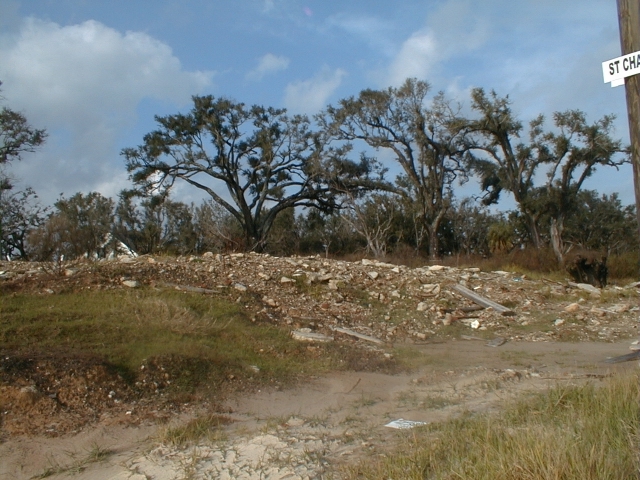
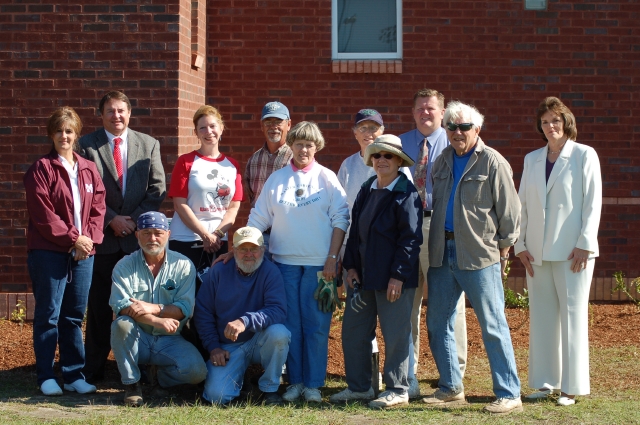
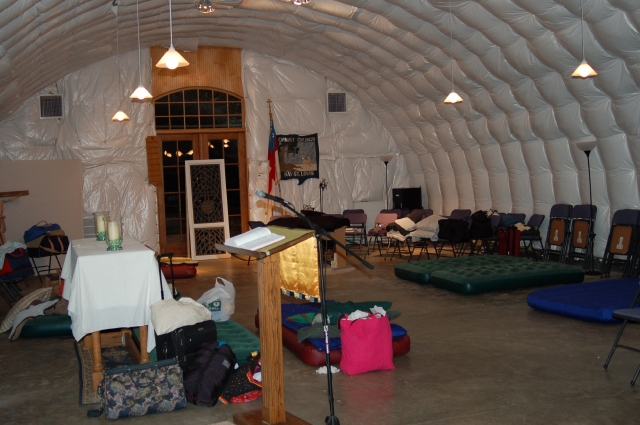
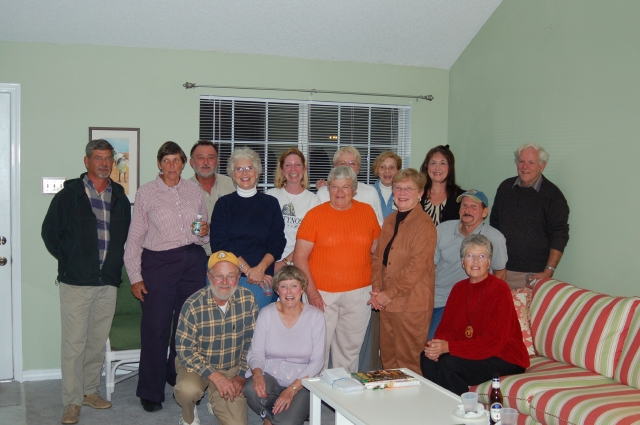
August 29, 2015 marks the tenth anniversary of one of the most powerful storms to hit the United States in recorded history. It was the wristwatch that caught me. I picked it out of the sand while we were walking the coast of Waveland, Mississippi. We had traveled down there with gardeners from North Carolina and Virginia a year later to help restore landscaping to devastated areas.

While I was doing routine fact-checking on Hurricane Katrina I uncovered so many compelling stories that I felt I could not talk about our small involvement without first describing the events of that stormy day. One post became four. Parts I and II tell of the storm and its immediate devastation; Parts III and IV follow the aftermath.

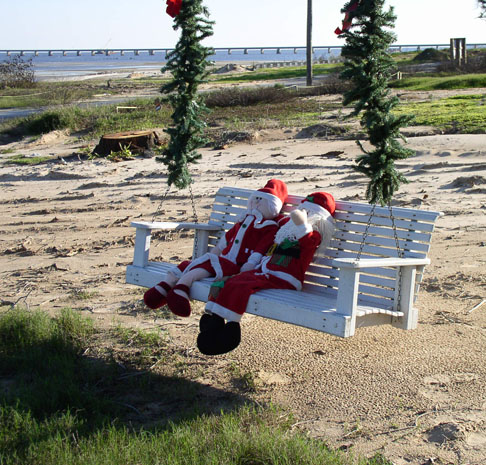
Merry Christmas from the Gulf, December 2006

Merry Christmas from the Gulf, December 2006

The damage from Katrina is so extreme that hopes of new beginnings or happy endings can become distant, persistent mirages, and for every positive experience there is often an equal or greater negative one. The coarse cloth of this nation’s character is woven through and around Katrina’s aftermath: steely resolve against all odds, patience that stretches into years, deep attachment to family and community, heroism that seeks no rewards, overwhelming, yes, overwhelming generosity, patriotism, and betrayal.

Part IV has no snappy conclusions, there can’t be any, only snippets of stories and file photos uncovered from news reports, editorials, and blogs. I apologize for omissions or errors of fact.

St Bernard/Plaquemines Parishes, LA: It’s been six months and we still don’t know if we can stay.

Aerial view of St. Bernard Parish before the water began to drain

Aerial view of St. Bernard Parish before the water began to drain

There was nothing left whole in St. Bernard Parish. This parish, five miles east of downtown New Orleans is the only county in America that has ever been totally devastated by a natural disaster. All of its 27,000 homes were destroyed. Six months later only 7,000 people remained out of a population of almost 70,000.

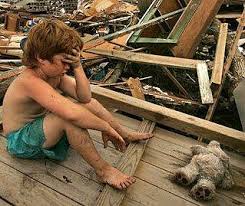
Mostly, people lived in limbo. They waited, many families living apart, split between states. They waited for aid to come. They waited for trailers. They waited for insurance companies to settle and then maybe tried to appeal the settlements. They waited for banks to give them loans. They waited to find out about flood insurance. Meanwhile, towns were twilight zones. No people, no dogs, no cats, no life.

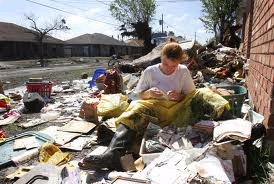
Sifting through a lifetime. danandersonphoto.com

Sifting through a lifetime. danandersonphoto.com

There were some bright spots. Volunteers with Emergency Communities did a bang-up job of serving 185,000 free meals in six months and boosting community morale by distributing tons and tons of food and clothing, offering first aid, showers, emotional support and much much more.

Domino Sugar called all 300 employees back when it reopened its plant and provided housing for their families in rent-free travel trailers. The new town on company property became Chateau Domino.

Geodesic domes of the Made With Love Cafe, Economic Recovery

Geodesic domes house the Made With Love Cafe where all those meals were served by Emergency Communities

ExxonMobil, another big employer, donated $4.2 million to rebuild the St. Bernard schools. The downside: nearby residents suffer from noxious odors, high rates of cancer and illness from industry emissions (over 2500 violations of the Clean Air Act). Citizen groups are asking the company to clean up its act as it rebuilds.

With volunteer help, the St. Bernard Project has rebuilt 479 homes (about 60 a year) each costing an average of $15,000. This ongoing project makes a special effort to train veterans in electrical and plumbing skills and then hires them to do the work.

Lunch under the Dome

Lunch under the Dome

Well, people did come back to St. Bernard and today the population is up to about 35,000. Many rebuilt following guidelines that FEMA laid down.

They didn’t count on Congress passing the Biggert-Waters Flood Insurance Reform Act last year. This act cuts federal subsidies out of flood insurance. The idea is to make the program self-sustaining, which sounds pretty smart.

No one in Congress considered that unsubsidized insurance for primary dwellings could be a hardship for low- and middle- income homeowners. Residents in St. Bernard who live 4 feet below base on FEMA’s maps (not so unusual in Mississippi delta country) can expect to see premiums of about $9,500 a year. The median income for a family in St. Bernard is about $43,000 a year. You can imagine the fallout. Entire communities could become ghost towns if insurance costs drive people out with no prospect of resale.

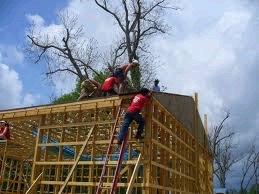
Volunteers help to rebuild, help to give hope

Volunteers help to rebuild, help to give hope

Nor did anyone in Congress check up on FEMA. In 2009 the Government Accountability Office reported that FEMA turned over as much as two-thirds of premium dollars to insurance companies for administration. (That would leave one-third for payouts to homeowners.) Nor did FEMA enforce audit requirements on insurance companies. And, the agency continues to work with flawed flood maps, though it has promised to correct them in time.

The people of St. Bernard have some powerful allies now. Residents in New York and New Jersey who felt Sandy’s wrath have joined the call to extend the deadline. Hopefully Congress can arrive at a reasonable solution.

Pearlington, Mississippi: Where is the money?

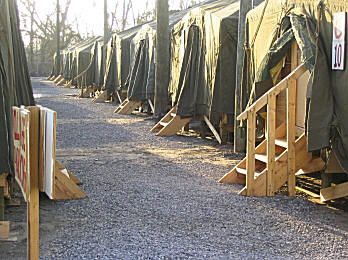
No shelter, living in tents, waiting for help

No shelter, living in tents, waiting for help

Immediately after Katrina, Martin Horn, owner of a commercial construction company in Charlottesville VA, sees that most relief efforts are going to New Orleans. He wants to use his skills to help, and he finds a town that is struggling to survive. In the course of two years and 25 trips to Pearlington he, along with volunteers from the Building Goodness Foundation, construct shelters, buildings and a recovery center in this community that lies 8 miles north of the Gulf on the Pearl River, halfway between New Orleans and Biloxi.

Indomitable spirit

Indomitable spirit, shutterstock.com

Eight years after Katrina, Hancock County officials announce that the buy-out program proposed five years ago for people in flood-prone areas is under way and three people have received offers. Originally, $10 million was allotted toward buying out about 110 flood prone properties, but last year the state moved $6 million to other projects because the buyout was not moving fast enough.

Now the state says it will honor the $10 million, if it must, though the buy-outs might not cost as much as originally estimated. Property owners will be offered fair market value based on appraisals, and the list of eligible applicants has been cut in half.

Volunteers helping to rebuild a community

Volunteers helping to rebuild a community

The County warns citizens that progress will be slow. The county has to apply first to MEMA and MEMA has to apply to FEMA and FEMA regularly requests more information and after all this paperwork and waiting, it will take at least six months to a year or longer to get the property appraised and then, if an offer is made. . . there is no appeal, it is a take-it-or-leave-it proposition.

Meanwhile, $36 million has been spent on water and sewer lines, badly needed in a community without water or sewer service, where a high water table can contaminate shallow wells.

Pearlington Resource and Recovery Center

Pearlington Resource and Recovery Center

Trouble is, the lines are allegedly in areas that the Corps of Engineers considers off limits for housing. Residents wonder why they are not seeing any money and why more consideration isn’t given to flood control.

Chatter on the Internet is brisk about irregularities in the state’s Department of Marine Resources management of funds.

The Mississippi Coast: It’s like we’re in a real bad dream.

Scour the Internet for vacation sites along the Coast and you will have no idea that there was ever a Katrina. Travel magazines call Bay St. Louis one of the Best Little Beach Towns and the Coolest Small Town. Buccaneer State Park in Waveland features, of all things, a half-million-gallon wave pool, water slide and flume.

Bay St. Louis Bridge today

Bay St. Louis Bridge today

Casinos in Biloxi are bigger and glitzier than ever now that they are no longer restricted to barges at sea. A new rule allows them to build on land, which means they can offer upscale dining, lodging, entertainment–and gambling–under one roof. Gamblers have come back and the casinos are today the golden goose for Biloxi, boosting employment and contributing a healthy chunk of property taxes to the city.

Debris pushed to the sides of a street in Waveland

Debris pushed to the sides of a street in Waveland

The Coast has come a long way from that day when a strip of Waveland between shore and railroad tracks disappeared and police officers and staff had to ride out the surge by clutching at trees. Afterwards, county offices – and schools — were housed in donated tents. Paper and pencil replaced computers and personal cell phones substituted for destroyed lines of communications. Police officers patroled the county in pick-up trucks and bikes until donations of vehicles and equipment came in from all over.

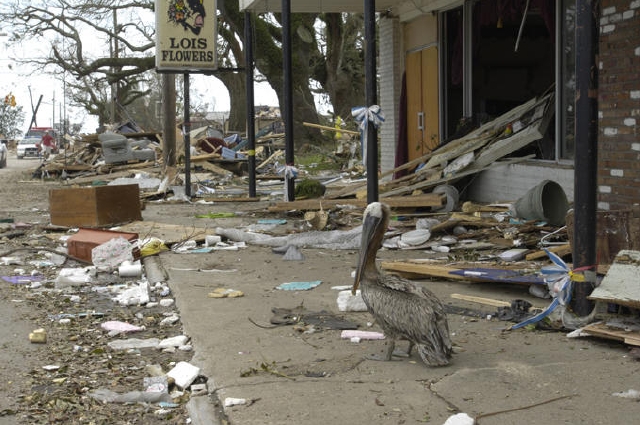
This pelican in nearby Long Beach seems as dazed as the rest of the world

This pelican in nearby Long Beach seems as dazed as the rest of the world

And the Rainbow Family, aided by donations from, it seems, everywhere, set up the New Waveland Café and Clinic. Three hot meals a day were offered and volunteer doctors and nurses from all over the country treated 5000 patients in four months free of charge.

A long way, too, from when Pass Christian’s public buildings and fine antebellum homes were destroyed and the city was close to collapse.

Tent City in Pass Christian

Tent City in Pass Christian

Charitable groups made building a day care center possible so people could return to work, and the State of Qatar donated money for a boys and girls club. Today, through pooled resources, the town has a modern complex of schools, a day care center and a boys and girls club in one facility called the Center of Excellence.

A long way, too, from days when Seabees in Gulfport cleared three miles of railroad track to lay a temporary sewer line and then built temporary town offices and temporary housing for a thousand people.

In ten months Mississippi cleaned up more than 10 million tons of debris.

But look beyond the playgrounds of the gulf and there is still sadness. . .

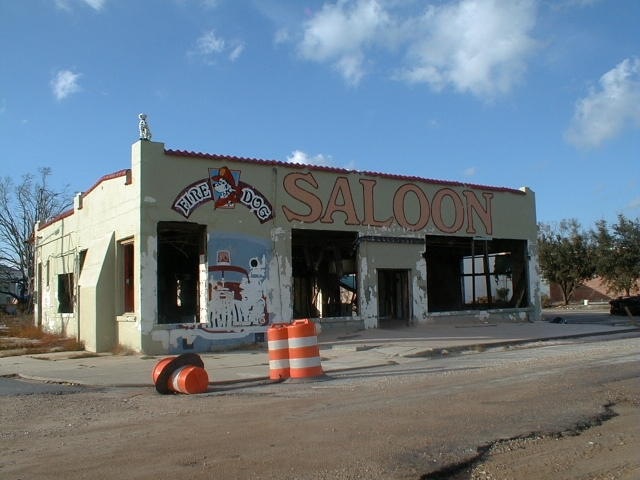
Fire Dog Saloon, a local eatery in happier days

Fire Dog Saloon, a local eatery in Bay St. Louis in happier days

As of 2011 the town of Waveland was heavily in debt. People came back, but the tax base did not recover. Insurance rates soared, sometimes costing more than mortgage payments. Many could not afford to rebuild to code. Nor have part-time residents on valuable beach property rebuilt. Without a solid tax base, police officers and city employees are taking pay cuts or losing their jobs.

Same restaurant in 2006.No plans to rebuild. . .

Same restaurant in 2006.No plans to rebuild. . .

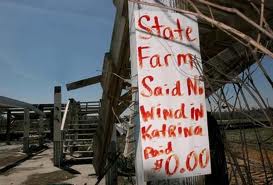
The story is much the same in Bay St. Louis and other towns. Some spiffy new homes sit on 20-foot tall cement stilts along Beach Boulevard, but many people can’t afford to rebuild. Here, as in other towns, insurance companies dickered over whether damage was caused by wind or water and took their time awarding stingy settlements.

Remember those signs for the Mockingbird Café? Relief crews wanting a good hot cup of coffee kept the Café alive and well for a while, but now they are gone. Then the Gulf oil spill temporarily scared off tourists. The Café hasn’t broken even for months.

No insurance payment here.

No insurance payment here.

People are angry. Mississippi State Senator David Baria of Bay St. Louis has introduced insurance reform bills in the state legislature for three years running. He is asking for fair policies and fair payment of claims. Insurance companies point out that few settlements have been disputed and they have paid billions in claims for losses by Katrina. Senator Daria can’t get the legislation through committee.

Hard Rock Hotel and Casino, destroyed by Katrina the day before it was to open, has nevertheless rebounded successfully

Hard Rock Hotel and Casino, destroyed by Katrina the day before it was to open, has nevertheless rebounded successfully

In Biloxi, where casinos are thriving and business is booming, hundreds of people on the north side of the railroad tracks are still living in substandard homes with structural damage, makeshift electricity and plumbing, and mold and mildew. Three years after Katrina, civil rights groups sued the State of Mississippi and the U.S Dept of Housing and Urban Development (HUD). Two years later, in 2010, the state agreed to dedicate $132 million for repairing needs that had already been identified and researching and repairing unidentified needs in nine south Mississippi Counties.

Did I mention that people are angry?

Did I mention that people are angry?

The state apologized for overlooking these needs for five years and made the point that 50,000 homes have already been rebuilt. The state also promised quick action on this last group. (Good people of Pearlington, take note.)

What in the world is going on in Mississippi? After Katrina, the federal government granted 5.4 billion taxpayer dollars to Mississippi, half of which was earmarked for families with low-to-moderate incomes. Surely, creative ways, such as partnering with charitable groups, could be found to stretch funds for rebuilding across the coast.

And still, God Bless America

And still, God Bless America

Governor Haley Barbour has repeatedly requested waivers from HUD to divert federal aid for rebuilding housing to other projects. According to investigative journalist Tim Shorrock, distribution “has been badly skewed toward wealthy homeowners.”  Steps Coalition reports that only about $1 billion, or 20 percent, has been spent to aid low-income victims.

Critics point to a parking garage near the MSU football stadium 200 miles inland as an egregious example of misspending. Other projects, they claim, never materialized or failed to create jobs. It took a lawsuit to squeeze $132 million out of the state. As to its promise to speed up aid, that hasn’t appeared to happen. The state is still sitting on almost a billion dollars of unspent funds.

Kat4biloxichildTo those whose lives have been on hold for eight years and who do not yet see a clear path, we salute you for your patience and determination.

To those children who have lost your childhood, our hearts go out to you.

We hope we have given some small voice to your story.

James Peters, 58, a Katrina Hero. He saved 13 lives in Pearlington Mississippi

James Peters, 58, a Katrina Hero, saved 13 lives in Pearlington Mississippi

The Invisible Coastline:  Part I  Setting the Stage

The Invisible Coastline: Part II  The Inexorable Surge

The Invisible Coastline: Part III Our Impressions, November 2006

The Invisible Coastline: Part IV  Good Works and the Artful Dodge


Posted in Hurricane Katrina, katrina recovery, Storm recovery, Uncategorized | Tagged , , , , , , , , , , , , , , , , , , , , , , , , | Leave a comment

The Invisible Coastline: Part III

Our Impressions, November 2006

August 29, 2015 marks the tenth anniversary of one of the most powerful storms to hit the United States in recorded history. It was the wristwatch that caught me. I picked it out of the sand while we were walking the coast of Waveland, Mississippi. We had traveled down there with gardeners from North Carolina and Virginia a year later to help restore landscaping to devastated areas.

Christ Episcopal Churc belfry still stands along the coast

Christ Episcopal Church demolished; belfry still stands

While I was doing routine fact-checking I uncovered so many compelling stories that I felt I could not talk about our small involvement without first describing the events of that stormy day. One post became four. Parts I and II tell of the storm and its immediate devastation; Parts III and IV follow up a year or more later.

Like most everyone else in the country, we were caught up in newscasts about the catastrophe in New Orleans and didn’t understand much about what was happening along the Mississippi coast. Memories of the fine time we had enjoyed there were hazy, and communities that were a thousand miles away seemed little more than dots on a map.

Land denuded except for oaks. Note the lean away from the shore

Land denuded except for oaks. Note the lean away from the shore

That perception was to change a year after Katrina, when Bob and I arrived in Waveland as part of a work crew of Master Gardeners. The project was the brainchild of a Pasquotank County Master Gardener who had taken it upon herself to spearhead a restoration of community gardens in coastal Mississippi.

The idea took on life after it was publicized at a North Carolina State Master Gardener conference. Once word went out, plans needed to be coordinated with the Hancock County Cooperative Extension Service in Hancock, Mississippi, funds raised, volunteers recruited, housing and meals organized, heavy equipment arranged for, plants to be trucked in, and top soil, fertilizer and mulch supplied.

Sign: STORM DEBRIS IN WATER DO NOT ENTER Note pile drivers working on bridge in background

Sign: STORM DEBRIS IN WATER DO NOT ENTER Note pile drivers working on bridge in background

Whew! A passel of logistics, but enthusiasm and top-notch organization made the plan work. Prior to our work week, volunteers organized and staged plants that would be transported to Mississippi by the nursery in Currituck County NC that donated them. Once the plants were safely on their way, ten of us from six counties in northeast North Carolina and Chesapeake, Virginia, would spend a week getting our knees dirty in Hancock County, Mississippi.

Here is our group, The suits are school officials

Here is our group, The suits are school officials

Our tasks were to landscape a complex of three badly flooded schools several miles inland in the town of Kiln, north of Interstate 10, and to replant a simple memorial garden at Christ Episcopal Church. By the time we arrived, one school had been razed and replaced by modular classrooms. Repairs from flood and wind damage were still going on in the other schools.

A haven for weary aid workers

A haven for weary aid workers

Before Katrina, the Church sat high on a bluff overlooking the Gulf. Only its battered belfry and a shredded banner remained to identify it–the sanctuary swept away by a 35-foot combination of storm surge overtopped by breaking waves. A quonset hut now replaced the church and this doubled as sleeping quarters for volunteer work parties that came and went in a continual stream from all over the country.

Ready to work on the memorial garden

Ready to work on the memorial garden

The memorial garden, once landscaped with handsome granite headstones and roses and boxwood, had been scoured into a trench, brickwork broken apart, shrubs torn away. We improved the soil by rototilling it and adding potting mix. Then we replanted the garden with periwinkle we’d dug from our garden and pansies we purchased for color from the local Wal Mart that was now fully up and running. Replanting the garden would become a symbolic gesture of hope. Two weeks after we left, the pastor of the church would be married in the garden.

Mark is making quick work of the mulch pile

Mark is making quick work of the mulch pile

When we arrived on school grounds, the first thing we saw was a mound of 50 yards of mulch that had been supplied by the school district. This needed to be transported to planting sites at the three schools by pick-up trucks and then rototilled in. No small feat, since each truck could hold only about two yards.

Oh my! Lots of shoveling. Again, good planning and enthusiasm carried us through and we were spared heavy labor. One of our work crew had taken it upon himself to transport a front loader and assorted tillers and heavy equipment the 1000 miles from coastal North Carolina to our work site. Once the soil was prepared, we worked quickly, assembly-line planting. No one ever counted, but the numbers we planted must have been in the hundreds.

A chill in the air but a small stove and friendly chatter warmed us

A chill in the air but a small stove and friendly chatter warmed us

People were so appreciative of our help. One evening we were invited to a Mississippi feast. Sheets of plywood with sawhorse underpinnings were set up along the sidewalk and covered with paper tablecloths. We ate magnificent, positively gluttonous, servings of the most delicious shrimp we’d ever tasted – oh, those Gulf shrimp—out of big serving bowls, along with red potatos, and drank the coldest Red Dog ever.

Our hosts' home in daylight

Our hosts’ home in daylight

All this in the company of warmhearted hosts who were still housing three generations of family in cramped quarters and still living under a roof of blue tarps. Those paper tablecloths? We crumpled them with our shrimp shells, and presto, the plywood and saw horses were back in construction mode.

It was a quiet, starry, night, so Bob and I walked back to the FEMA trailer on church grounds where we were staying.

From the road this house looked rebuildable. Up close. . .

From the road this house looked rebuildable. Up close. . .

Under the stars, storm desolation didn’t seem so stark. Night shadows softened the scruffiness of weeds that hid a mosaic of concrete slabs and camouflaged the junk that Katrina created when she robbed people of fond possessions and tossed them into trees. We picked up a plastic Frosty Snowman that still blinked when it was plugged in and we left it with the church. Maybe someone would enjoy it during the holidays.

Debris piles, some created by Katrina, others by people clearing property

Debris piles, some created by Katrina, others by people clearing property

By daylight no shadows camouflaged the land. Brick steps rose to no homes. Odd pillars marked no entry. Walks led nowhere. Plywood boards spray painted with names and addresses and posted on trees–there are no landmarks now–affirm boldly, garishly, that someone once lived here.

Bones of gutted buildings, vacant pilings now superfluous, piles of rubble (where did they take the big stuff?), plastic orange fencing and blue tarps, displaced chunks of road, flattened stanchions, toppled buildings, signs askew, and acres of dead trees speak eloquently of the battle. Scattered amid the wreckage are FEMA trailers for families, quonset huts for churches.

A pretty violent storm interrupts our planting schedule

A pretty violent storm interrupts our planting schedule. We wonder how people cope psychologically with bad storms now

A stroll with no destination uncovered moments in time: an upright rocking chair, a coat hanging on a twig hook, an intact birdbath, a bruised doll. The crusted but elegant vintage 1930’s watch we found remains on our desk as a reminder. We wonder where the owner is, what happened to her.

Signs of black humor and bitterness gave us pause. A bistro table and chairs theatrically arranged on a barren rise. A plywood poster: State Farm Sucks. Signs of patriotism, too. American flags everywhere, big and imposing, tiny that a child would wave, frayed, or fresh looking.

Our planting beds got a good watering

Our planting beds got a good watering

We spent another evening at a wonderful potluck party at the new home of a Hancock County Master Gardener who had lost everything and now was beginning again. She felt herself to be one of the lucky ones. Before Katrina, the Master Gardener group was 32; now there were 8. A year later and so many have not returned. But that evening was jolly, and again we ate too much. Lots of good cooks along the coast.

Master Gardeners all, we have a common language. Organizer Ruth seated, in red

Master Gardeners all, we have a common language. Our project organizer Ruth seated, in red

Oh, the stories. Told simply, sketchily, matter-of-factly, and with amazing good humor. Of being thankful the floodwaters ebbed before they had to climb up to the roof. Or of coming back home and finding everything gone. Of wearing the same clothes for two weeks straight. Of being called “slab people” and living like nomads in faraway states. Of sleeping on floors, among strangers, rotating from house to house. And the mix of bad smells—mold, decay, sewage–that seemed to stay around forever. No drinking water. No showers. No place to get a cup of coffee. No place to get a cup of coffee.

We travelled this parklike road to and from the beach. Once there were houses all along it. Photo by Margie Kieper

We travelled this parklike road to and from the beach. Once there were houses all along it. Photo by Margie Kieper

Of greeting friends they’d missed with an ecstatic “You’re Alive!” Of being denied entry to sound homes because sewer and water were unavailable. Of the ugliness. Of being dependent on help and handouts. Of bureaucracy and greed. Of shock, bitterness, depression and isolation. Of losing, not their lives, but the fabric of their lives. Yet, they said, it could have been worse. “It’s not the worst thing that could happen to you.” They had come through and survived.

He only looks like the lonely rototiller; we were planting right behind him

He only looks like the lonely rototiller; we were planting right behind him

Signs of survival, even normalcy, are all around. Signs for building contractors, real estate agents, candidates anxious to win elections. Rebuilding is everywhere, on and away from the coast.

One optimist is recreating an East Wing, or guest house, of what will eventually become his personal White House overlooking the Gulf, though right now he is having trouble finding supplies.

A pizza break. No, we weren't always eating

A pizza break. No, we weren’t always eating

Pile drivers sound for all the world like ghosts thumping at night, but they are very real, working to restore washed-out bridges.

A temporary ferry is finally in operation, though it can’t replace the broken bridge.

We hear train whistles in the night, too. Long-silent, they are sweet song to needy, isolated people.

The ubiquitous Coffee Cup sign looks like it's floating

This Mockingbird Cafe Coffee Cup sign looks like it’s floating

But there is a long way to go. There are few gas stations and grocery stores. Casinos are up and running, and business is brisk. And nursery schools, too, those humble foundations of economic prosperity, have reopened.

And there are ingenious handmade decorations for Hallowe-en. And what must be a hundred coffee cup signs; yes, the Mockingbird Café has opened in Bay St. Louis and yes, you can get a good hot cup of coffee for $1.50.

The sun casts its spell

The sun casts its spell

At sunrise, when the land is silhouetted against a deep blue sky a sweet rosiness blurs the warts. Even the church-quonset-hut takes on an air of hope in the rising sun. The second, new banner behind the belfry that reads God is With You speaks profoundly of these Mississippians, their resilience and grace, faith and pride in community and country, determination to get on with life, to make the best of things despite the odds.

As we leave, we realize that the live oaks, denuded by Katrina in 2005, had begun to put forth new leaves this year.

kat3sunrise

The Invisible Coastline:  Part I  Setting the Stage

The Invisible Coastline: Part II  The Inexorable Surge

The Invisible Coastline: Part III Our Impressions, November 2006

The Invisible Coastline: Part IV  Good Works and the Artful Dodge


Posted in Hurricane Katrina, Master Gardeners, Mississippi Coast, Storm recovery, Uncategorized | Tagged , , , , , , , , , , | Leave a comment