The Invisible Coastline: Part II

The Inexorable Surge

The Mississippi coast, showing three counties coastal counties

Major communities along the Mississippi coast. The Pearl River, Hancock County is the state line.

August 29, 2015 marks the tenth anniversary of one of the most powerful storms to hit the United States in recorded history. It was the wristwatch that caught me. I picked it out of the sand while we were walking the coast of Waveland, Mississippi. We had traveled down there with gardeners from North Carolina and Virginia a year later to help restore landscaping to devastated areas.

While I was doing routine fact-checking I uncovered so many compelling stories that I felt I could not talk about our small involvement without first describing the events of that stormy day. One post became four. Parts I and II tell of the storm and its immediate devastation; Parts III and IV follow up a year later.

Storm surge in St. Bernard steamrolled houses into one another

Storm surge in St. Bernard steamrolled houses into one another

Before we visit the Mississippi coast, let’s detour a moment to  Plaquemines and St. Bernard Parishes southeast of New Orleans, where Katrina made her second landfall. This is low country, bayous, more water than land, nourished by the Mississippi River which flows through these parishes into the Gulf.

A mosaic of levees and canals buttress  communities, but Plaquemines and St. Bernard were destroyed even before Katrina’s official landfall. Her storm surge of 15 to 25 feet rolled over the land, preceding her eye, breaching levees. Most people had evacuated from
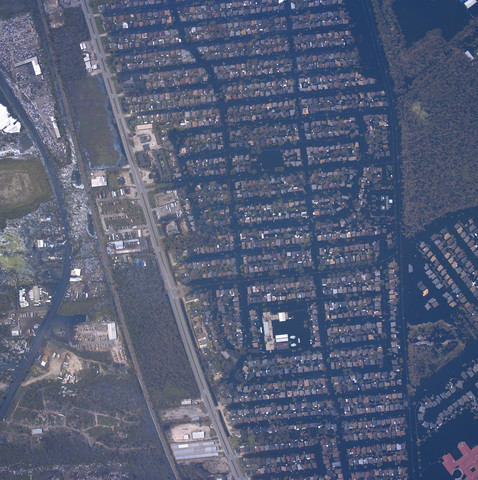
Flooding in Chalmette, St. Bernard Parish

Flooding in Chalmette, St. Bernard Parish

Plaquemines. Those who remained in either parish tell of violent currents and water filling lower stories very quickly, in about 15 minutes, trapping people. People survived by waiting for rescue in upper stories, or they drowned. It took about a week for the water to drain.

St. Bernard was the only parish/county to be totally inundated by Katrina, this from an unanticipated one-two-three punch. The first blow, described above, came from the south and east. The second followed when the Industrial Canal Levee, the boundary between New Orleans’ Lower Ninth Ward and St. Bernard, failed, and water poured in from the west.

Flooded refinery in St. Bernard Parish

Flooded refinery in St. Bernard Parish

Finally, a damaged storage tank contaminated floodwaters with millions of gallons of oil. A foot of oily mud remained after the water was pumped out. Of 26,900 homes, there was not a livable house in the parish. Everyone in St. Bernard had a story to tell, but it was the same story: I lost my home and everything in it.

I don’t recall a lot of news coverage about the flooding of Plaquemines and St. Bernard, battered as much or more by breached levees as was the Lower Ninth Ward. I do recall a lot of coverage about the New Orleans flooding. Too bad that, with few exceptions, the news media never looked beyond.

Scenes like this were common in Pearlington. (Photo from nomofilma)

Scenes like this were common. (Photo from nomofilm)

The rural community of Pearlington MS, about 8 miles inland on the state line, was not so lucky, either. It caught Katrina’s eye as she made her final landfall. Few buildings withstood the wind and water. Many people stayed in their homes because they had weathered Camille in 1969, and, after all, they lived several miles inland. They did not count on the strong storm surge up the river that had given the town its name. From accounts by Katrina survivors, their ingenuity and common sense, faith in God and sharing with and caring for neighbors helped keep them alive in the aftermath.

Eventually the bulldozers would get to the town

Eventually the bulldozers would get to the town

Nevertheless, the town was destitute. Ten days later, when a state emergency response team from the Florida panhandle arrived, they found that “The town had nothing but a place to get water, ice and military-issued meals. There was no Red Cross or shelter. The homes were heaps of debris, and trees and nail-studded boards littered the roads. The people – perhaps 600 of the 1,700 residents that remained – were living in tents and under tarps.” According to a CNN report, six weeks after the storm, FEMA hauled away portable toilets and did not replace them. The citizens of Pearlington called themselves the “forgotten” people.
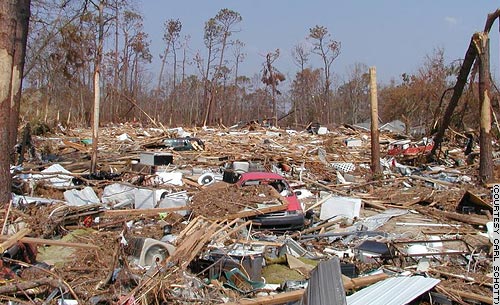
Everything leveled except the trees, which would lose their leaves making for a long winter

Everything leveled. Note the car on top of the pile. Stressed trees will lose their leaves, even if they do not die. Photo by Carl Schott

The surge hit the coast some time between 7 and 8 am. That is when the 911 calls began to come in to operators, mostly screams. That is when most fatalities occurred. For three hours the surge piled water onto the land, peaking around 10:30 or so before it began to recede. Search and rescue missions would determine locations of bodies by recorded 911 calls. As houses were searched, they were marked; if bodies were found, a number was written under the mark. Along the Mississippi Gulf Coast, 238 people died and 67 people went missing during flooding that was beyond the imagination of anyone living there.

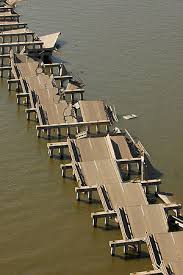
The railroad bridge links Bay St. Louis with Pass Christian

The railroad bridge once linked Bay St. Louis and Pass Christian

The surge overtopped Rte 90, the Hospitality Highway we talked about in Part I. It twisted up the railroad tracks and broke up the railroad bridge. It reached as far inland as 12 miles, using rivers and bays and estuaries as a conduit for its relentless push. It tore up the bridge that crossed St. Louis Bay, so people in communities on either side of the bay were now isolated. Further north, it took out swaths of Interstate 10.

A year later the litter would be cleared but the beach would still be off limits.

A year later the litter would be cleared but the beach would still be off limits.

Waveland, “ground zero” in Hancock County, has been described as an ideal Small Town USA. The kind of town with white picket fences and good neighbors. It lies in a narrow strip along the coast and extends north beyond the railroad tracks. Katrina’s eastern eyewall with its storm surge of 27 to 30 feet overtopped by 5 to 7 foot waves blanketed the town.

Along the town’s 7-mile beach front, not one building or home was left intact. Further inland, few structures remained. Houses were floated off their foundations, some dropped on railroad tracks, others left in roads or pushed into other structures. Block after block of slabs were the only landmarks left for identifying houses. In the neighboring town of Pass Christian on St. Louis Bay, wave action and surge currents working at cross-purposes pushed wreckage into piles that were 30 or 40 feet high. To these piles people would add personal belongings, appliances, wallboard, and the rest of their past, as they gutted their homes.

The railroad tracks parallel Rte 90 a couple of miles inland

The railroad tracks parallel Rte 90 a couple of miles inland

Although the railroad tracks acted like a berm, slowing the water, homes as far inland as 10-12 miles were flooded. Eyewitnesses describe water creeping under doors and through windows and quickly filling lower stories, giving residents barely enough time to escape to upper stories before furniture and refrigerators started floating and acting like missiles in the swirling water.

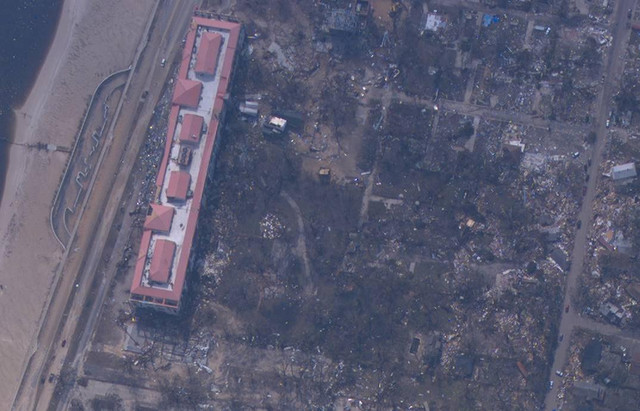
Compare this with the "before" picture in my previous post

Compare this aerial view of Waveland with the “before” photo in my previous post

The Hancock County Emergency Operations Command Center was set up in the county courthouse in Bay St. Louis. As the water began to rise, and not knowing how much higher it would go, everyone wrote a number on their bodies with a magic marker. A list of names and numbers was tacked high up on the wall. The floodwaters held, but it is worth noting that every EOCC along the coast was flooded.

View from the Jackson County Emergency Operations Center at the western end of the coast

View from the Jackson County Emergency Operations Center at the eastern end of the Mississippi coast

Susan Stevens, a social worker and manager at the hospital in Hancock County, wrote movingly about her experiences during the storm. Our condensed version here can give only a glimpse of that day.

As the lower story of the hospital begins to flood, patients must be moved to the second floor, carried upstairs on stretchers when generators fail and elevators are no longer working. All equipment, oxygen, food and water stored on the first floor is destroyed. By now roads are flooded and the bridge is destroyed and communities are isolated. The hospital is operating without basic supplies and power, with no communication outside the county.

Shipping containers strewn like dominos in Gulfport

Shipping containers strewn like dominos in Gulfport

Yet the hospital must become an emergency haven for hundreds of exhausted, dazed, injured, dehydrated people who come on foot, or are carried in on table tops or doors, or come off the beds of pick-up trucks. There is no other place for them to go to. They come from all over needing medication, treatment, a peanut butter and jelly sandwich, a kind word and someone to listen to their stories of mass destruction. No one is prepared for the numbers who did not evacuate and have lost everything. Hospital staff work well into the night using flashlights, but they have no idea of what has happened to their own homes and loved ones. It will be two days before they can take the time to assess their personal losses.

What remains of the Marine Life Oceanarium in Gulfport. Some dolphins spent the storm in hotel swimming pools, other swept out to see and later rescued

What remains of the Marine Life Oceanarium in Gulfport. Some dolphins spent the storm in hotel swimming pools, others were swept out to sea and later rescued

Details vary, but Waveland’s story is much the same for the entire Mississippi coast and into Alabama. Destruction comes from wind, yes, but most especially from storm surge. Because the storm is large, the storm surge remains powerful along the coast.

Gulfport: most of the city is destroyed or flooded, including the Marine Life Oceanarium. Shipping containers are scattered like spilled dominos around the flooded port.
Casino barges pushed onto shore, crushing buildings

Casino barges pushed onto shore, crushing buildings

Biloxi: largest city on the coast, is known for its casinos on barges. Katrina’s storm surge shook casino barges off their moorings and propelled them like battering rams into buildings on land, which in turn became weapons that pushed houses off foundations.

Jackson County is divided—and was flooded–by the Pascagoula River. Interstate 10, damaged by flooding, became impassable after a boat floated onto it. As in other counties, despite orders to evacuate, many people stayed, preparing for wind, not water. The city of Pascagoula was 80 miles from the eye, but 95 percent of its homes were flooded. In fact, no inland communities in Jackson County escaped flooding. As in Hancock County, inland resources could not be counted on for recovery.
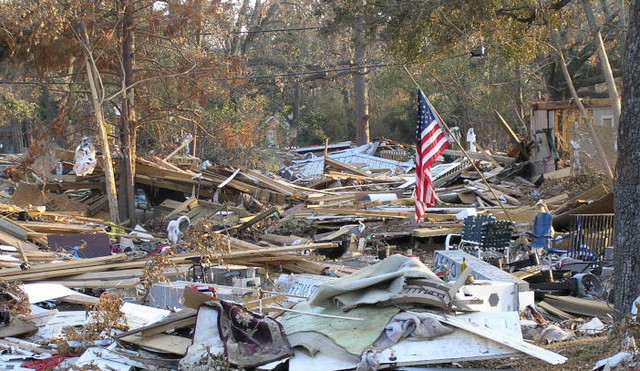
Flags rise all over the coast even before clean-up begins

Flags rise all over the coast even before clean-up begins

Katrina swept into Alabama, too. Flooding engulfed downtown Mobile, and water covered the I-10 causeway over Mobile Bay. The coastal communities of Bayou La Batre and Coden, shrimping centers, were destroyed. Joseph Rodriguez, a fisherman, counted 87 boats tossed from port and deposited hundreds of yards inland, with about 30 landing up in the woods.

(Nobody could foresee that five years down the road, when fishermen in the Gulf have finally recovered from Katrina, they will reel from the BP disaster.)

Indomitable spirit

Indomitable spirit

Many people left and never came back. But those who stayed, stunned, lost, pulled themselves together and began the wearying task of cleaning up. Days before help came, they began to gut lower stories and clear property of debris. American flags were raised and plywood boards with upbeat messages appeared. But there is a long road ahead, years, a long, life-changing recovery from loss and debt. As we shall see, help would come from people all over the country.

Steps to Nowhere Now

Steps to Nowhere Now

A Waveland street, cleared after Katrina
A Waveland street, cleared after Katrina

Bay St. Louis Bridge. Pilings dislocated by surge causes pavement to accordion. Check out new bridge in Part IV

Bay St. Louis Bridge. Pilings dislocated by surge causes pavement to accordion. Check out new bridge in Part IV

Christ Episcopal Church on a small bluff at the edge of the Gulf, surrounded by slabs and leafless live oaks. Photo by Duke University

Damaged belfry, the only part of Christ Episcopal Church left standing at the edge of the Gulf in Waveland, surrounded by tattered live oaks and  piles of debris where once there were homes. Photo courtesy Duke University

Details about Katrina and the Mississippi coast come from Margie Kieper’s series, Katrina Storm Surge published on the Weather Underground web site and from accounts in Wikipedia, NOAA, and newspaper articles. Most photos come from FEMA and NOAA. archives.

The Invisible Coastline:  Part I  Setting the Stage

The Invisible Coastline: Part II  The Inexorable Surge

The Invisible Coastline: Part III Our Impressions, November 2006

The Invisible Coastline: Part IV  Good Works and the Artful Dodge


Posted in Hurricane Katrina, katrina recovery, Mississippi Coast, Storm Surge, Uncategorized | Tagged , , , , , , , , , , , , , , , , , , | 2 Comments

The Invisible Coastline: Part I

Setting the Stage

August 29, 2015 marks the tenth anniversary of one of the most powerful storms to hit the United States in recorded history. It was the wristwatch that caught me. I picked it out of the sand while we were walking the coast of Waveland, Mississippi. We had traveled down there with gardeners from North Carolina and Virginia a year later to help restore landscaping to devastated areas.

While I was doing routine fact-checking for this post I uncovered so many compelling stories that I felt I could not talk about our small involvement without first describing the events of that stormy day. One post became four. Parts I and II tell of the storm and its immediate devastation; Parts III and IV follow up a year later.

Taken from the second story during Katrina by Barbara Bradford, whose husband swam out to rescue the marooned man

In Waveland MS, taken from the second story during Katrina by Judith Bradford, whose husband swam out to bring this man and two others to safety

Before I begin, please take a moment to imagine yourself in the midst of a scary storm. You have not been properly warned about its particular dangers, but you don’t know that. Now imagine that your home and all your possessions are destroyed, but, hey, you are alive. Maybe you scrambled up to an attic or clung to a piece of wedged flotsam, or a neighbor rescued you. You are cold and wet and muddy. And now you wait for rescue. Maybe your 911 call got through, maybe it didn’t before the phones went out.

Note the eye and immensity of Katrina

Note the size of Katrina, the eye crossing the coast of MS after passing through the tail of Louisiana

Gradually you realize that your community as you know it is gone, and other communities are hurting, too. Imagine that there is no grocery store, no bank, no gas station to go to. If you could. But you can’t because piles of debris make roads impassible and, anyway, your vehicle has been brined. If you are lucky you have a boat and its motor still goes.

Now imagine that the rest of the country is transfixed by the devastation of this storm. Scenes of helicopter flyovers and dramatic rescues fill the airwaves and newspapers. Except that almost none of this reporting is about what happened to you and your town.

Instead, the news media reports on apocalyptic events in a city in another state. This city did not experience the storm’s power as you did. In fact, its heralded devastation was caused, not by the storm, but mostly by faulty infrastructure. If you can imagine all that, you will have some idea of what the people of the Mississippi Gulf Coast experienced during Hurricane Katrina, and why they call it the “invisible coastline”.

A postcard view of lovely Beauvoir, finished in 1850, home of Jefferson Davis

A postcard view of lovely Beauvoir, finished in 1852, antebellum home of Jefferson Davis in Biloxi

Many years ago, on vacation, we took a leisurely drive along Rte 90 on the Mississippi Gulf Coast. Later, as tourism became a hot industry, the 50 miles from Pascagoula to Waveland would be called, according to the map, the scenic Hospitality Highway along the beautiful Gulf Coast, featuring artists’ colonies, fishing villages, resorts and casinos.

What we saw back then were gracious old homes that hearkened back to earlier eras. In some places, where the land was naturally hilly, they sat high, and they seemed grand when you looked up at them. Elsewhere, maybe they were simpler, and they hugged sea level. In fact, most of the houses along the coast were pretty basic homesteads, but they had one thing in common: a sense of antiquity and serenity.

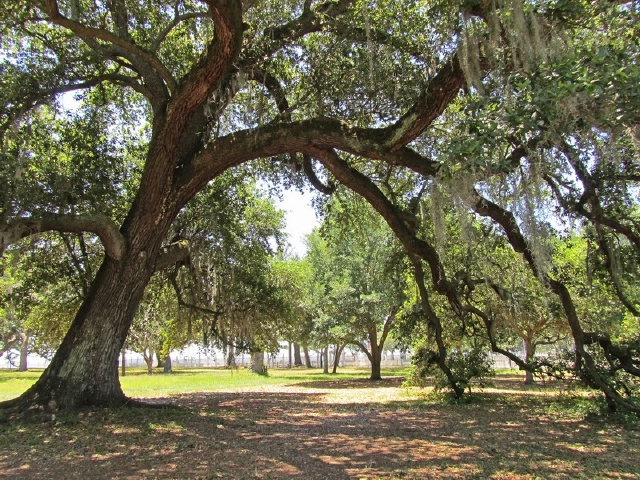
Ancient live oaks added splendor to the coast

Ancient live oaks add splendor to the coast

It was warm and cloudless that day, so we weren’t thinking about hurricanes then. We did not ponder that these coastal towns had been surviving fierce storms for, maybe a couple of hundred years. That historic buildings and old homes were still standing. That the inhabitants are rooted here by generations of family, networks of friends, their occupations, and their devotion to God and their church.

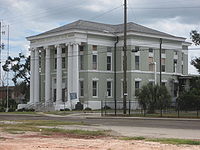
Hancock County Courthouse, another antebellum building, will figure in the nex post

The fine Hancock County Courthouse in Bay St. Louis will figure in the next post

They are, we came to discover, a resilient people who live in tight-knit communities that have long histories. They have indefatigable spirit and a trust in God that will uplift them in the face of tragedy and its aftermath. But I am jumping ahead in the story.

A very detailed and complete Hurricane Evacuation Study by the Army Corps of Engineers exists for the Mississippi coast. It covers topography, population density, vulnerability to hurricane winds and storm surge and presents tailored suggestions for response to major storms. There is also a tool called SLOSH ( Sea, Lake and Overland Surges from Hurricanes) that models and forecasts coastline conditions under all possible storm conditions and intensities. It is highly accurate.

Waveland is west of

Major towns along the Mississippi coast. The Pearl River is the boundary between LA and MS

Yet, despite Camille’s 1969 Category V winds and record-breaking storm surge, emergency personnel did not seem to be aware of study particulars, nor was the general public kept well informed.

A third tool exists, this for communicating with the general public. The Hurricane Local Statement, based on HES and SLOSH findings, informs about anticipated storm conditions in each county affected. The HLS for the Mississippi coast emanates from Slidell, Louisiana. Unfortunately, its televised warnings were general and somewhat misleading, so that many people misunderstood the danger and based their plans of action on how well their location had weathered Hurricane Camille whose winds approached 190 mph at landfall.

Katrina's path. The bayous of LA do not show on this map

Katrina’s path. The bayous of LA do not show on this map

Katrina’s first landfall on August 25th was inauspicious. With 80 mph winds she did little damage as she crossed the southern tip of Florida. But conditions in the gulf favored strengthening and expanding beyond expectations, until Katrina became a Category V storm, measuring about 450 miles wide. By Sunday, August 28th, she was expected to remain powerful at landfall, with the capacity to destroy the coast of Mississippi.

Indeed, the entire coast of Mississippi was destroyed. But not by high winds, which had been the focus of weather forecasts and which, traditionally, inspire primal fear in people. Nor was it flooded by heavy rain; the 8 inches of rain that fell in as many hours did not flood buildings or knock them off their foundations. So what actually happened?

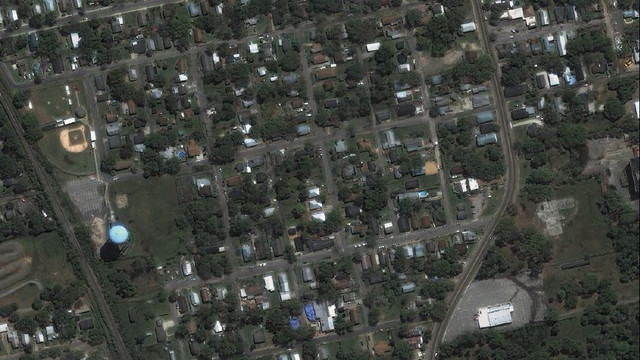
Aerial view of the coast before the storm

Aerial view of the coast before the storm, a nice place to live

After making a second landfall over the southeast Louisiana parishes of Plaquemines and St. Bernard, Katrina drove northeast to make final landfall on the Louisiana-Mississippi line around 8:30 am on August 29th, a Category 3 hurricane with winds of about 125 mph. Her powerful eastern eyewall passed over the coastal cities of Bay St. Louis, Pass Christian and Waveland, later referred to as “ground zero.”

Storm surge map shows greatest surge in Waveland area but surge extended along the coast

NOAA map shows greatest surge in Hancock County, not labeled, but strong surge extended along the coast

125 mph? Frightening? Yes. Calamitous? Maybe, if you lose your roof, or if a big tree falls on your house. But most decently built buildings can handle such winds; in fact the Mississippi coast had handled similar winds in previous hurricanes. (Not that we are recommending hanging around in winds like these, but perhaps this explains why so many old buildings along the coast had withstood 200 years of storms.) No, something else was at work here.

The line on the belfry marks 35 feet, the addition of wave action on top of the storm surge

The line on this belfry in Waveland marks 35 feet. Additional height is added by waves generated on top of storm surge

Immediately prior to Katrina’s final landfall, an unprecedented storm surge of 25 to 27 feet broke over “ground zero” at high tide. Because the storm was so huge, and the east face so powerful, the entire 90-mile coast into Alabama experienced surges of 18 to 27 feet. A hundred communities were battered.

If you have a picture of storm surge in your mind as a wall of water rushing onto land faster than a speeding bullet, erase it. Initially, a storm surge can seem like a benign turn of the tide, a few waves lapping at the shore, each wave a little higher than the one before, but compounding. They are coming

Looks rough but innocuous, doesn't it?

Top, surge begins, then rolls in quickly

in pretty fast, at the speed of the hurricane’s northward movement, in this case, 15 mph. There may not be any white water visible, but conditions can be comparable to a Class IV rapids, barely navigable. Only this is not a current you can outrun. The constancy of the momentum and the sheer weight of the churning water literally beats up buildings inside and out. No house is surge-proof. It may be hurricane-proof, but not surge-proof. Surge is relentless. It takes no prisoners. By the time it comes, it is too late to call 911. Nobody can reach you.

Such was the case on September 8, 1900 when the most deadly hurricane to strike the United States made landfall in Galveston, Texas. Its storm surge caught residents by surprise. 3,000 homes were swept away. 6,000 people were killed in a few hours. The death toll eventually rose to 8,000. Where 20,000 people had lived on September 8th there was not a house standing on September 9th. Looters were shot by vigilantes and mass cremations of unknown storm victims took place to avoid decomposition of bodies where they lay.

Galveston, September 9, 1900

Galveston, Texas, September 9, 1900

What made Katrina’s surge so powerful? The physics of waves and currents are far too complex for me to grasp, but I will try to simplify the process as I understand it. A column of water rotating around Katrina’s eyewall, where winds are highest, intensified as the storm grew more powerful. These currents are unseen in deep water because their energy can disperse into the depths of the Gulf.

Storm surge debris in Pass Christian, MS, August 29, 2005

Pass Christian, Mississippi, August 30, 2005

Once Katrina made her move across the continental shelf, this churning water had no place to go except over the land. Katrina’s storm surge developed its power when she was a Category 5 storm out in the Gulf of Mexico. Even though she arrived on land as a Category 3 hurricane, in terms of storm surge she is considered a 500-year storm.

Beauvoir after Katrina

Beauvoir after Katrina

Information about Katrina and the Mississippi coast come from Margie Kieper’s series, Katrina Storm Surge published on the Weather Underground web site and from accounts in Wikipedia, NOAA and the news media. Most photos come from FEMA and NOAA archives.

The Invisible Coastline:  Part I  Setting the Stage

The Invisible Coastline: Part II  The Inexorable Surge

The Invisible Coastline: Part III Our Impressions, November 2006

The Invisible Coastline: Part IV  Good Works and the Artful Dodge


Posted in Hurricane Katrina, Mississippi Coast, Storm Surge, Uncategorized | Tagged , , , , , , , , , | Leave a comment

The Dances of Summer

Dog Days they’re called, 40 days in July and August when sultry days and nights get man and plants down. The garden is looking tired and I’m tired of looking at the garden.

Until butterflies arrive. They spice up the garden with dances that can mesmerize me. Sometimes there’s only a single flutterer languidly weaving in and around shafts of sunshine, disappearing into shady nooks, emerging, and sailing to a sunshine-flicked blossom for a drink of nectar.

Our Invitation. . .

Our Invitation. . .

Or maybe it’s a spirited pas de deux mating dance full of fluttering and teasing, accepting, rejecting, closing in, separating, and by some canny instinct just missing the gleaming spider webs laid throughout the garden to trip the unwary.

When rivals enter, the choreography picks up and it can be difficult to follow moves by a troupe of three or four fast-fluttering, hovering males maneuvering for favors from the prima ballerina who may dance until she is exhausted. If she is lucky, she may steal a moment on a blossom off-stage while rivals distract each other.

We’ve read volumes about creating butterfly gardens but we never got beyond reading. Designing one? That would take much too much planning. Serendipity propelled our plot into a one-acre butterfly garden that tells me, by the arrival of certain species, whether summer is waxing or waning.

Years ago we had cautioned our builder not to remove any trees. He must have known we were serious because he would, on occasion, apologetically tell us he would have to take out a certain tree that was preventing him from finishing our house.

A little extreme, yes, but we learned soon enough that these native trees and shrubs are the bulwark of caterpillar lives. Wild cherry, tulip poplar, redbay, red maple, oak, spicebush, second-growth residents of our plot, are host plants for the larvae of butterflies and moths.

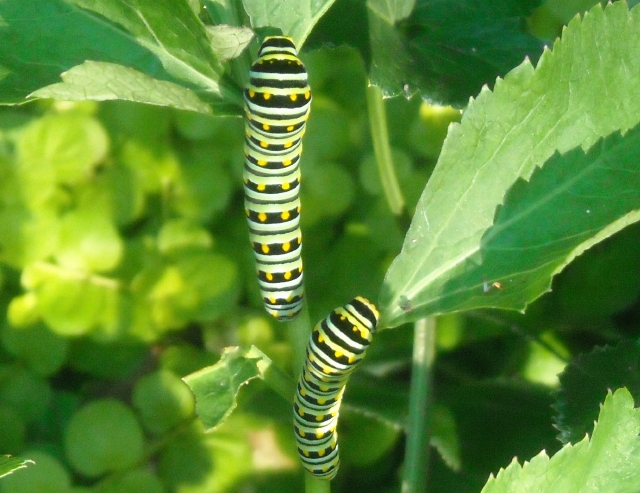
Black swallowtail caterpillars, sometimes called parsley worms, enjoying golden alexander

Black swallowtail caterpillars, sometimes called parsley worms, enjoying golden alexander

So are parsley, fennel, dill and rue. Coincidentally, each summer I resolve to experiment with growing and using fresh herbs when I cook. Since my cooking skills have never risen much above the It’s-five-thirty-and-I-still-don’t-know-what-we’re-having-for-dinner-tonight level, this resolution is quite a leap of faith for me. Happily, my faith has never been tested. The voracious caterpillars annihilate my herbs long before I recall ever making those resolutions. Aw shucks, maybe next year.

As a must-have-it-all gardener, by coincidence, I have managed to scatter a schmorgasbord of delights throughout the garden for the dancers: native shrubs and perennials like phlox, Joepyeweed and sweet pepper bush and non-natives like lantana and butterfly bush. As one plant finishes blooming, another may be in its prime of bloom, or just beginning to bloom, so the butterflies dance all summer.

Here are pictures of some of the dancers in our garden. Rarely can I catch their airborne choreography — they are too quick–so I usually have to be content with snatching moments of stillness.

buttpala2Summer would not be summer if we did not see palamedes swallowtails wandering through our garden. One year there were so many we would meet them fluttering on our paths. Their host plant is the redbay, or swamp redbay, which grows along the banks of our canal. It’s a handsome bay, though its leaves are often blighted by insect galls, which is why it has never been marketed. Native phlox is one of their favorite nectar plants. Note the female’s ragged wing.

buttpalapursA male palamedes in hot pursuit.

buttpala3Three male palamedes hovering. The female is out of range of the camera. 

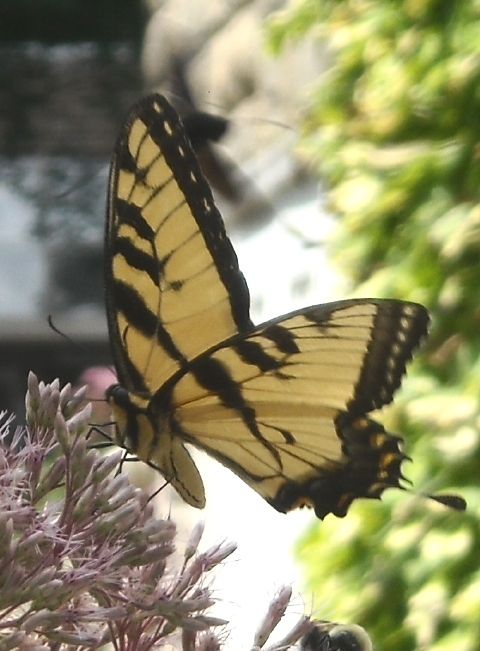
butttigmaleThis male eastern tiger swallowtail is a repeat visitor to Joepyeweed, a tall native plant of moist sites. Its large showy flower heads are composed of many small blossoms that open over time. Once they begin to open, the word goes out and Joepyeweed becomes a fast-food stop, not just for swallowtails, but for an amazing variety of nectar-sipping insects.

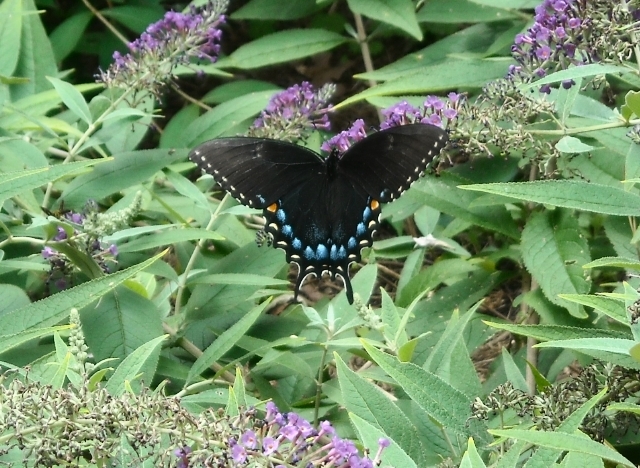
butttigblkFemale eastern tiger swallowtails have two morphs, a light and a dark. For several days I have seen this female feeding on dwarf butterfly bushes called ‘Lilac Chip,’ one of the recently introduced Lo and Behold series. They are seedless and rebloom until frost without deadheading. I trim them occasionally to keep them looking fresh. So far they are staying around two feet, but they are young.

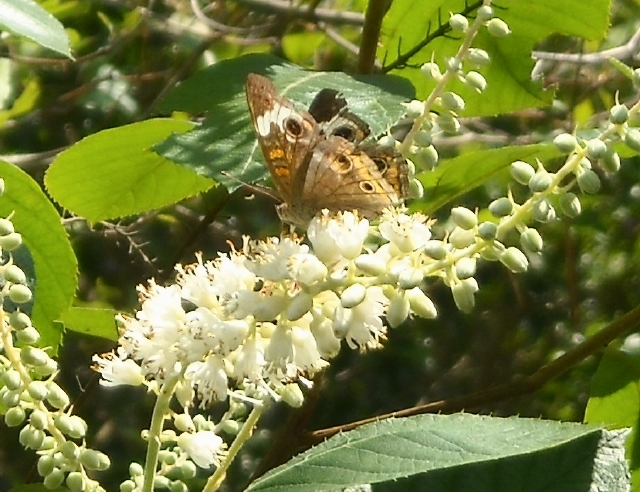
buttbuck3Sweet pepperbush, a native plant of moist areas that does well in gardens, buzzes with activity during its long bloom period. Its heavenly scent fills the air and bumblebees, wasps and butterflies flock to it. Here a buckeye butterfly is nestled in its blooms.

buttbeeEvery (small) inch of this bumblebee is focused on its task, mining for nectar, probing each blossom in the panicle row by row with the speed and efficiency of an assembly-line worker. (As an aside, occasionally I have discovered bumblebees playing hooky inside a folded rose of sharon bloom. Napping, perhaps?)

buttwaspI watched these wasps linked together cavorting through the sweet pepperbush like giddy kids. I doubt they have efficiency on their minds. I had to snap them quickly in repose; they were off in a minute.

buttfieryskipInadvertently I disturbed this fiery skipper loafing on a hydrangea leaf more than once. Since he regularly returned to the same leaf despite the bother, he gave me ample time to photograph him. I wouldn’t consider his coloring “fiery,” but for a skipper he is a show-off. Skippers are the drab guys of the butterfly world, known for antennae that end in pointed, curved clubs. 

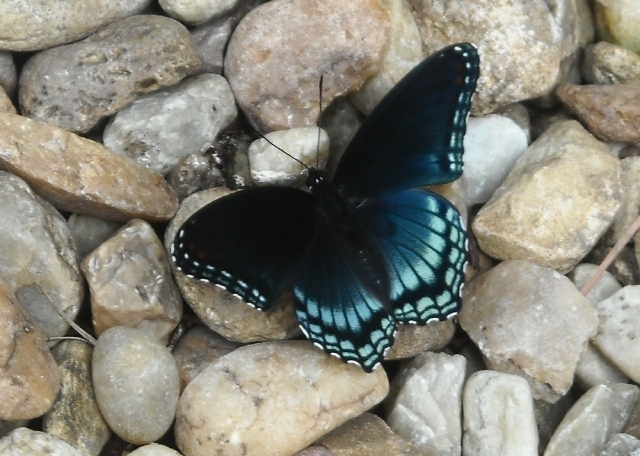
buttredsptpurThe beautiful red-spotted purple butterfly is a member of the Admirals group of brush-footed butterflies, though it is not purple and in this photo the red spots on the forewing are inconspicuous. Its larva feeds mostly on wild cherry, which grows in our woods. We’ve only seen singles each summer, no mating dances, and only for a day or two, often on our driveway as pictured, though one year, late, I spotted one on goldenrod.

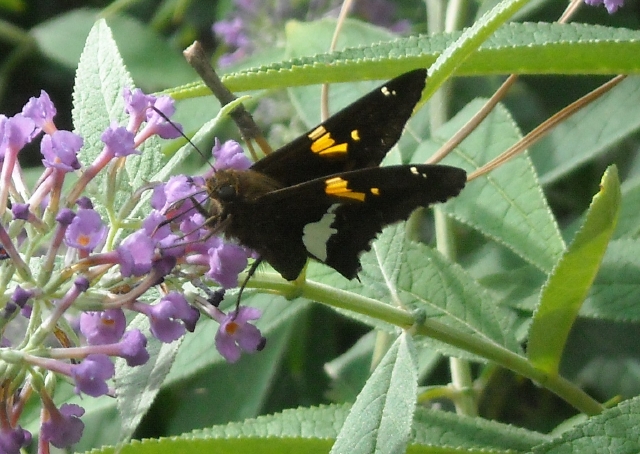
buttsilvspotskipThe silver spotted skipper foraging on Lo and Behold butterfly bushes is another of the brightest skippers we see in our garden.

buttsilvspotskip3Here he is hanging upside down like a bat. What big eyes you have. . .

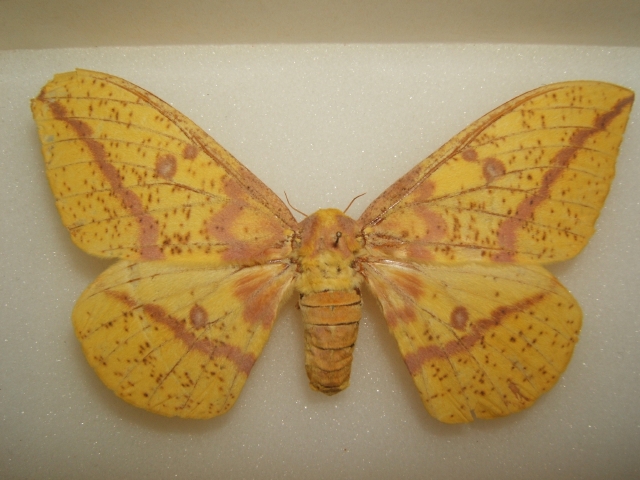
buttimperialmothNo, I am not responsible for pinning this Imperial moth; the photograph is from Wikimedia. Two weeks ago I accidentally disturbed one resting under groundcover at the edge of the woods when I was thinning brush. In terror it took flight, flying so fast and so erratically, I could follow it only with my eyes. Though it was a blur of dusty brown and muted yellow, I knew by its large size and pale coloring that it was a female Imperial moth. The moral of the story: butterflies and moths like an untidy garden; don’t fuss. 

buttargiopThere is one final dance in the garden, and sometimes it is played out by an argiope spider. An orb weaver and cousin to Charlotte, this female spider spins large webs with a bold signature of zigzags in the center. When an intruder blunders into her web, she pounces, paralyzes, and packages it in silk as shown here. Butterflies included, sans wings. Mostly, though, the argiope catches insects we are not so fond of, so she is a garden good guy. And, contrary to rumor, she probably does not eat the much smaller male after mating.

butttigmvertBy cold weather the dancers will be gone, but I know their offspring are safe from the elements somewhere in the garden, waiting to emerge as new dancers next summer.

Posted in butterflies, Hydrangeas, Summer, summer bloom, Uncategorized | Tagged , , , , , , , , , , , , | 1 Comment

The Taming of the Garden

Experimental planting beds in spring

Neat experimental planting beds in spring

The other day I turned my back on the garden—just for a moment, mind you. Well doggone it, that corn grew as high as an elephant’s eye. You are thinking, perhaps, What a bonanza of good eating. Not so. No neat rows here. This corn was scattered through beds, elbowing respectable plants. How thrifty the squirrels! All these plants from a corn feeder we’d put out for them.

Same beds in July

Same beds in July gone wild

While the corn was jumping out of the ground, poison ivy was sprouting from seeds planted by birds after a good meal and launching itself across the yard. Blue Pacific junipers were inviting wire grass to Come on over and grow a spell. Creeping Charlie was leaping and elephant ears were stampeding.

Seems a shame to whack back these late weigela blooms but. . .

Seems a shame to whack back these late weigela blooms but. . .

Streamers were exploding like Roman candles from Lady Banks roses and abelias. Butterfly bushes were rangy. Spring shrubs, revived from the drudgery (to them) of blooming, were nudging their neighbors. Weeds were masquerading as legitimate boarders in the borders.

Enough. Enough. Who’s in charge here?

I am! I said firmly.

Grandpa and Tommy "volunteer to haul choppings to compost

Grandpa & Tommy “volunteer” to haul choppings to compost

I am? I asked, but quietly, so the unruly mob would not think they could take advantage of me. If they had shown the slightest bit of self-discipline, I might have ignored them. Instead, fueled by baths of rain and sunny days, they felt free to crash through the garden.

My curiosity about new volunteers (weeds, usually) and how they would grow and flower (and, yes, go to seed) and my misguided tenderness for waifs causes trouble in the garden to this day. Belatedly, I am coming to believe that truism, If you give a plant an inch, it will take a yard.

The last  yellow swamp iris bloom, a beauty but the plant is a spreader

The last yellow swamp iris bloom, a beauty but the plant is a notorious spreader

So I make my resolution. Today I will become a hardhearted Whacker and Weeder. (Except for those few stray seedlings that may be asters. . . or maybe goldenrod…)

Be firm, I remind myself.

Whacking! Ah, Whacking! Off with their heads! I say like a mad queen as I dash about the garden with my trusty pruners creating piles of trash. Such satisfying work with so little effort. Yes, I do it all with a pair of Felcos. Much more fulfilling to use shears, but in my delirium I don’t want the plants to look hacked.

Once bloom is gone, the daylilies are cut close

Once bloom is gone, the daylilies are cut close

Butterfly bush, whacked half way down. Spring bloomers, divested of hopeful streamers. Daylilies and iris, scissored off. Southern Indica azaleas, beguiling but too big for their britches, cut way back. Oops, left some sticks there. Never mind, there will be no beanstalks in this garden.

Except maybe that six-foot-high mullein in the path that’s just coming into bloom. . .

A spire of mullein. See why I get in trouble?

A spire of mullein. See why I get in trouble?

Hollyhock and foxglove, lopped off or pulled up, depending on how tawdry they look and whether I can coax another year’s bloom out of these biennials. (Mostly I can’t.) For good measure I toss their seeds back in the beds and hope for gifts next spring (see why I get into messes?). Or I store them in a box I will forget about.

Tracy DiSabato-Aust, in her excellent book, The Well-Tended Perennial Garden, discusses how and when to prune perennials to prolong bloom, prevent floppies, and keep the garden tidy. Emphasis is on pruning at the right time, which means planning ahead (not my strong suit), and making decisions (another weak suit) about what gets whacked, pinched, or nipped. Gardening is such a nasty business. I love it.

The "invisible fence" keeps plants in tow naturally. Available on line and at K Mart.

The “invisible fence” keeps plants in tow. Compare top, where plants are reined in and bottom where plants sprawl. From K Mart.

For the pruning enthusiast there are also instructions on how to delay bloom. The idea of delaying bloom would never enter my head. I’m invariably ecstatic over whatever bloom I can get wherever and whenever I can get it, and I am not a fan of staking and pruning.

So I go for easy fixes. The best one yet: cheap, light-weight, low decorative fences plopped in front of totterers and leaners. They are easy to install and a much more natural alternative to staking floppies or whacking rebels.

Unfortunately, when I Whack I expose the tangle of Weeds hiding beneath the Whackees. This requires Weeding, which is not nearly as satisfying as Whacking, but it forces to me to look closely at the scene.

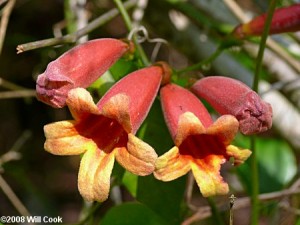
Crossvine once covered an old locust with blooms, now it puts roots down everywhere. Will Cook photo

Crossvine once covered an old locust with blooms, now it puts roots down everywhere. Will Cook photo

Most times I wish I hadn’t. I usually see more work. Sometimes I make delightful discoveries, such as plants I’ve forgotten about that are growing happily without my care, but maybe they’d like a rescue from the rowdies and a place in the sun.

I concentrate on the tough weeds we inherited with the land: Virginia creeper, Japanese honeysuckle, greenbrier, trumpet vine, poison ivy, crossvine, and wire grass.

Before Isabel clobbered so many pine trees, blooms of trumpet vine fed hummingbirds. It's still trying to find trees. Ocracoke Island Journal photo

Before Isabel clobbered so many pine trees, blooms of trumpet vine fed hummingbirds. It’s still trying to find trees. Ocracoke Island Journal photo

These are repeat offenders and will never recognize my authority. They laugh at me behind my back.

I should mention that old romper, creeping Charlie, who is irksome but doesn’t qualify for the big leagues. His shallow-rooted streamers will take over in a season, but they pull easily, especially if they set down roots in compost. They mound into large tousled bundles that are most gratifying to a gardener like me who views big piles of trash as a grand accomplishment. Charlie’s good nature about being pulled up probably comes from knowing he’ll be back next year from mere slivers of roots that resisted my entreaties.

Creeping Charley, nice groundcover but it will cover your plants, too

Creeping Charley, nice groundcover but it will cover your plants, too

Tough, aggressive wire grass requires a more devious approach. Once we tried some four-star grass killer in flower beds, but it knocked the good guys unconscious and the wire grass took revenge next season.

We do not argue with wire grass. We resolved the juniper-invitational problem by digging up the juniper and replacing it with a wide ribbon of rudbeckia goldsturm. We call this solution “cosmetic starvation.” It is an attractive way of shading out most of the grass and keeping whatever makes its way above ground hidden from view.

Rudbeckia holds its own against wire grass

Rudbeckia holds its own against wire grass

Nothing in this world is perfect. Rudbeckia can be as wandery as wire grass, so we had to figure out a way to keep it from ravaging plants that were flanking it. We finally sank a 1 by 6-inch plank along the length of the flower bed. This fix has been in for a few years and, except for an occasional intrepid jumper, the rudbeckia remains contained.

When I am tempted to grumble about grass that pops up after the flowers are deadheaded, I remind myself that I have never spent any time pulling grass in summer heat and humidity.

Cut and Paint is another relatively successful technique I use. (Keep that word “relatively” in mind.) It works on trumpet vine, Virginia creeper, poison ivy, catbrier and cross vine.

We ignored the  elephant ear poking timidly up in spring. The bold look is grand, but not all over the garden

We ignored the elephant ear poking timidly up in spring. The bold look is grand, but not all over the garden

I clip the vines as close to the ground as I can and paint them with straight glyphosate. This can be tricky business. To reach the source of the vine I must crawl through tightly planted beds balancing pruners, paint brush and a jar of the herbicide. If I am not careful, I might paint a plant I like.

In all honesty, I only undertake this task when I feel I must do penance of some sort. Mostly, I do Pulling and Ripping, which are grand for releasing aggression but not for eradicating weeds.

Lizard tail, a pretty native needs to stay in ponds because it really would take over an entire yard

Lizard tail, a pretty native needs to stay in ponds , otherwise it romps with abandon. Sue Dingwell photo

As for elephant ear and lizard tail, Cut and Paint does not work on them. They travel the world by stolons that seem to be indestructible. Our elephant ear has popped up 50 feet from where it was originally planted. Lizard tail, an agile rascal that is native to eastern swamps, jumped out of our pond and waltzed around the back yard clear up to the front yard.

These require patient pitchfork-and-spade drudgery after a good rain has muddied up the soil. While we’re digging, the plants tell us that if we are even more patient, they’ll see us next season.

This roadside aster escaped into my beds, knowing I am a  softie, becomes a froth of white in fall

This roadside aster escaped into my beds, knowing I am a softie. It becomes a froth of white in fall

Japanese honeysuckle is the winner of big-league weeds. But we’ve established a truce: I rip away at the vines when they threaten a plant, and they grow where they want.

At least we don’t have kudzu.

And so the garden rolls on. Next season will bring new blooms and new challenges for Whacking and Weeding.

Posted in garden maintenance, invasive vines, Summer, Uncategorized, wildflowers | Tagged , , , , , , , , , , , , | Leave a comment

Time and the Osprey and the Shadbush

I hear high-pitched keening and I see soaring birds, and I feel privileged to witness the wonder. Our osprey have returned.

Osprey preparing to dive. NASA photo

Osprey preparing to dive. NASA photo

Half a century ago, an osprey was a rare sighting. They’d consumed so many DDT-contaminated fish, their eggshells were too brittle to survive brooding, or hatchlings were so deformed they died soon after birth. Time, and the removal of DDT from the insecticide arsenal, have granted the osprey a hearty recovery.

Today, they’re nesting in Albemarle Sound. Until the decrepit cypress tree they used as a platform for their twiggy, higgledy-piggledy nest got felled by one hurricane or another, they nested right down the canal from us. A couple of years ago they moved to more substantial quarters on another canal, but we still see them overhead.

Mother stays on the nest while Father goes fishing

Once eggs ae laid, Mother remains on the nest while Father goes fishing. Tom Middleton photo

Year after year they’ve returned on schedule, around the first of April. After their 3,000-mile trek from Argentina, they spend some well-earned time carouselling the skies, performing daring aerobatic duets above the trees. In quieter moments, they become domestic, rearrange their nest to suit.

They are a majestic pair, six-foot wing span, white underbellies and white heads, deep and steady wing beats. The crook in their wings and their bright white heads make them easy to identify. Their dives are spectacular affairs, feet-first splashes, and we gasp with panic, wondering if these bulky birds will ever rise from the water with their prize.

Fishing

Strong talons wih tubercles like velcro are holdfast for slippery fish, but a large fish is still a challenge for a bird weighing less than four pounds. About Falconry blog

Shame on us worriers! Ospreys are meticulous about oiling their feathers, and their hollow bones are almost weightless. Still, we are relieved to see this bird take off, having somehow aligned the slippery fish headfirst into the wind, aerodynamically streamlining his profile.

I look away from the sky and hunt for the blooms. It must be time. Yes, they are there, a wispy constellation of white that would be inconsequential if they weren’t among the first in spring. In our garden the shadbush bloom can be upstaged by more flambuoyant bloomers. At the edge of a leafless woods, though, it sparkles, the first splash of white you’ll see in spring.

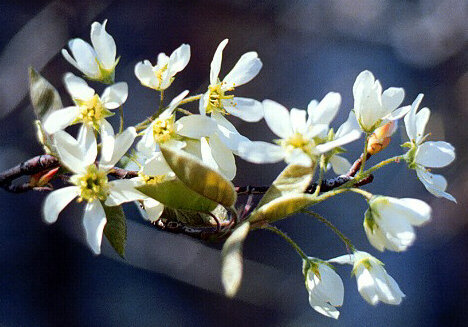
Shadbush blossoms against a spring sky

Shadbush blossoms against a spring sky

Given rich moist soil and light sun it makes a nice small tree with edible, bright-red-with-a-hint-of-purple berries that ripen in June to give birds their first taste of fresh fruit after winter pickins’.

The shadbush is hard to find in nurseries but worth the hunt. Few other trees are so closely interwoven with the life of early colonists. The affection they felt for it comes through in the variety of names they gave it:

Small but beautiful

Small but beautiful

Juneberry, because its berries were used in jams and jellies, pies and muffins, steeped for medicinal teas and dried for later treats. Or they were eaten right off the tree, in fierce competition with thrushes, mockingbirds, orioles, even woodpeckers.

Serviceberry, because the plant bloomed when the first funeral services were held for those who had died after the ground was frozen.

Luscious berries. Photo by Wildman

Luscious berries. Photo by Wildman

Sarvis, because it reminded homesick colonists of an Old World tree by that Latin name.

And shadbush, or shadblow, because the tree blooms at the same time the shad are running. Like their relatives, herring and alewives, the shad leave the sea each spring to swim upstream to spawn in fresh water.

Stories tell of rivers boiling with fish, never-ending streams of them, dark blue-green and silvery, teeming toward spawning grounds, a joyous time of plenty for folks who lived along the water. Along the east coast this annual event was awaited with eagerness.

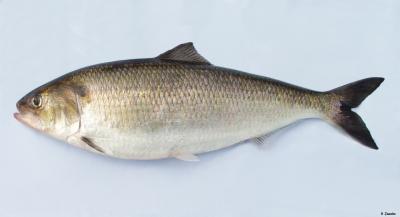
The shad, a spring mealtime staple in spring

The shad, a spring mealtime staple in spring

It’s no coincidence that osprey return from their winter sojourn and begin nesting at the same time the shad are running. Spawning herring and shad make for easy catches, fast food.

And what prompts the shad to run its race up rivers to spawn so dependably? One of the triggers is a rich food supply! Shad feed, no feast, on plankton, microscopic plants and animals that “bloom” in the sunlight of spring.

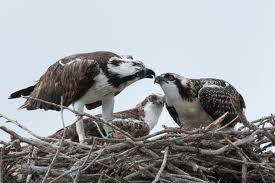
A new cycle of life. Cornell Ornithology Lab photo

A new cycle of life. Cornell Ornithology Lab photo

It all takes place with consummate timing, one event following another, linked fast in a great web of time and weather and circumstance that we barely understand. Time, in days when people fished and hunted and went a-berrying for their suppers was told not only by the clock, but by when the shadbush bloomed, the shad spawned, and the osprey returned.


Posted in Uncategorized | 1 Comment

Midsummer Lights

Dark skies. Strobe lights. Log-splitting thunder. Wind twisting trees. A riproaring summer storm was upon us. We waited it out (nothing else to do) hoping none of the trees would twist and fall.

A brilliant sunset after the storm

A brilliant sunset after the storm

After the rage, a last grumble or two, then peace and an early dusk. The woods, shadowy, shut up for the night we thought.

There were other forces at work. Was there a signal? Out from the ground, hundreds of winking lights rose in waves, dancing like stars tumbled to earth by the storm. But this was not fantasy.

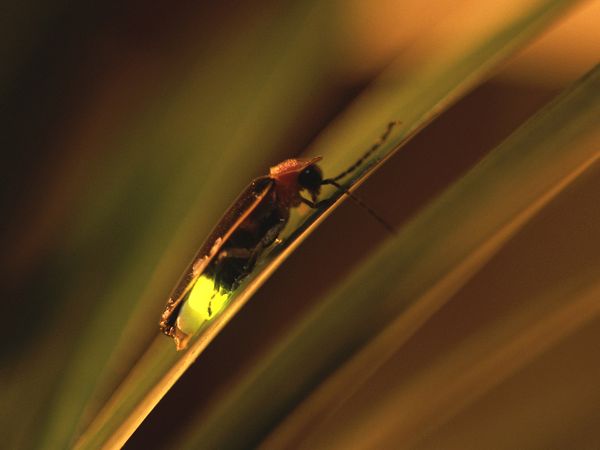
Fireflies were waking and going sparking. For a while they twinkled for our pleasure. Then, casually, silently, they drifted off, back-packing their mini-torches to find a mate.

Lighting up the woods. Photo by Jacquelyn Glelsner

Lighting up the woods. Photo by Jacquelyn Glelsner

Had all these beetles reached grown-up mating age at the same time? Were the woods their hangout during the day until they went about flashing? Did the storm prompt their rising in unison?
The little lights brought back childhood memories of starry summer evenings when we would chase fireflies and herd them into mayonnaise jars with hole-studded lids and wonder at their glow.

Elizabeth Madox Roberts says it best.

Memories. . .julesofarc.files.wordpress

Memories. . .julesofarc.files.wordpress

A little light is going by,

Is going up to see the sky,

A little light with wings.

I never could have thought of it,

To have a little bug all lit

And make it go on wings.

Art inspired by fireflies. By Adele Lorienne, Meadow Haven

Art inspired by fireflies. By Adele Lorienne, Meadow Haven

That was years ago. We’d forgotten how much we missed those little lights. Now and again we would see some flickerings, but there was no magic, for the magic of fireflies lies in their dancing numbers. Bright city lights, pavement and pesticides had knocked them off.

Not until that summer when we moved to the swamps of eastern Carolina twenty-five years ago, did we see fireflies again during evening walks. My, did we see fireflies, winking bright as saucers against woodland edges. (Rarely in deep woods; no point shining your light under a thicket of leaves.)

We would time their blinks and try to establish patterns that would tell us how many different species lived in our neighborhood. But most only blinked once every four or five seconds (Once we saw two energetic souls light up with a series of twelve fast blinks.), so we guessed there was only one kind of firefly here.

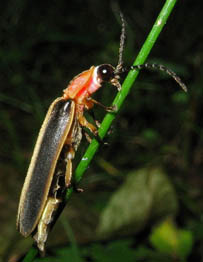
Male on grass. Photo by Taylor S. Kennedy

Male on grass. Photo by Taylor S. Kennedy

Occasionally we would see a solitaire, motionless, blinking on and off as tireless as a lighthouse beacon. Was he waiting for that special female to blink back to him from her hideaway in weeds and grass?

While the sky was still dusky we could see bats dipping and whirling, gathering their evening meals, as quick on a dime as fireflies are slow on a nickel. Occasionally they’d swoop low and once a couple, locked in (amorous?) embrace, dove at us, so fast we had no time to react. Just before we expected a splat in the face, they split and careened away. Bat sonar really works.

Fireflies and star trails in this time lapse photo. From www.firefly.org

Fireflies and star trails in this time lapse photo. From http://www.firefly.org

After the evening star rises and the sky turns luminous indigo and the breeze quiets, an occasional firefly will venture above the treetops and to our imperfect eyes, he seems to merge with the constellations. One last flight before retiring for the night?

Green tree frog in lusty song. Photo by Evan Pickett

Green tree frog in lusty song. Photo by Evan Pickett

On some still nights we can feel the silence of their lights. On other nights, especially after a good rain, we are overwhelmed with the raucous songs of frog-impresarios wooing mates. Along with insect calls, and maybe a bobcat scream or a night heron squawk, this light and sound show beats any Imax production.

During one evening walk we saw the moist grass on the verge glowing with greenish-white neon auras. A closer look showed small creatures with segmented bodies that looked like flat, stubby caterpillars. Firefly larvae! An odd place for them, next to the road, but they were on the move. We never saw them again. Despite their apparently random wanderings they must have found suitable bed and board in the brush until the following spring.

That night on the way home we had a good time singing our version of the Mills Brothers’ classic that hit the charts when we were in high school. More memories.

Firefly larvae glowing in leaf litter. From www.firefly.org

Firefly larvae glowing in leaf litter. From http://www.firefly.org

Glow, little glow-worm, glimmer, glimmer

Glow, little glow-worm, glimmer, glimmer

Lead us lest too far we wander

Love’s sweet voice is calling yonder

Glow, little glow-worm, glimmer, glimmer

Glow, little glow-worm, glimmer, glimmer

Light the path below, above,

And lead us on to love.

Firefly larva emerging in this dramatic photo by Terry Lynch

Firefly larva emerging in this dramatic photo by Terry Lynch

Our community has evolved over a couple of decades. Then it was a weekend retreat, now it is home to permanent residents. Haphazard clearing of woods where firefly larvae lived broke the forest up into islands that were less inviting to wildlife (and fireflies) than are contiguous, unbroken tracts.

Security lights on new homes banished darkness, creating bright patches that snuff out firefly signals. Even a few passing cars that scatter light across the roads temporarily stop the pulses.

Then there was the run of dry years that may have discouraged survival of the young. Firefly-magic seemed to be fading even here, where we thought it would always be a bright evening welcome to summertime.

Female waits hidden in grass and signals back to a male that suits her fancy, from www.firefly.org

Female waits hidden in grass and signals back to a male that suits her fancy, from http://www.firefly.org

Too bad, because the firefly is one of those hardworking unsung heroes in meadows and woods. In our yards, too, if we let them in.

The cruising males we see will only be around for a couple of weeks, enough time to mate. Neither they nor the egglaying female will eat. But larvae living in leaf litter and rotting logs are eating machines; their fare includes a gardener’s nemeses: mites, slugs and snails. Good reason to keep pesticides out of the yard and haphazard municipal spraying out of the neighborhood. (Ironically, a search for fireflies on Google turns up an ad for a pesticide applicator.)

Fireflies mating in the female's hideaway, male below. Photo by Dr. Sara Lewis, evolutionary ecologist at Tufts University

Fireflies mating in the female’s hideaway, male below. Photo by Dr. Sara Lewis, evolutionary ecologist at Tufts University

Good reason to leave parts of the yard messy, too. Meadows of grasses and wildflowers left unmowed can provide boudoirs for females who wish to signal an invitation to males for a mating date.

And maybe consider dimming outside lights, too. Even the shine of a full moon will interfere with reading signal-beams meant for their eyes only.

This year, the rainiest in a decade, we are seeing more fireflies. Their sparks today are only a glimmer of long-ago evenings, but we see signaling in our garden and at the edge of the woods, in shaggy clearings and around unmowed roadside ditches.

During the long mating the male gives the female a nuptial gift of protein which may increase number of eggs produced. Tufts University photo

During the long mating the male gives the female a nuptial gift of protein which may increase number of eggs produced. Tufts University photo

Early one evening I found several hovering over a patch of periwinkle in the garden, quite a congregation considering they usually operate as loners. As I watched their blinking, an answer came from among the leaves. One firefly, the anointed one(?), blinked back. After an exchange of blinks (my place or yours?) the two disappeared among the leaves, lights out for the night. No, dear reader, I did not follow.

Still, I keep thinking about all those fireflies caught in jars on summer’s eves. I, who was always last on the team in grade school, remember the ecstasy I felt when I could actually overtake and bag a meandery firefly. So, why don’t night-birds or bats chase them?

Sex is not safe in firefly land. The species pictured preys on other species, answering males and devouring them when they  close in. www.firefly.org

Sex is not safe in firefly land. The species pictured preys on other species, answering males and devouring them when they close in. http://www.firefly.org

It turns out that probably the major enemies of fireflies (besides progress and pesticides) are little kids with mayonnaise jars. Predators know instinctively, or after one brief encounter, to avoid the lethal wink of that languorous flier. It’s bad tasting — and most likely poisonous.

So, it looks like I was the bad guy in the life of a firefly. I can’t remember. Did I ever release my catches? Or did I leave them trapped and forgotten on a windowsill?

I’m glad they didn’t hold a grudge. I kind of like them lighting up my garden.

Posted in conservation, fireflies, Summer, Uncategorized | Tagged , , , , , , , , | 1 Comment

Sunbeams in my Garden

Overheard in the garden after a long rainy spell. . .

You’re looking lovely as ever, dear Mrs. Cottontail. Tell me, can you help me find the sun today?

No, I’ve not seen the sun, Wolf. And don’t sweet-talk me like you did Red Riding Hood. You can’t worm your way into my tales.

Well, have you seen the sun, elegant White Rabbit?

No, no, no, and I can’t look now. I’m late I’m late I’m late. And you’re not invited.

Goodness, gracious me, everyone, listen up, listen up, the sky is falling. Can’t you feel it on your heads? That’s why there’s no sun.

No brain at all, some of them. No brain at all.

And what are you mumbling about, Eeyore? You can’t say you’re not informed, because I just informed you.

Henny Penny, the sky is not falling. Anybody knows that what’s falling is rain.

He’s right, Henny Penny.

You’ve got it all wrong, Eeyore. And the rest of you, too. I’m telling the king.

Wait everybody. I boldly interrupt this odd convention of storybook characters. Before you go back to the pages in your books, can anyone tell me where I can find the sun?

Ahem, dear lady, maybe you should look around your garden. Maybe the sun is hiding in your garden. And while you’re about it, see if you can find Mole and Ratty, too. They promised to go messing about with me today.

Before I can say thank you, they scatter.

Of course, the sky hasn’t fallen as Henny Penny says. Nor is it hiding in my garden. But Toad may have a point. Maybe when blossoms glow like gold on days of pewter and lead, it’s because they’ve caught sunbeams that have gone missing. Here are some pictures of plants that bring sunbeams to our garden from early spring through late fall.


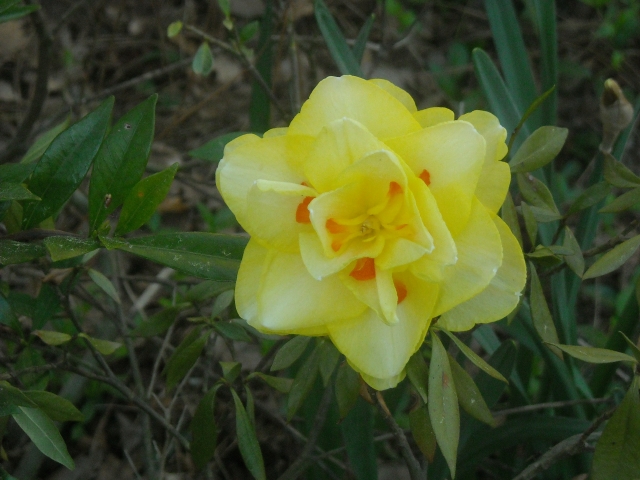
Daffodil 'Tahiti

Daffodil ‘Tahiti

Daffodil/Narcissus ‘Tahiti’: The orange flecks really brighten the petals of this daffodil, don’t they? They remind me of flouncy petticoats. For us this daffodil blooms fairly late in spring, so its fresh clean look is a nice surprise when other daffodils are fading. They don’t get the full sun in our garden that daffodils would like, but  our dry summers and wet winters suit them well. I look forward to them every year.


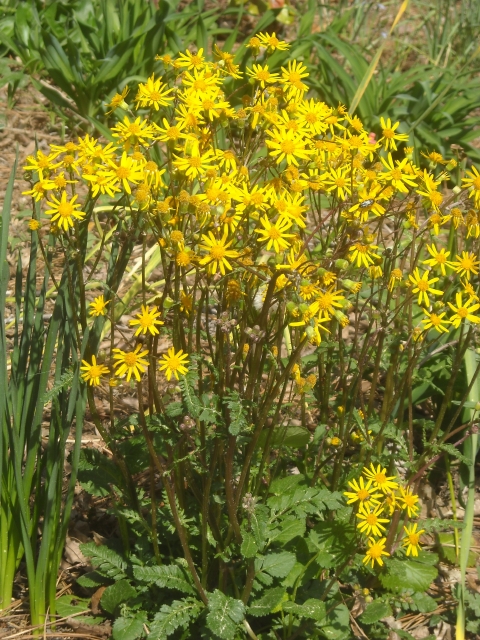
Golden Ragwort

Golden Ragwort

Golden Ragwort: (Senecio aureus or Packera aurea) A native woodland spring bloomer before trees leaf out, rarely used in gardens. Too bad. Bright dazzle-your-eyes gold dandelion-like flowers rise above handsome foliage. Leaves, purple on the undersides, remind me of violet foliage and makes a nice groundcover all season.

Seedheads are tufty puffs that fly about on a breeze, but seeds rarely take hold for me. Instead, I divide the plant in spring, careful to place new plants is a moist, somewhat shady area.This picture captures its somewhat rangy character, and maybe that’s why other people don’t plant it.


Hybrid Columbine

Hybrid Columbine

Columbine: (Aquilegia sps.) I don’t know where my yellow columbine came from. It seeded in behind my back somewhere in tme and bloomed this year during our rainy spring.

I love it. Will it be back next year? Not looking good. The plant is not strong and may very well disappear before summer is over. Maybe it will drop a seed that will surprise me in some future year. Perhaps a sunbeam or two will revive it.

Its relative, the native columbine is a tall, strong grower and seeds prolifically in gardens here. Some people think it is weedy, but I savor the red and yellow blooms.


Coreopsis 'Sunray'

Coreopsis ‘Sunray’

Coreopsis: (Coreopsis grandiflora) A native spring/summer bloomer. In other people’s gardens coreopsis grows in waves, returning year after year and seeding in. The challenge for those gardeners lies in maintaining order among reckless extravagance. Fortunately, I have been the lucky recipient of this extravagance. Unfortunately, said plants turn stingy as soon as they touch my soil. Those that survive are a real treat.


Southern Indian Azaleas

Southern Indian Azaleas

Azaleas: (Southern Indian Hybrids) There’s a hint of late-afternoon sun shining through rain clouds, casting its golden spell over the leaves on these evergreen azaleas so well suited to the south. We grow ‘George Taber,’ ‘Mrs. G.G.Gerbing’ and ‘Formosa’ and keep them pruned to about four or five feet. They are less palatable to deer than other types of azaleas. Massed, their pale leaves act like a tranquilizer in our pell mell garden.


Missouri Sundrops

Missouri Sundrops

Missouri Sundrops: (Oenothera missouriensis) Native. The quintessential sunshine blossom. A daytime relative of the evening primrose, in late spring its blooms explode. After deadheading, the stems are best camouflaged by other plants.  In fall I find ground-hugging rosettes, precursors of new plants. Mine are well-traveled: from a neighbor’s yard to mine, then up to  New Hampshire and back to me when mine succumbed to drought.


Yellow Flag Iris

Yellow Flag Iris

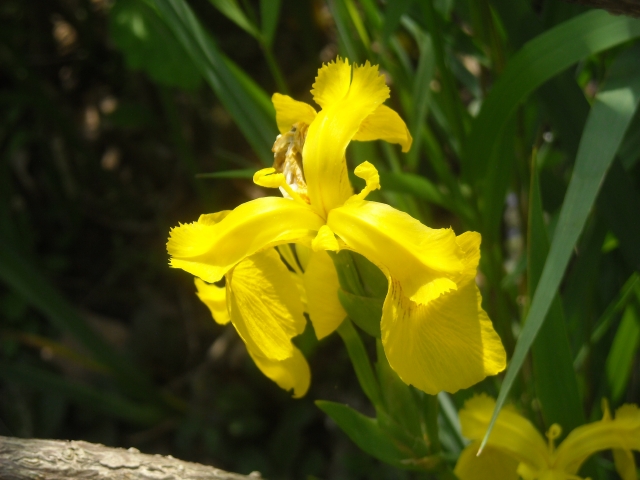
Yellow Flag Iris: (Iris pseudocoris) One evening these iris, which we grow in a ditch by the road, glowed in the western sun. I did not take advantage of that moment of glory, so, like the proverbial fish, my prize photo got away. I once thought it was native, a relative of blue flag, but the Latin name translates as False Sweet Flag. These iris are vigorous spreaders, and can edge out natives.


Rudbeckia 'Irish Eyes'

Rudbeckia ‘Irish Eyes’

Rudbeckia Irish Eyes: (Rudbeckia ‘Irish Eyes’) Despite the name, it’s a native like all other rudbeckias. The centers of the large daisy flowers are a pale green. They are light and airy and even when the air is still, they seem to dance in the garden. The bloom is similar to that of cutleaf coneflower, but on shorter stems and earlier. For us, bloom begins in late spring and continues into summer. Collected seed generally comes true.


Boston Ivy 'Fenway Park'

Boston Ivy ‘Fenway Park’

Boston Ivy: (Parthenocissus tricuspidata ‘Fenway Park’) Not an ivy, but a relative of Virginia creeper. This goldy-chartreuse gem is named for the Boston Red Sox stadium. Here it is climbing the faux stone applied to our garage after tree damage from Hurricane Isabel.

It would like a spot with some afternoon shade, as it tends to lose color in summer sun, but it’s on this wall forever. You can’t easily take Boston Ivy down once established because its frog-toes-look-alike suction cups from holdfasts remain after the ivy is gone.

Still, we love it. It makes us feel that we were to the manor born.

St. Johnswort

St. Johnswort ‘Sunburst’

St. Johnswort: (Hypericum frondosum ‘Sunburst’) This handsome spring-summer native is a cheerleader. Petals are inconsequential, but brilliant pompoms of pollen-laden stamens are a magnet for bumblebees. The bees’ speed and efficiency gathering pollen into “baskets” on their legs is a wonder. Happy and hardy in good sun. Our original died after heavy shade encroached.


Cutleaf Coneflower

Cutleaf Coneflower

Cutleaf Coneflower: (Rudbeckia laciniata) Not a coneflower. Like all rudbeckias, a native summer bloomer. It grows best in moist soil and is a carefree, vigorous spreader that makes a handsome groundcover all season. Late summer it sends up tall stems capped with masses of yellow daisy-like flowers. But the real show begins when goldfinches alight on the waning flowers and pick over the seeds.


Goldenrod sps.

Goldenrod sps.

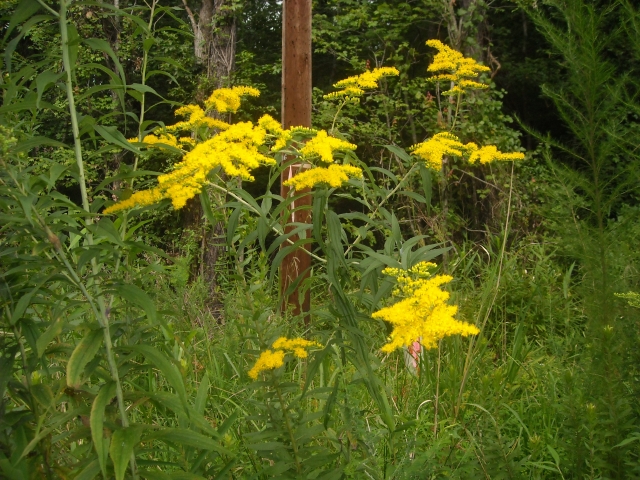
Goldenrod: (Solidago sps.) After seeing exuberant goldenrod growing in the gardens at Anne Hathaway’s cottage in Stratford-on-Avon, I wanted goldenrod in my garden, coarse stems and tough leaves included. Errant singles I pull, but I leave clumps if they are polite to other plants. Sometimes they are not, which is why the garden turns into a jungle as summer wears on. I leave flower heads for birds to forage and cut plants down in spring.


Cutleaf Coneflower

Swamp Sunflower

Swamp Sunflower: (Helianthus angustifolius) A native fall bloomer. Tall, with narrow leaves, the plant sometimes looks like tangled hair, but its blooms are a knockout, oases of pollen and nectar for late-browsing insects. It grows easily in moist places but needs room in a naturalized area. (Not near the front door unless you are a nature nut, which I may be, but there are limits.) It reseeds because I leave seed heads for the birds, but seedlings are easy to pull.

And let us not forget the highlight of the early summer garden: the yellow Daylily, a charmer in spite of its frazzled blooms here. After a week out of town, I will be snapping away, and it won’t be photos.

sundaylily

No matter the weather, I have plenty of sunshine in my garden. . .

Posted in Birds, fall bloom, Native Plants, Seeds for birds, spring bloom, Summer, summer bloom, wildflowers, yellow flowers | Tagged , , , , , , , , , , , , , , , , , , | Leave a comment

Our Fabulous Plant Sale

Which we almost didn’t hold.

Empty beds and sticks in April

Empty beds and sticks in April. Green plants in rear are purchases being held for planting in our own garden

We had all the reasons. Spring was late this year. The garden looked like it had bad hair every day. The potted plants were brown or twiggy or leggy. It all looked so shabby we thought briefly about escaping to a condo. So we kept mum about our May day that had, in a decade, apparently become an anticipated community event.

We learned this one evening in early May when a stranger came knocking on our door. She figured this was the right place because of all the plants in the yard. She said she knew our plant sale was some time in May and she didn’t want to miss it because she was bringing some friends.

By May a veritable jungle

By May a veritable jungle

We looked at each other. Sunday, May 26. Snap decision.

We said good night, wondering if we really wanted to do this. Visions of potting plants, writing reams of labels, repairing signs, fertilizing, pruning and a hundred other tasks flashed through our minds. Generous rainfall and nippy temperatures had not made us enthusiastic about getting outside and dirtying up knees. Now we had no choice.

Decisions Decisions

Decisions Decisions

Hallelujah! Sunbeams replaced raindrops and Lady Spring dashed in, apologizing for her late arrival by squandering glorious, bright bouquets. Plants stopped dallying and started growing. Day by day the garden became more lush. Dead sticks came to life; we could finally distinguish good plants from the weeds that had been running amok.

By Sale Day the potted hydrangeas were actually ready to bloom. Too bad they had looked so tacky in April we ignored them and never gave them the pruning they needed. What a bunch of scragglers they were, but they were healthy scragglers and people bought ’em because you can’t believe our prices.

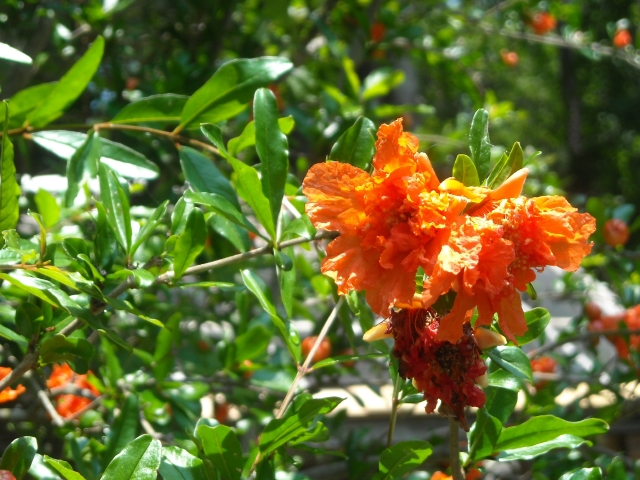
Flowering pomegranate is a good grower and is sought after

Flowering pomegranate is a good grower and is sought after

Our sales feature a wide variety of plants: camellias, hydrangeas, flowering shrubs and trees, natives, hostas, perennials and annuals. We take stem cuttings, do air layers, make divisions, grow from seed, con seedlings/young plants from family and friends–anything that works for propagating a plant. We give our plants some help from fertilizer, but we don’t force them or fuss over them with pesticides.

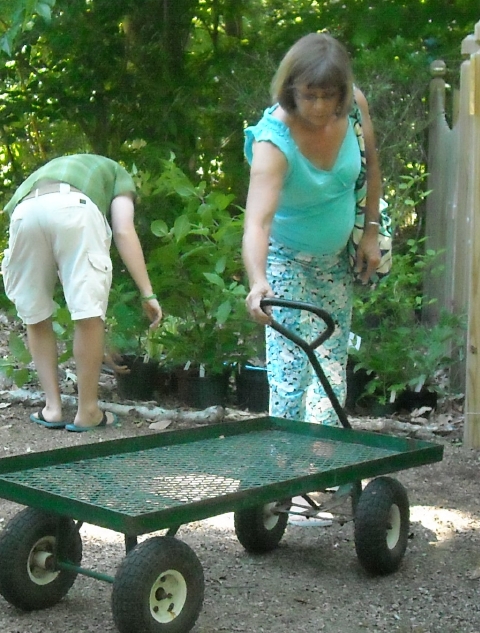
Collecting the stash before wheeling it to checkout

Collecting the stash before wheeling it to checkout

Propagation can be time-consuming if you hover, but over the years we’ve found that a little benign neglect can work wonders. It’s like Christmas in summer when you stumble on forgotten plants and they’re growing just fine without you. Since we only work with stalwarts from the garden, we’re not slaves to our potted plants, and we can be pretty sure that when they leave us, they’ll take a little benign neglect in stride.

The sale itself is only 2 hours during one afternoon, from 2 to 4, but we usually sell more than 300 plants. Except for 3-gallon camellias that are pricey (ten dollars), the rest sell for two, three, or four dollars, and we give a bunch away, too. As far as inventory goes, it’s mostly in my head, which is fine, because by Sale Day my abbreviated handwritten notes on a couple of wrinkled pages are so blurred they’re barely legible. (Do you think we’ll ever make it to the Fortune 500 list?)

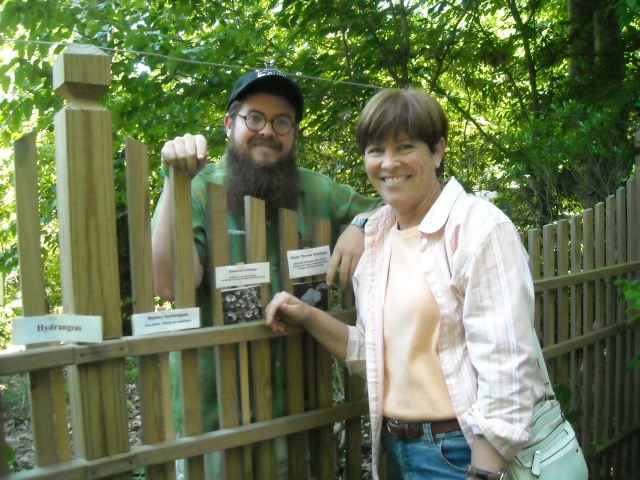
Cari and son Shea from the Outer Banks relax after stashing their finds

Cari and son Shea from the Outer Banks relax after stashing their finds. Note plant signs and pictures

We keep prices low because we want people to experiment with lots of plants. We figure that if you choose a variety of plants, your garden will come alive with birds, bees and color. To guide gardeners in their choices, we put out over 150 plant-care signs, and people really do read them.

Visitors start queuing up at 1:30. Cars line both sides of our narrow street. Neighbors arrive pushing wheelbarrows. Some wait patiently, others use the time to poke around our garden. At 2 pm the fast-walk to the sale begins.

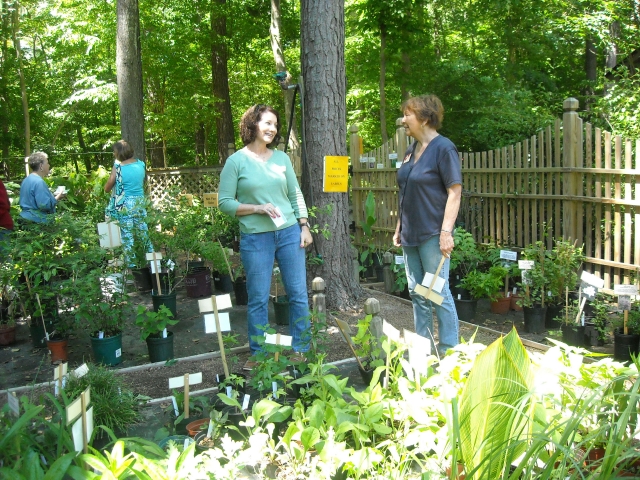
Linda shares a light moment with a visitor

Linda shares a light moment with a visitor

We couldn’t do it without good friends and Master Gardeners who have both garden smarts and common sense. It helps that they have a sixth sense for divining my tattered inventory. They pitch in with enthusiasm and energy. Jim mans the check-out, with help from Dot, Anne, or Bette Lou. Don, Tim, Jack or Sam will ferry people’s purchases to their cars. Linda, Janice, Larry, Quin, Bob and I answer questions.

Candy convinces a visitor to buy one of those hydrangeas

Candy convinces a visitor to buy one of those hydrangeas

Janice is a master salesperson, so she sometimes stations herself near nice but under-used plants; maybe they don’t have enough pot-appeal. Her positive approach can lead to a sellout. Meanwhile, Bob is the point man for camellias. He’s grown the plants from air layers he’s taken from our daughter’s collection and our garden.

Part of the fun is greeting newcomers and catching up with folks we may see only once a year. It’s also grand to get reports about how well last year’s purchases are doing. Those few words, “everything lived,” mean so much to us. Flowering pomegranate, saint johnswort, variegated Solomon’s seal and pink deutzia are some of the plants that have charmed our visitors.

Ruby, a nurse in WWII, and her son Marshall take a break

Ruby, a nurse in WWII, and her son Marshall take a break

Benches and chairs are scattered through the garden, so when people decide to “set a spell” they can enjoy refreshments served in our garage/studio by Elaine or Anne or Quin. Candy brings a plate of special treats every year, but after our volunteers do serious taste-testing, we’re never quite sure how much is left for visitors. It’s not exactly a café, but the table’s centerpiece, created by Janice with blooms from our garden, and the painted Victorian family that Linda positions among plants around the stone patio add a festive note.

Cris (right) and friends. One, an artist collects insect-eaten hibiscus leaves for printmaking

Cris (right) and friends collect insect-eaten hibiscus leaves for printmaking

Later, Linda will disburse the earnings. Granted, when most of the plants you are selling cost anywhere from 2 to 4 dollars, it’s pretty hard to make big bucks. But those two-dollar sales add up. After Bob and I take a share for expenses (yes, even with anonymous donations of used pots, and labels made from cheap venetian-blind slats, costs of potting soil, fertilizer, and especially water mount up) the remainder goes to the Albemarle Environmental Association.

Eshrat, originally from Iran, a great gardener, walked over a mile to get to the sale

Eshrat, originally from Iran, a great gardener, walked over a mile to get to the sale

With no administrative expenses, AEA has been able to give money to the Southern Environmental Law Center, fund scholarships to area students and taxidermy for exhibits at Merchants Millpond State Park. AEA’s popular brochure, Explore a Coastal Swamp, available at state Visitor Centers, has also been reprinted with sale proceeds.

But all that comes much later. Pretty promptly at four pm everyone pitches in lickety-split to bring in signs, clear tables and relocate chairs. Then we raise our glasses in celebration of another good day. The refrigerator is crammed with tasty

Louisiana iris, spirea shibori, fairy roses, variegated solomon's seal, native penstemon

A bouquet of Louisiana iris, spirea shibori, fairy roses, variegated solomon’s seal, and native penstemon from our garden, by Janice

side dishes and the oven is heating for the best pot luck supper you can imagine, seasoned with good conversation and friendly bantering.

This year was our best sale and garden open house yet. Not necessarily in terms of dollars and cents, but because luscious spring bloom, perfect weather on Sale Day and camaraderie of good friends and visitors combined to make it a perfect day. Even the bugs left us alone as we chatted quietly outdoors through the evening. We had worked hard since the beginning of May, and it was all worth it.

Posted in plant sale, propagation | Tagged , , , , , | 2 Comments

Castles in Clay

Charley is the best weatherman, though we rarely see him because he usually hides out in the culvert beneath our driveway. You might assume that he is hiding because he doesn’t want to hear complaints about his forecasting, but we assure you, nothing could be further from the truth. Charley is a highly reliable weatherman. In any case, his hideout is probably safer than standing on a beach with a microphone during a hurricane.

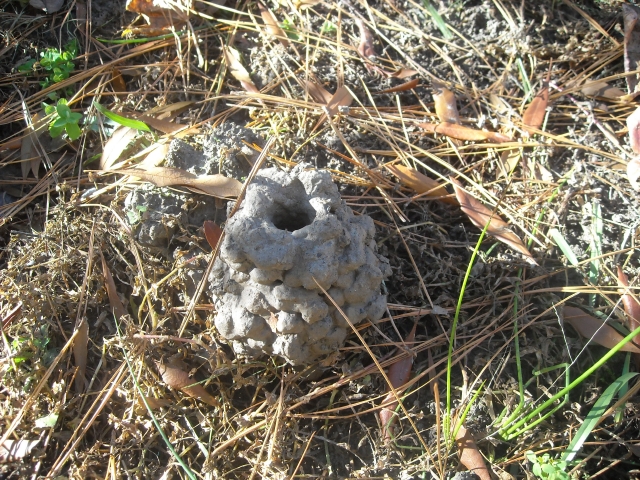
An old castle

An old castle

We could add that looking out the window gives us a pretty complete weather report, but we all know this is a last resort. What Charley is really good at is communicating weather trends. This is valuable information for gardeners. It helps us figure out excuses for why the garden may not be up to snuff.

To be honest, we have never actually spent any time with Charley. He is too fidgety, and we are usually not quick enough to catch the gray streak that precedes his dive into hiding. We know he is around only when we hear a loud, echoey kerplunk deep inside the culvert.

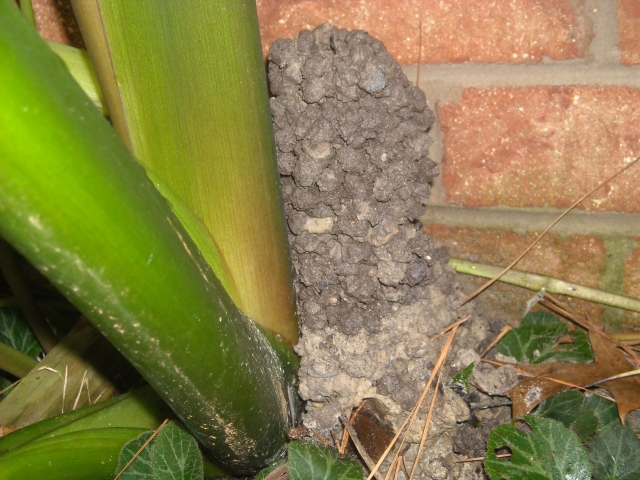
An elegant tower near the house. Note spitballs.

An elegant tower near the house. Note spitballs.

Charley’s castles are what give him away. For Charley is not just a weatherman. He is a builder of note and an impressive digger of tunnels. He has true renaissance talents.

We find his castles all along our brick path, smack dab in the middle of daylilies, mounding up rudbeckias, pushing out spring-blooming phlox. How much of these he eats in the course of construction we can’t imagine. (For the record, Charley is a vegan, except when he can get his claws on some unlucky morsel of meat.)

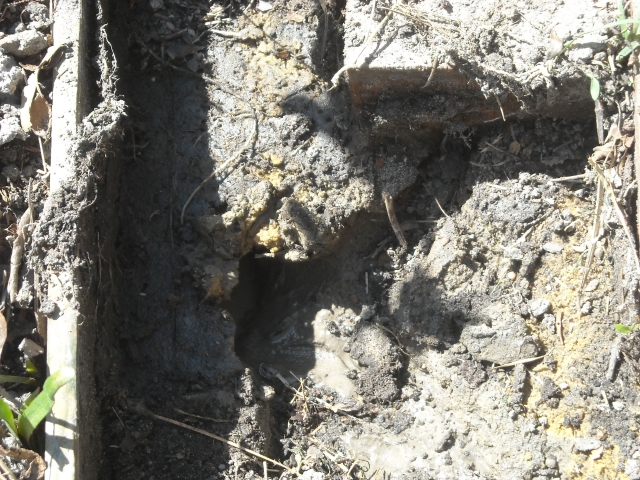
The black hole underneath our walkway

The black hole underneath our walkway

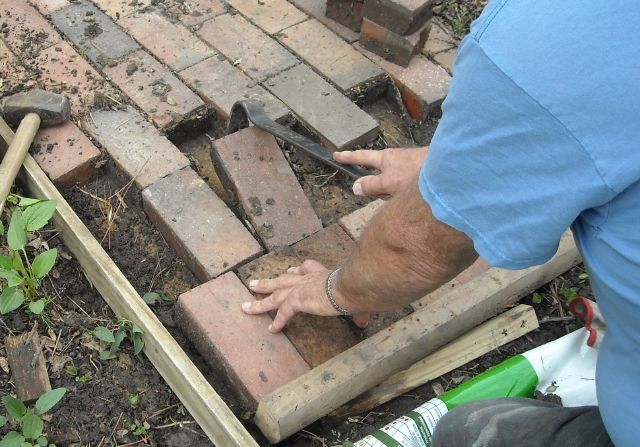
Sometimes Charley is such an enthusiastic digger/builder that bricks disappear, collapsing into murky tunnels. We shudder to think of the collateral damage to subterranean life.

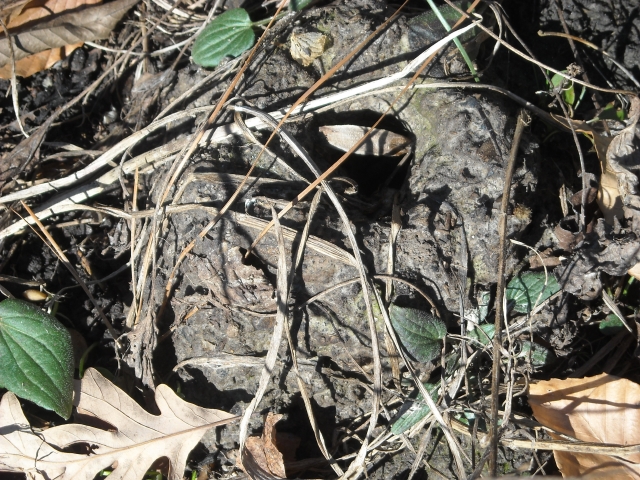
For all his trespassing and dining, we can’t help but respect Charley’s handiwork, all done, it seems, in dead of night. Mounds of silky smooth moist clay piled up with an opening at the top an inch or so in diameter magically appear.

Lookin' mighty tasty. Picture cropped from an old Golden Guide to Pondlife

Lookin’ mighty tasty. Picture cropped from an old Golden Guide to Pondlife

Sometimes Charley gets creative and his castles are decorated with spitball-bricks – maybe they really are spitballs, the spoils spit out from his tunneling.

By now you have probably figured out that Charley is our resident crayfish, or crawfish, or crawdad, as you like, depending on your geography. And by now you are probably thinking that we are starry-eyed crayfish groupies. We are not, though we do enjoy Charley’s relative, the lobster, but in a different way.

What we especially admire about Charley are his talents for spotting weather trends. It works like this. If we have a rainy spell and the ground is mucky, Charley takes to higher ground and builds next to our front door. Gentle steady rainfalls that keep the ground moist but not muddy send him down the path to lower ground.

Into the ditch!

Into the ditch!

Sunny and clear? He’s building on the slope to the ditch. Hazy, hot and humid for days, no rain in sight? His handiwork shows up in the ditch. Punxsutawney Phil has nothing on Crayfish Charley.

Now, to our excuses about the condition of the garden. All legitimate, all based on Charley’s endless construction. Castles near the house: too rainy to weed. Castles on the slope: too hot and sunny to stay out long enough to deadhead. Castles in the ditch: too dry to keep up with watering. . . You get the drift.

Not exactly the holes we'd want for plants. Technically speaking, Charley is a chimney crayfish. The castles are mini-slag piles. Picture from Golden Guide to Pond Life

Not exactly the holes we’d want for plants. Technically speaking, Charley is a chimney crayfish. The castles are mini-slag piles. Picture from Golden Guide to Pond Life

For a while we thought of taking advantage of Charley’s digging talents. Particularly when the clay would suck our shovel in and we’d have to wrestle with it and it would come out covered with globs of muck. We doubt that Charley is ever covered with muck.

What an ephiphany that was! A weatherman digging holes for us. What a disappointment when we came to our senses! That just won’t work, we said. No weatherman would want to dig holes for a living; he’d always be diving away from us. And besides, how would we ever pay him?

Bob filling the black hole and refitting bricks to the path.

Bob filling the black hole and refitting bricks to the path.

So we bumbled along. When we added sand to clay in some spots, Charley turned his antennae up at the resulting concrete. When we poured potting soil into planting holes that turned into clay soup bowls after heavy rains, Charley disappeared. Didn’t want to be an ingredient for crawfish stew, I guess. He kept clear of our raised beds, too. Probably too messy with composty bits, or maybe too well drained for his tastes.

Charley's immediate response to the repair

Charley’s immediate response to the repair

Summer of 2010 we thought we’d lost him. It was so hot and dry. We’d watch those rain clouds skip right over us to the next county. We figured Charley would head for the ditch, but the mud was so dry it cracked. Nothing there except some broken-down hovels. Had Charley found an air-conditioned motel somewhere? Had we lost our favorite weatherman to drought?

In early spring we found our answer. We were clearing a tangle of old iris fans, hibiscus sticks, grass plumes, and aster/ironweed seed heads from the lowest, wettest spot on our property. We call it our ditch garden. We planted it a long time ago to catch the muddy run-off that comes racing down the block after a heavy storm. Some people might call it a rain garden, but ours is not that fancy. Anyway, Charley had never shown any interest in this garden that offered a smorgasbord of greens to please his palate.

Part of the "village" poking out of the weeds in spring

Part of the “village” poking out of the weeds in spring

What we discovered as we cleared was an entire village of crayfish castles. Some elegant, some worn, some freshly minted, some saggy. Charley’s? Family and friends’? One out-sized mound camouflaged with emerging aster leaves caught our eye. Hmm-m, we thought. Could this be an earthen pub where Charley and friends gather for a pint during off hours? Or maybe it’s a school for future weather forecasters.

Posted in Soil, Summer, Wildlife | Tagged , , | Leave a comment

A Garden at theTop of the World

Photos of the Presidential Range like this one by John Compton enticed us to plan our trip.

Photos of the Presidential Range like this one by John Compton enticed us to plan our trip.

One day, about fifteen years ago when we turned sixty, a friend and I decided to hike along the Appalachian Trail in the White Mountains of New Hampshire. You may think this topic an unlikely entry in a blog about gardens and gardening, and it is. Except that within those rugged hills we quite literally stumbled into an enchanting garden of diminutive plants.

On a clear day. . .Lakes of Clouds hut and site of the alpine garden. Taylor Lenz photo

On a clear day. . .Lakes of Clouds hut and site of the alpine garden. Taylor Lenz photo

It took fifteen years and a chance exhumation of an old diary for me to recall our delight with our discovery and what we eventually learned about the lineage of this garden.

So, if you’d like to read a tale about how two sixty-year-olds managed to get in shape for a mountain hike of no mean proportions and visit a garden at the same time, I would invite you to go to Great Gardens listed in the sidebar and in the black banner above.

Fresh and ready to roll, Megs holds on to her walking stick which will come in handy later on

Fresh and ready to roll, Megs holds on to her walking stick which will come in handy later on

Click on the entry called White Mountains, NH. From there you can follow our story.

It’s a tale full of twists and turns (literally and figuratively) and a singular introduction to hiking in the White Mountains. You’ll hear, too, about some of the memorable hikers we met along the way.

Much of our hike was shrouded in clouds, so we took few pictures, none of them digital. We carried those clunky old cameras that weighed heavily around our necks, like mini-albatrosses. To prove to you that we were really there, we scanned our old pictures. To fill in some gaps, we borrowed pictures from websites or blogs, wonderful pictures taken much more recently—many on clear days when you could see forever.

Resting on he rocks and eating blueberries, my favorite part of the hike

Resting on he rocks and eating blueberries, my favorite part of the hike

For these, and for the beautiful photos of plants in bloom, we thank the photographers and hope we have given appropriate credit to them.

If you want to skip the hike and just go see the plants (we couldn’t; these particular plants were at the farthest point from GO), click on the entry called The Garden. What you’ll be reading about is an alpine garden, one of several in the Northeast and points north, amazing patchworks of plants tucked into mountain rock at the top of the world.

A stunning montage of spring blooms by 1happyhiker

A stunning montage of spring blooms by 1happyhiker

Posted in Alpine Gardens, Uncategorized, White Mountains NH | Tagged , , , , , , , , , , | Leave a comment