The Weed that can Snare a Gardener

Was I taken in by this one!
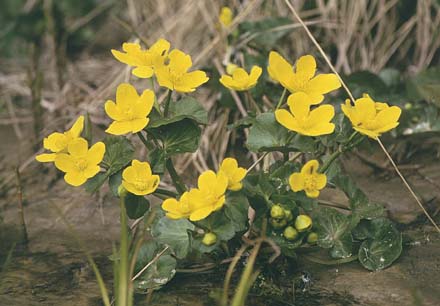
This native marsh marigold is a bright spot in wet areas.  

A very good friend who shall remain nameless gave me this particular weed as a gift. She was as excited to give it as I was to receive it. Marsh marigold, I exclaimed. Yes, she said. And there’s lots more if this doesn’t take.

Warning sirens should have gone off in my brain. I’d only seen marsh marigolds growing deep in swamps. So where did my friend find this mother lode of plants? However did she gather them without sinking into muck and becoming a swamp mummy? No sirens blared. No questions asked. In my enthusiasm I made extravagant promises to give these special plants a good home.

What a show this impostor makes in late winter here in eastern North Carolina

The legality of gathering and growing native plants never entered my mind. This was too great a prize to quibble. Who would be arrested if someone tattled? Would my friend be the culprit and I the accomplice, or would we both go down together? Would the tattler get to take a plant? Much much later these questions occurred to me.

At the time, I was feeling insecure about my gardening skills, which is a delicate way of saying that most of what I planted died summarily. So I nurtured my marsh marigold. When it prospered in our heavy wet soil, and gardeners congratulated me on my great plant, and I could share bonuses with friends, I felt like a proud parent and an exceptional gardener. I was so tickled I began to transplant it throughout the garden.

I lovingly planted up this bed, waited impatiently for it to fill in.

It was hard not to love this plant. Bouquets of flashy yellow buttercup flowers above shiny round leaves that hugged the ground would cheer the flagging spirit of any weeder in early spring. A couple of months later we would have to put up with a short messy period until these little suns set and the entire plant disappeared to rest until next spring. But once the beds were clear, a second act of later bloomers, like Japanese iris, or maybe Mexican heather, or salvia, could take center stage. The possibilities were endless. Wasn’t I the clever one!

After about five years this docile plant became positively cheeky, and I began to suspect something was amiss. Yes, it took me that long. By the time I caught on, the plant had become a tribe of biblical proportions. In their exuberance, the plants clambered over each other, rolling over more polite plants and worming themselves in and around the roots of others in an epic battle for territory.

Lesser celandine loves colonizing shrubs like this still dormant hydrangea, probably because the plant has been regularly fertilized and watered.

The coup de grace came one day when a visitor commented on all the lesser celandine I had, and my, how it had invaded my garden.

Lesser celandine! Lesser celandine! I’d never heard of lesser celandine. Not marsh marigold?

No, she said, but it’s a pretty close look-alike and they’re in the same buttercup family. Marsh marigold only grows in very wet places. Lesser celandine is not native. It was brought over from Europe in the 1800s, maybe for its medicinal qualities – it’s supposed to cure everything. Did you know that Wordsworth loved it, even wrote poems about it? Today it’s an escapee from gardens.
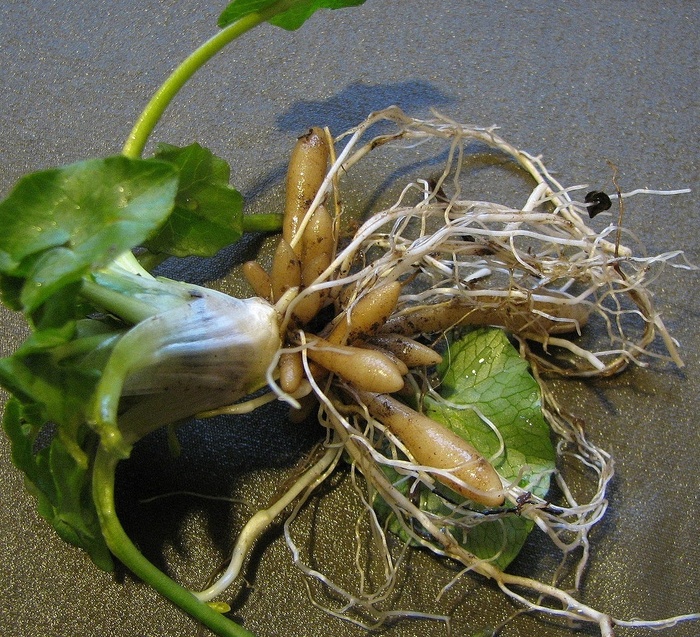
A healthy sample. Stems may look tough but they release willingly. Photo from http://www.fosc.org

Well, I thought, at least my friend and I won’t go to jail. Maybe I could open a pharmacy with this lot. If I had not been reeling from shock, I might have said something insouciant like, oh, but it is such a cheerful plant I like having it everywhere. (Maybe.)

Never mind, I thought, I can handle this. I’m an experienced gardener now. Right? This weed/plant — what’s the name of it again? I can never remember its name, I must have a mental block — is too pretty to pull out. I’ll keep it in bounds. I’ll control it. You’ll see. I’ll thin it. Yes, that’s what I’ll do, I’ll thin it and put the thinnings in a special pile separate from all our other piles, so there’s no contamination.

And that was when I learned about how lesser celandine grows. Talk about hedging one’s bet. These beauties multiply by seeds, by tiny bulbils and by tubers that break away when soil is disturbed. The bulbils and tubers attach to the plant by a wand, no, a thread, of gossamer. If I pull a plant, I get a handful of leaves. It takes a spade to dig up a plant and then a sieve to sift the soil and catch the tubers. One bulbil or tuber left behind and voila! next spring.

Another cutie that took me in. Herb Robert. I actually paid money for this one. Such a cheery spreader, but easy to pull. Oregon Dept of Agriculture photo.

I wonder if Wordsworth ever tried weeding these things before he wrote his poems. I will need an army of sorcerers with full-fledged spades to rout them all out, especially since that “no contamination” idea did not work.

But there’s only me. I look out on my garden of weeds winking at me. I think, well, I can wink back and smile, or I can start digging and leave in their place a monstrous moonscape. Then I can wait for the survivors to wink at me next year.

Another ubiquitous weed I fell for, lemon balm, touted by garden writers years ago. Citrus odor from leaves is its redeeming quality. Strategically located, it might deter rabbit damage. Nice crushed in a glass of white wine.

I Google lesser celandine and I find that it mows down native spring ephemerals in woodlands and has spread throughout northeast and middle atlantic states and is now heading west, apparently on a mission of manifest destiny. Doses of glyphosate (RoundUp or Rodeo) applied before woodland flowers emerge are recommended for eradication.

 I have to think about all this.

The other day a friend who lives nearby commented on how much he enjoyed that little yellow buttercup plant I’d given him several years ago. He was somewhat disappointed it hadn’t spread much.

Aaargh! I’m with you, Charlie Brown.

Posted in Invasive Plants, Native Plants, wildflowers | Tagged , , , , , , | 2 Comments

Love Is in the Air

It’s the end of February, and the Spring 2012 version of Fantasia is just beginning. The next few weeks are the noisiest, happiest time of year in our garden. Buds are greening. Days are brightening. Holly berries, last in the berry parade, overripe crabapples, and pine cones and sweetgum balls still cling to trees. Crumpled leaf litter provides minute meals of seeds that only a scavenging bird can find.
This stunning photo captures the qualities of the pied-bill grebe: chicken-like beak with stripe, diminutive tail and chunky body.

Choices that remain after winter pickins’ may not be everybody’s favorites, but there is still enough around to fill bellies and then some, with a little dessert from our nonstop birdseed and suet-cake buffet.

Still weeks away is the serious work of feeding babes that seem to be all beak and squawk, then chasing the tipsy toddlers as they test their wings. Time now for dancing and playing and flirting to rhythms we can only guess at. Time enough later to pay the fiddler.

To our surprise, water birds, not woodland birds are playing out the first scenes in these springtime duets. We thought our regular January visitor, the pied-billed grebe had already departed for points north. (See The Visitor.) Not so. For the first time ever, there is a layover into February, and for the first time ever there are not one, but two grebes. A pair? Grebes are normally loners except during mating, so this seems a reasonable assumption.

Their markings are practically identical, except for the fluff below their tails: one is ultra-white, the other is the color of thick cream. So, as is usual with pied-billed grebes, there is no easy way to tell male from female.

Nests are anchored to mats of floating vegetation that in time stains the pale eggs and camouflages them. Photo by Anthony Mercieca, Root Resources

They keep a certain distance, too. No tandem swimming that could announce a partnership, a ritual we see each spring as Canada geese explore our slip before rejecting the digs. (Who gets final say, I wonder.) Swimming and diving were strictly solo affairs for these two. Maybe they were simply acquaintances (Hi. Don’t I remember you from the pond last summer?), each with a free spirit.

Grebes don’t have an elaborate courtship. A little fluffing up and some maniacal laughing duets.

Slowly sinking to avoid danger. Air is released from feathers and “lungs.” Brad and Lynn’s Field Photos. Herpindiego.com

No fluffing, no duets here. This was casual choreography suited more to a comfortable, old-shoe pair. They preened. They loafed. They tucked their beaks into their backs for quick dozes. There seemed to be no self-appointed sentry. Neither seemed concerned about predators. Grebes count on diving in an eye-blink or sinking like lead weights to escape danger.

Our grebes became such a fixture, fishing, preening, loafing, we hoped they might consider nesting here, though we knew this would not work. There is no shortage of floating vegetation in our quiet canals to use for nesting, but our summertime salinity levels are too high for freshwater birds.

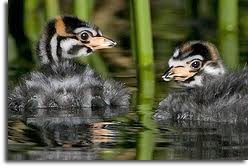
Young grebes have distinctive stripes and stay close to their parents. Photo by Jim Flynn, Root Resources

In a few days they were gone, and, in our loneliness (Yes, we missed seeing that duo’s arrival around lunch time each day.), we imagined their joy at returning to favorite ponds, imagined their loony calling, imagined piggy-back rides they’d give their youngsters.

A pair of hooded mergansers temporarily distracted us. It had been eight years since their last visit. That winter of 1994 had been a cold one. The slip had iced over and much of the canal was frozen, too. Those mergansers, three females, three males, swam and dove in the open pools that remained.

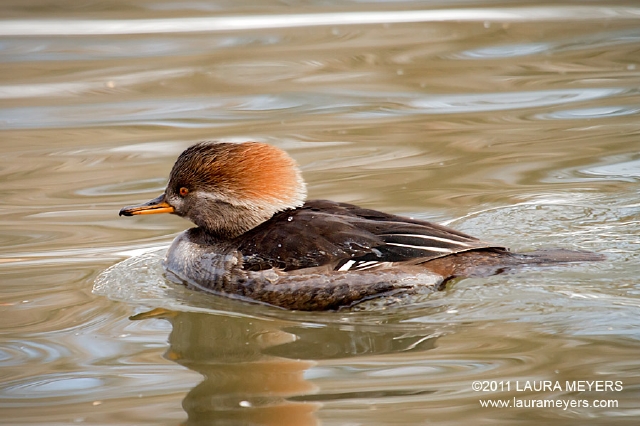
Differences between male and female are clear in this fine acrylic painting on board by George Lockwood

There’s no question about gender with hooded mergansers. The white crest on the male is flashy and he displays it proudly when he is courting. The female’s crest is brownish, yet when a western sun reflects off the feathers, they glow like burnished copper. Does the male consider this when he pursues a mate?

They are only stopping here to rest and refuel before they fly north to nest. Somehow the word has gotten out about the terrific fishing in our slip. Log jams left by Hurricane Isabel and other storms have become home to schools of small fish, and some not so small. The great blue heron knows this, as do our local fishermen, who never give up hope, and, of course, our grebes.

Success! Photo by Paul Janosi, Digital Nature and Wildlife Photography

We watch these transients as they fish for dinner. Their success rate is impressive. Once caught, it’s probably a rare fish that gets away. If the fish has not been impaled on the hooked nail at the tip of the beak, he will become prisoner to serrations along the edge. As soon as the merganser surfaces, the wriggling fish is deftly maneuvered into position to slide down the gullet with a gulp.

Is her beautiful crest a come-on to the male? Photo taken at the Bronx Zoo by Laura Meyers

When the mergansers left for their important business up north, we thought the story was over until one sharp-sunned windy day a single pied-billed grebe showed up in the canal. A determined north wind was pushing water hard to the south, impatient to empty the canal. The little grebe bucked wind and water for most of the day, rarely budging from his self-appointed outpost.

Why in the world didn’t he look for shelter in the lee? Where was his partner? As we watched the bobbing and bouncing, we began to understand. He was having time of his life. We could almost hear our little grebe laughing with delight.

A day or so later both grebes were back loafing. Is there no end to this off-again on-again courtship? you ask. Patience. . . We’ve had a few warm days, winds are coming from the south, and turtles are sunning themselves for the first time in months. Maybe the same signals that bring the turtles out of their muddy winter havens prompt the grebes to take off, for they are truly gone now.

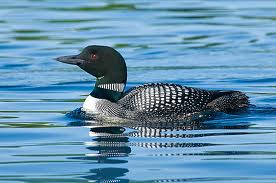
The Common loon spends his summers nestng in northern waters. Photo by Michael Cummings

In the distance we hear, briefly, the haunting call of a loon, barely audible, tentative. Practicing, perhaps? Checking out a possible mate before heading north? The quiet subsong brings back memories of camping and canoeing in Maine and Minnesota.

We understand so little. Every spring celebration brings more clues and more puzzles. We can only watch and guess and imagine what is unknowable. Perhaps that is as it should be. It prevents us from prying and it helps to keep us humble.

Posted in Birds | Tagged , , , , | Leave a comment

The Visitor

I know it’s January. No, not just because I’m atoning for holiday indulgences.

Lots of clues. Cold weather, maybe. The sun, yes, the sun. It’s so low in the sky its rays at noon reach far into my paneled sitting room, flooding it with cool gold. Spectacular sunsets, too, splashing sky and sound with my favorite Crayola colors. Dark starry nights with Betelgeuse winking at me. Such bright shadows from a full moon I can take kitchen scraps to the compost pile late at night without fear of bumping, tripping or slipping, though muffled rustles or thumps on the way still startle me.

The casual stripe on his bill give pied-bills their name, but they only wear it in summer. Photo by Gerrit Vyn, Cornell Lab of Ornithology

I take all these signs for granted until one day I spy The Visitor, and I say, yes, this is January, and I smile with delight because I know he, or she, has not forgotten us. He, or she, has been spending a week or so with us every January for, oh, maybe a decade.

This meal will be a big one for the pied-bill. Note the white rump. Internet photo.

I’m so self-centered. Of course, these visits are not to us in particular. He, or she, happens to like our boat slip. It’s a nice, protected spot for loafing before going on, and its jumble of submerged logs makes for good fishing. In spite of myself, I imagine that she, or he, is tipping its hat (or should I say tail tufts) to us before going on to other adventures. Perhaps there would be stories each January if we could hear them. But our visitor is silent.

All in the family. Male feeding young as they sit on the female's back. Photo by Gregory Peterson, National Geographic 2011 Contest

Our visitor, as you have surmised by now, is a water bird. At first glance you might mistake him for a duck, but he is not. He is a pied-billed grebe, born of ancient lineage, distant relative of the flamingo. The difference is the flamingo is the archetype runway model, flashy, long slender legs stepping with precision, long neck gracefully arched. Our pied-bill is small and chunky, dun-colored, with stubby legs set so far back on his body he can hardly walk. (Don’t ask. It’s a molecular form and function thing.) Sometimes he sits so low in the water he looks like he should lose a few pounds. But he does have a cute white rump. All in all, a comfortable-looking bird I can relate to.

Flashy chicks emerge after 27 days in eggs laid in a floating nest. Photo by Joe Kegley.

And that’s how I recognize our visitor: low in the water, not flashy, small and lonely and silent, always too far away to pick out details. If I reach for my spyglass, I fear I will miss a dive, so I don’t turn away. Besides, I was taught that it is impolite to spy on visitors.

I hold my breath each time he dives; he’s down under for such a long time. I try to guess where he will surface, but he surprises me too often to make predictions. Does he know his bearings underwater, or does he surprise himself, too?

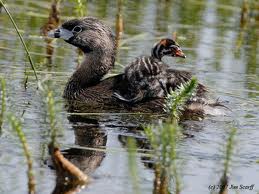
While they are young the chicks get a ride on Mom's back. Photo by Jan Scoff

Probably not. Diving is his life. His lobed toes make wonderful propellors when he swims for his dinner of fish, frogs or crayfish. Crayfish! Our very own crayfish? Surely he wouldn’t be so impolite as to pop one of our neighbors. Would he?

I would like to see him sink out of sight like a lead weight some time. It’s his way of escaping predators, but nothing seems to alarm him in our waters. Grebes manage this maneuver by quick-release of air trapped in thick feathers. Once under, they can swim into hiding to wait out danger. Maybe that’s why they are nick-named Water Witch and Hell Diver.

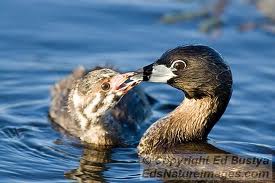
If our pied-bill is solo and silent in winter, he or she is busy and noisy in summer. Photo by Ed Bustya.

I will probably have to wait until next year. Our little grebe will be off in a week or so. Moving on toward breeding grounds? Or simply loafing elsewhere? So many questions. How old is our little grebe? Could he be a decade old? Am I seeing the same grebe each year? And is our grebe a “he,” or a “she?”

This I do know. I will be disappointed if I do not see our little grebe next January. 


Posted in Birds, Wildlife, Winter | Tagged , , , , , | Leave a comment

Candy’s Quince-tessential Jam

There are three things I like about Candy. First, she’s an absolute whiz at trading food for food. For three weeks last summer she brought tons of her figs to every farmer’s market for miles around. Would you like some figs? she would ask. How much do they cost? No money. I would like to barter. I brought my own recycle bag and I’ll just keep putting veggies in it, and YOU tell me when we’re even.

Candy in the Kitchen

Now, Candy’s figs are special. They come from a tree that looks like it should be growing next to Charlie’s Brown’s Pumpkin Patch on Halloween, and they are bigger and sweeter and juicier than anyone has ever seen. So Candy came home with bags of corn, tomatoes, cucumbers, onions, potatoes, beans, eggplant, peppers, watermelon, and anything else that looked good to her.

Last year, she said, was the best summer for free food. Candy did lots of canning, freezing, and dehydrating.

Tools and ingredients. Scale not needed for this jam

Which brings me to the second thing I like about Candy. She’s an absolute whiz at putting up preserves. Not just the usual strawberry and grape jams, but fun stuff like beautyberry jelly and watermelon pickles and quince jam.

And the third thing I like about Candy is that we get to feast on her creations. Like the time she brought us her super duper figs and the heavenly goat cheese she’d made while babysitting her daughter Christine’s goats. Come to think about it, maybe that feasting is really the first thing I like about Candy. (More about Christine’s organic farm below.*)

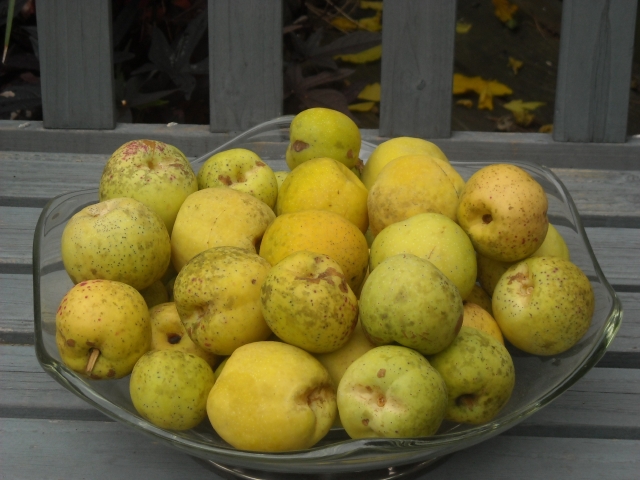
Candy’s always up for a challenge. This year we had a bumper crop of quince fruit in our garden. When she told me, yes, she wanted them all, even the gnarly ping pong balls, I put on my brave face and dodged the thorns and twigs to gather all the mini-cannonballs and gnarly ping pong balls that hung from the bushes or sat on the ground. Didn’t matter where they were. They were all hard as rocks.

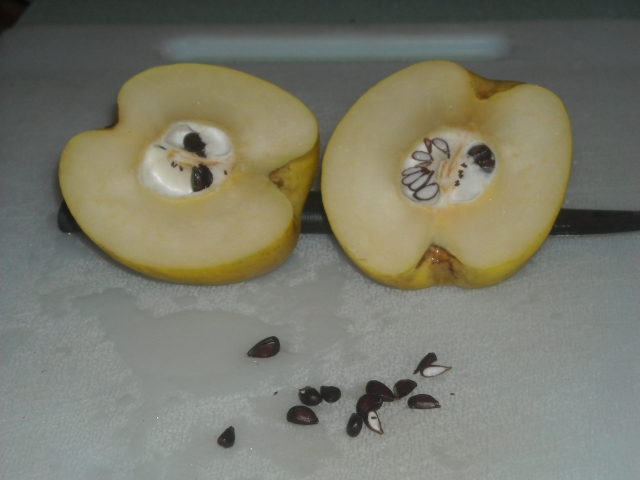
Cut in half, quince look like apples, fair enough, since they are relatives , both belong in the rose family

This is the second year Candy has made quince jam. Neither of us is quite sure when quince are ripe because they’re always hard and tart, except once a ping pong ball got wrinkled after sitting a while. But it was still a rock.

Last year our crop was meager, so Candy had to add some wild pears, or maybe apples, to the quince fruit to get just one batch. We never did figure out quite which they were. They came from a tree by the side of the road that drops unidentifiable but tasty fruit every fall.

But that one batch was delicious, golden yellow with small pieces of quince with a hint of apple, or maybe pear. One afternoon a group of us had a good time tasting quince jam with crackers and tea. Cream cheese would have been nice, too.

Candy uses a Sure Jell recipe she found on the Internet.

The recipe calls for 4 cups of prepared fruit, 2 cups of water, ¼ cup of fresh lemon juice, 1 box of Sure Jell pectin, ½ teaspoon butter or margarine, and 51/2 cups of sugar.

She peels and pits the fruit, then finely chops it with a small chopper she’s had for years. She combines the ingredients except for the sugar and brings the mixture to a rolling boil. Stirring constantly, she adds the sugar, brings it back to a boil for a minute, skims any foam and ladles the jam into an assortment of canning jars.

The color of the jam is a clear, pale yellow when white sugar is used. Organic sugar gives the jam a warm honey color.

Organic sugar gives quince jam a honey color

This year Candy made 3 batches. She eked 10 cups of chopped fruit out of the mini-cannonballs and gnarly ping pong balls, enough to make 2 batches, with two cups left over for another half batch. Two large organic pears added the two cups she needed to complete the third batch.

Tasty as it is, all this jam doesn’t get eaten overnight, so some of it goes into the freezer. Freezing the jam helps preserve its color. Kept at room

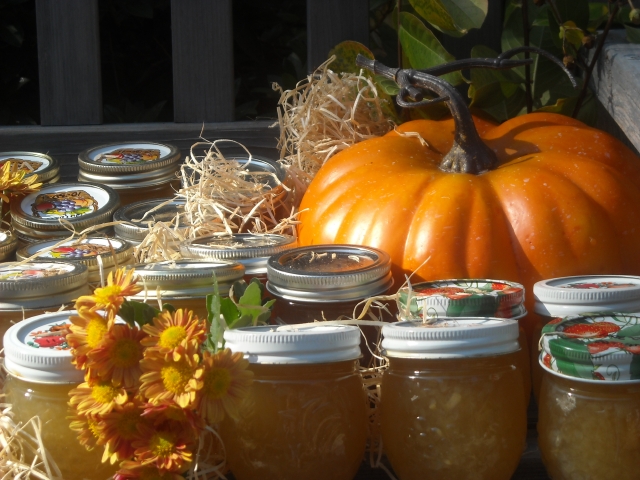
Candy’s quince jam on display

temperature it darkens over time.

Making quince jam is not for the faint of heart, Candy says. Peeling and chopping the hard fruit take time, but it’s a labor of love and good eating from the garden.

*Christine is a Master Herbalist and CFO (Chief Farming Officer) of Sprawling Oaks Farm, an organic farm in Arcadia, Florida. She raises goats, makes soap and cheese and is active in promoting organic farming. Look up her farm on the Internet or read her blog: http://veggiechronicles.wordpress.com

Posted in Jelly from Fruit | Tagged , , , , | Leave a comment

‘Tis the Season. . .for Quince to Fall

We never know when the quince are ripe, or if they ever do get ripe. We barely notice them when they first show up as shiny green one-inch balls tight along a leafy branch. After they grow into yellow mini-cannonballs, we begin to count.

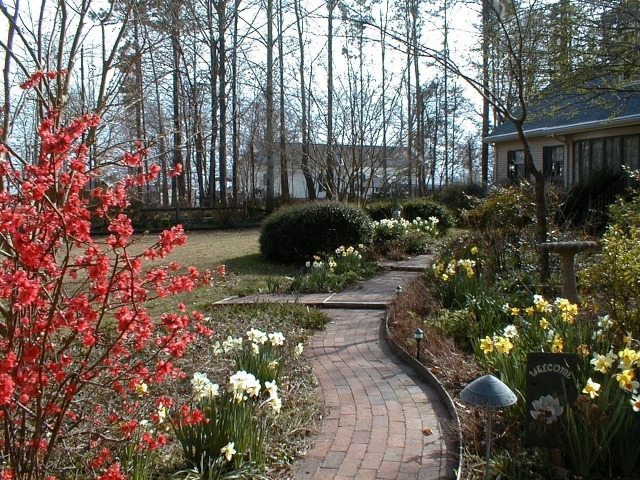
‘The Quince’ brightens a spring day

We wouldn’t make the grade in statistics, either. Our counts are casual and forgotten a moment later. When the counts seem to tally a minus, usually in early October, we look to the ground. And there they are. You’d think they’d be rotten, but they are hard as rocks, hence the designation yellow cannonball, though they come up a bit short on size.

That’s when I call my friend Candy and say, the quince are falling. Do you want to make your quince jam? This year is a bumper crop, but last year she had to add some wild pears or apples (they came from a roadside tree we never quite identified) to the quince fruit for volume. Her jam is clear with small bits and pieces of quince. It has a hint of apple to it, or is that pear? and it is delicious.

This year’s crop. Raw fruits are sour. Red dots are glands. Imperfections don’t affect the jelly

We’ve been growing quince for almost twenty-five years and we like them because they were one of the few plants that did not complain about the soil when we began gardening in clay. They shrug off long stretches of dry weather by dropping their leaves and pretending to be dead. More to the point, they do not actually die.

A visitor to our garden in August once asked why I didn’t pull out the dead bush with the tangle of twigs.

Wait until you see it in spring, I replied. Unless the winter is exceptionally cold, it blooms punctually on New Year’s Day here, sparse at first, then spectacularly from February to April. Timing is perfect, because that’s when the daffodils and forsythia are blooming. Quite a triumvirate. Since daffs don’t like moisture in summer, and the quince can tolerate dry spells, they are most compatible.

‘Jet Trail’ aptly named, is a showpiece

If the particular dead-looking quince in question were not planted at the junction of our driveway and a path to the house, people wouldn’t notice the sticks. Nor would they be threatened by a close encounter with spines.

Ouch! One of the first mistakes in the garden. Don’t plant a quince along a path. It’ll eventually reach out with daggers. No matter. We’ll never remove ours because it gives us such a lift in early spring. So we pay our dues with conscientious pruning once or twice a year to keep it from impaling us as we walk along the path or graffiti-ing our cars as we back out of the driveway.

We solved the matter of the dead sticks in August by allowing an errant Japanese honeysuckle vine to twine around them. Very nice. Don’t ask how we unwind the vine from the spines in fall. So far there have been no emergency trips to the hospital .

One of the prettiest, ‘Toyo-nishiki,’ gave us good fruit this year.  It’s tall, 6-10 feet, and about 4 feet wide

If our quince came with a plant label, we have long since lost it, so we just refer to it as ‘The Quince.’ I propagated it, so now it has a sister on the opposite side of the driveway.

No, this one won’t attack any person or vehicle. It’s guarded closely by Indian hawthorn and Japanese holly, but what a time we have scrambling around the jungle dodging spines when we pick up fallen fruit.

We grow other quinces that came with labels we didn’t lose. ‘Jet Trail,’ with glossy green leaves and shining white blooms, is one of these. Three feet high and wide, says the label. We all know labels never lie, so I planted it a few feet from the corner of the house. It stayed within bounds until it felt comfortable. Now it regularly tries to invade the upper story. It’s a tangle of twigs, of course, like all quinces, but one of our favorites. It never pretends to die, and it always seems to be smiling with blooms, and its tangled twigs create a haven for small birds.

Profuse bloom is typical of 'Texas Scarlet'. ForestFarm photo

Profuse bloom and spreading habit is typical of ‘Texas Scarlet’ quince

Our bright red ‘Texas scarlet’ quince, pictured at the right, are spreaders that will grow to only three feet (maybe).

They are newcomers to the garden, surviving summers of drought and a tipsy friendship with ashy sunflowers that need a prop to stay vertical.

One of these days the quinces will grow big enough to straighten up the sunflowers.

The best fruits this year came from ‘Toyo-Nishiki,’ a quince whose lovely chameleon-like flowers deepen from white to soft pink to rose. We think that its good fruit set might be the result of hard pruning, transplanting, and the final insult, having a tree fall on it. This last is not recommended gardening practice, but it didn’t seem to do any harm. Maybe good soil helped, too.

For the record, these quinces are cultivars of Chaenomeles speciosa, or Common Floweringquince, originally from China, then cultivated by the Japanese and brought to the United States in the late 18th century. Chaenomeles is Greek for ‘split apple’ and speciosa means showy or splendid. This type of quince is not grown for its fruit, but it’s fun to try, and perhaps that is why we can never tell when they are ripe.

Quinces are hardy from zones 4 to 9, thrive in sun or part shade. They adapt to most any soil but seem to do best when treated nicely, maybe a little compost and water during dry spells.

Getting back to Candy and her fine quince jam, well, that’s a story for another post.

Posted in Jelly from Fruit, Spring shrubs, Uncategorized | Tagged , , | Leave a comment

How Hurricane Isabel Changed our Garden

As I write this on Thursday, August 25th, 2008. Hurricane Irene is bearing down on us. Her eye is expected to pass to the east of us, and so we do not anticipate the high winds, high waters, or heavy damage that might occur if Irene’s eye

Our backyard after Isabel swept through

were to roll over us. Instead, we are hoping for soaking rains to combat a droughty summer. Of course, this rosy picture could all change with a whim of the wind.

The forecasts and warnings bring back memories of a mischievous lady whose name also begins with the letter I, who rolled over us in September, 2003. She passed to the west of us, inland, and caught us in the wall of her eye.

Hurricane Isabel was one of the most violent hurricanes to hit eastern North Carolina. It took months, in some cases, years to recover from its

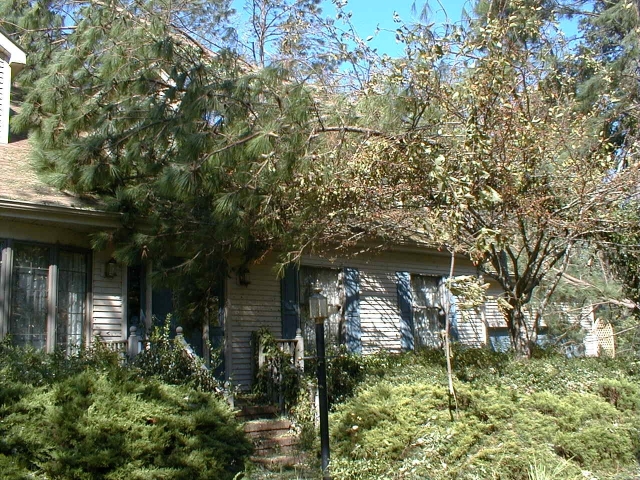
These pines did less damage than first suspected, thanks to timely blocking by an old crabapple

devastating blows. Our home was battered by several trees, but we were fortunate that damages were manageable (not necessarily so with friends and neighbors). Our garden, on the other hand, which we thought was finally coming along after 15 years, was devastated.

And so began a rebirth. Here, on several pages, we will chronicle our efforts to make sense of Isabel’s mischief, which, eight years later, still continues. We will record the challenges, joys, and yes, adventures that we experienced, two gardeners in the woodlands of North Carolina recreating a

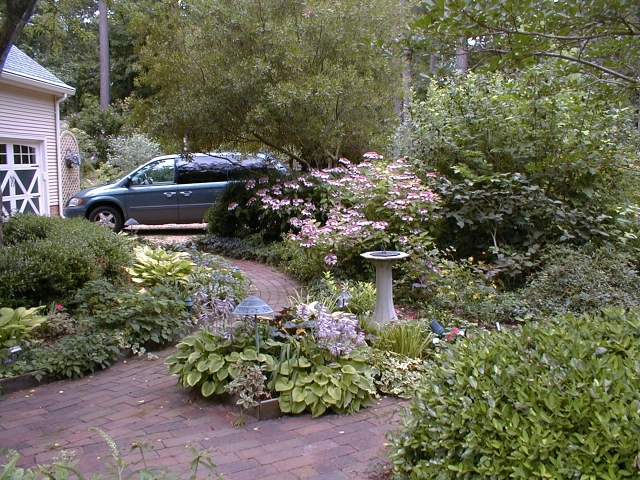
A tamer front yard today

garden, not as it had been, for that garden was lost forever, but in new and unexpected ways. It was a winding journey, a mixed-up journey of anticipation, high hopes, discovery, disappointment, and delight, and always a surprise in the garden.

You can follow our footsteps by hovering over Isabel’s Story and clicking on the entries below. We’ll be adding new pages at intervals to bring you up to date on Isabel’s shenanigans.

Posted in hurricane isabel, Storm recovery, Uncategorized | Leave a comment

King Mullein Rides High

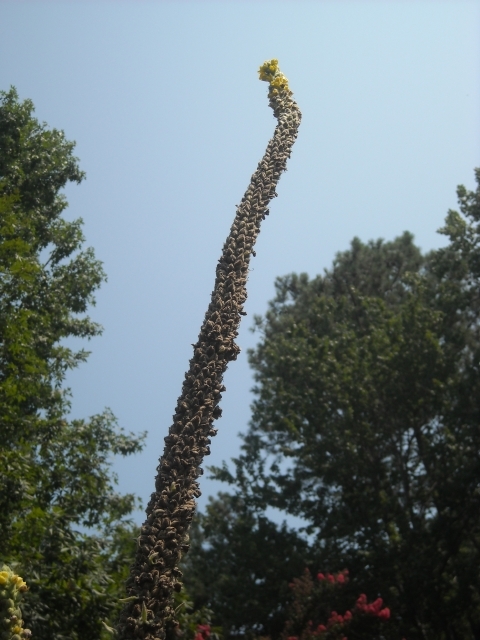
He certainly was not born to the fanfare a young prince might expect. In fact, we missed his arrival altogether. Yet here he is, royalty from the Old World, soaring ten feet into blue skies and spreading four feet at the ground, graciously enveloping, well, smothering, his subjects.

The adult king, reaching for the sky in July

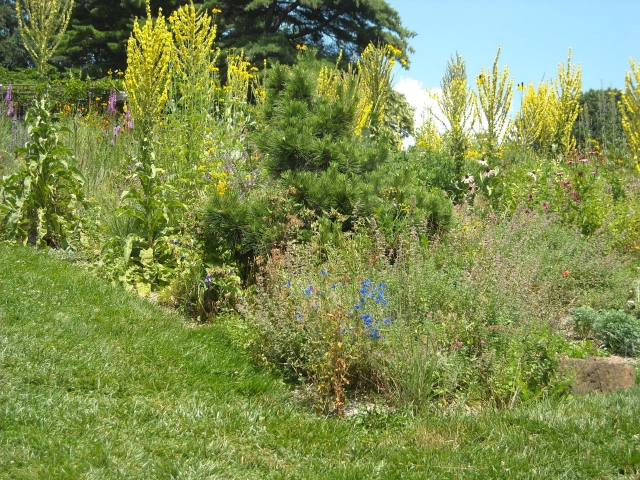
The previous summer our daughter-in-law had given us several small mullein plants. I was thrilled. I had wanted mullein ever since I had seen it spontaneously marching up (invading) a hill at Chanticleer, a Pleasure Garden near Philadelphia.

I have friends who like mullein, too. There, I was doing it again. Dreaming of magnificent mullein in our garden and being a glad hand with whatever grand mullein I couldn’t use. I hadn’t even planted the starts.

Robust common mullein (Verbascum thapsus) volunteers marching through a dry, sunny wildflower bed in Chanticleer, a Pleasure Garden near Philadelphia

They all died. They turned out to be a persnickety bunch of wimps. Some of them resented being plunked in a strange garden under hot summer sun. Did these macho dry-soil types really expect to be pampered?  Others melted in cold winter rains. Chalk them all up to another Garden Checkmate. (I think this was Garden Checkmate Number 247, or maybe two thousand forty-seven, I can’t remember.)

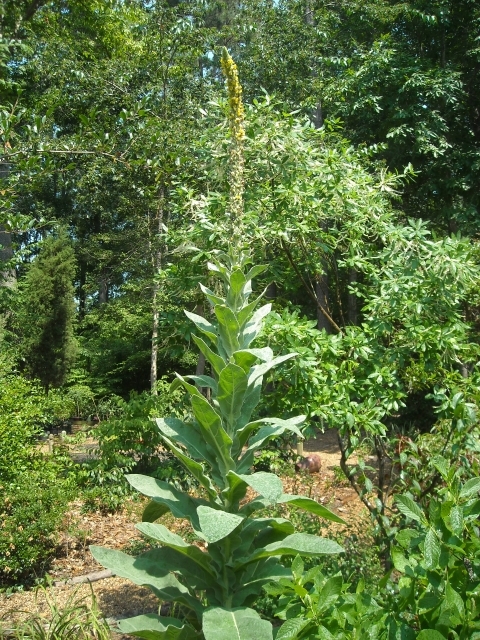
And then next spring, quietly, King Mullein arrived. No parched stony patch for him. Nosiree, nothing but the best for this monarch. He landed in a compost pile-turned-garden bed that we had just replanted, best spot in the yard, once home to elephant ears so immense they could have been dinosaur food, now elbowing a fledgling kerria and hosta honeybells. I guess he figured they’d be his handmaidens.

Since we weren’t expecting him, we totally missed the first sign, a tiny rosette, probably sprouted in late fall—amazing how blind we can be—and never noticed him until he was quite the dandy, some time in June. Beats me how he found such a good spot. It was nowhere near his vanquished kinsmen.

He didn’t belong where he was—he wasn’t part of The Current Plan—but oh well.

King Mullein in his prime

He was alive and growing, which was more than some of his neighbors were doing. We ceded the territory to him. Isn’t that the way with kings? They pretty much do what they want and still  subjects  bow.

To be fair, His Highness was no wimp. Velvet leaves almost two feet long covered with fuzzy branched hairs cloaked half his ten-foot spire. They made cozy umbrellas for beetles, spiders and frogs,  and, like the egos of king and courtiers, they begged to be stroked.

Yellow blooms, tight to the stalk, began in June and continued through July into August. Lesser stalks, courtiers, I suppose, surrounded the tall spire as faded blooms produced seed capsules that spilled over with royal seed. Is an invasion of our garden imminent?

Mullein flowers open interspersed among fat buds and seed capsules, along mullein stalks

Now, in late August, King Mullein is an aged monarch. His fine rosette shriveled long ago. His velvet leaves are splotched yellow, torn, chewed, bored through, or shrunken from prolonged drought. If we’d been quick-witted, we could have made poultices and decoctions from them to cure all sort of ailments: COPD, ulcers, tumors, piles and kidney infections. They did this in the old days, only they didn’t call it COPD back then. We have none of these complaints, so we had no reason to experiment.

The flowers are gone, too. In a long-ago time we might have soaked them in mineral oil to soothe earaches or cure warts, or steeped them in lye to dye our hair. But we had no earaches or warts and we weren’t in the market for yet another hair-care product. Instead, we were happy to watch bees and wasps foraging.

Quite beautiful, the five-petaled flower has five stamens that promote self- pollination and assist bees in their work

All in all, King Mullein seems to have been quite a handy plant to have around years ago. When the need arose, perhaps during a funeral procession, his spire could be dipped in tallow to make a great torch. (We’re not tossing our LED flashlights yet.)

Having served his time, the hoary king seems ready now for an off-with-your-head moment, a borrowing of ancient ritual to keep royalty under control.

The old king may be gone, but we wonder when the  grand invasion by the minions will begin. Along what path,  in what flower bed will we discover them? When will seed

The wonderful velvet texture of the leaves have inspired many common names: Donkey’s, Cow’s or Bunny’s Ears, Flannel Petticoats, and Cowboy’s Toilet Paper. We could add another: Crepe Paper Mulch, for the dried up leaves flat out at the base keep the ground cool and bar weeds.

capsules open to release hundreds of thousands of tiny seeds? We’re counting on goldfinches to do their bit and cut down the numbers.

I understand that the wand given to Ulysses by Mercury to protect him against Circe’s enchantments may have been a spire from a common mullein. I guess a plant that’s been around since Homer wrote the Odyssey deserves an occasional spot in our garden. So long as he behaves himself.

Posted in Summer, Uncategorized, wildflowers | Tagged , , , | Leave a comment

Sweet, Sweet(?) Sounds of Summer

There is peace on this afternoon in June. Listen and you can hear a whisper of leaves on a breeze, a whisper of waves on the shore, and the faintest ripple of music in the trees. This music is not the bold song of springtime when birds are dueling for territory, telling the world that the world is theirs and theirs alone, and how fortunate the females who fall under the spell of their bodacious

Home sweet home for a hatchling until he too joins the wide world. Photo from the Internet

boistering.

Today, the songs are, well, not really songs, but  warbled murmurings, a sweetness in the trees that barely touches us. Nor can we place any of this plain-song. It comes from all over. There are nests everywhere, but we won’t know until we see the bare limbs of winter where the householders chose to raise families.

The ripple simply spills out from the trees and envelops us, lightly, and we feel a little guilty, eavesdropping like this. For we are almost privy to behind-closed-doors-

Probably a Great Crested Flycatcher nest. Snakeskin in the foreground is a common flourish.

for-family-only patter, mates signaling mates, parents coddling young, whispered warblings singular to the life of each family but part of the harmony that reaches us.

This is our lullaby as the last lazy days of June slide by.

One day it all changes. The Cardinal Kids sail on to the open porch, spitting image of Mom, but leaner, scruffier. Hey, this is a good playground. Only three or four of them, but they skitter so,

Wilson (Army Gal) caught this young cardinal foraging on her porch

they are hard to count. From rail to chair back, from rung to bench they bounce, balancing, teetering, testing, missing. When they find a perch, they pause, edgy, alert, not quite sure why they should be alert. Ummm, now what should we be doing?

Let’s try the feeder. No, Mom said we’re not ready for that yet. I can do it. A flutter, a slip, a miss and a recovery to the safety of the crabapple tree. Told ya it was too hard for us. Hey, these are my sunflower shells! Darting, chasing round and round, they are caught up in the first serious game of staking territory.

Abruptly, the red-bellied woodpecker stops the tumble-play. He swoops on to the feeder, landing elegantly for such a large bird, squawks, Outta my way, and everyone scatters. They already understand the prerogatives of size.

This little guy needs some friends. Photo of juvenile tufted titmouse by Matthew High

The Titmice Trio bluster onto the scene, chipping, chattering, chasing, ready to beg a meal. Momentarily they perch in a large osmanthus shrub. Where’s Mom? Um, I don’t know. What can we do now? Um, I don’t know. Where should we go? Um, I don’t know.

Hm-m-m. There’s a playground over there. Let’s go. They flit from chair backs, down to chair arms, down to chair rails, so fast we can’t keep up with their antics. Kind of like watching a hockey game with three pucks. A surprise move to the table top. Oops, there are big people up there. Let’s get out of here.

Where do we go now? Um, I don’t know. Let’s try that feeder, oops, missed the perch. Here’s mom, we can get something to eat from her. For heaven’s sakes, get to the safety of that bush. She plucks some seed from the feeder and noisy begging begins. One independent soul pecks at the rail, then decides begging is better.

Mrs. Blue Jay is shrieking, flying frantically through the woods. What is it? A snake, a hawk, a roosting owl?  No, she is missing her youngster. We know this because she finds him hiding underneath the foliage in a pot on the porch. Is she relieved? Of course. Does she tell him never to do that again? That he’s big enough now to answer her calls? Does he reply, But Mommy, I was scared?

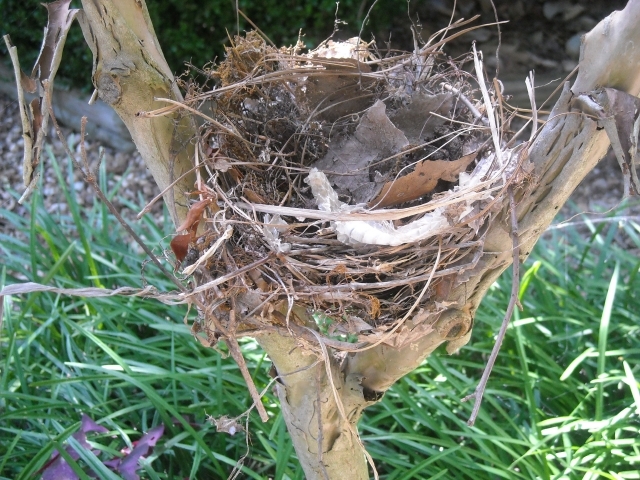
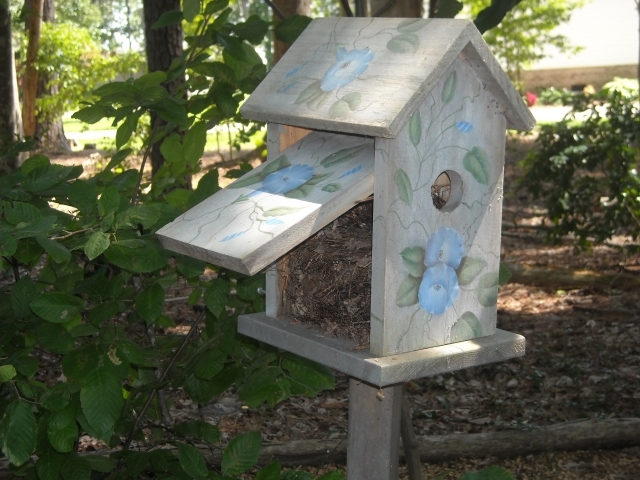
The original wren home was this bird house. Somebody's gray hair and slivers of black plastic were part of the nest

Baby wrens are roosting in the fern hanging from the porch beam. Chatter chatter chatter. Buzz buzz. Stop pushing. You stop pushing. I’m getting scrunched. I don’t want to be in the middle. On it goes. Mom finally flies in to intervene.  One word from her. Maybe just a look. The fern is quiet. Next day they are gone.

The hummingbird squadron jet through and around the open porch, missing us by a nose, figure eights over the roof and up to their feeder, hovering, chasing, daring a cousin, sister, brother to a game. How many? We can’t tell. Only two to a nest. How many nests are nearby? Seems like an army has arrived.

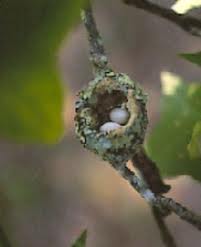
Taken in quieter times, before hatching.Eggs the size of peas. Photo from the Internet

Mother hummingbirds were quiet, businesslike at the feeder earlier in spring, complaining to us only when something was not to their liking. This crew comes in like a bunch of marauders. In between dip-stick checks of spent canna blooms, bee balm, crocosmia, joe pye weed, phlox, any old blossom or bud, they chase titmice, harass a chickadee (who, actually, was not aware he was being harassed), stand up to (more accurately, hover up to) a wasp, and face down a young downy woodpecker.

This downy is already a nervous Nellie. Her scoping ritual includes dozens of peeks around a wooden post before finally flitting to the feeder. Balancing and sipping become the next challenges. Then there is the scary image of that larger-than-life bird in the bottle who seems

Juvenile downy woodpecker. Photo from Wildside Nature Tours blog

always to be moving. And now here come the hummingbirds in bold and glorious flight. It’s all too much. She retreats to the crabapple (to gather wits? summon courage?). We think she is gone for good, but the memory of that nectar is too sweet to surrender. She will stand her ground.

One day, playtime is over. Mom and Dad push the youngsters away when they come to feed. No more free lunch for you. We have work to do, another brood to raise. Some offspring are happy to be off, others cling. They chase after retreating parents. Their frantic, high-pitched begging cries fill the garden.

This well crafted nest, reinforced with mud, once held a clutch of robins but will not be used again

At last they are silent. They and their siblings have joined the grown-up world of birds in which a certain stealth may insure survival. They have learned how to be wary, when to recede and be silent, and they will learn when to sing. They fly with purpose, they perch with ease, they retrieve seeds with skill, and they behave themselves.

It’s noon and it’s quiet on a sultry July day. A Carolina wren sings half-heartedly, a fish crow squawks in the distance, a resident squirrel stretches out on the porch rafters. We miss the boisterous bunch. We barely recognize the birds at our feeder now. In a while, new broods will fledge, and a new show will begin.

Posted in Birds, Summer, Wildlife | Tagged , , , , , , , , | Leave a comment

The Great Wild Ride our Hydrangeas Took

We give the plants in our yard three simple rules to follow, and one option. They should not die. They should make every effort to grow. They should do their best to look healthy and attractive—most of the time. The one option they have is to bloom. However, if they choose not to take that option, they do so at their own peril.

Our native Hydrangea arborescens ‘Annabelle’ brightens shady nooks

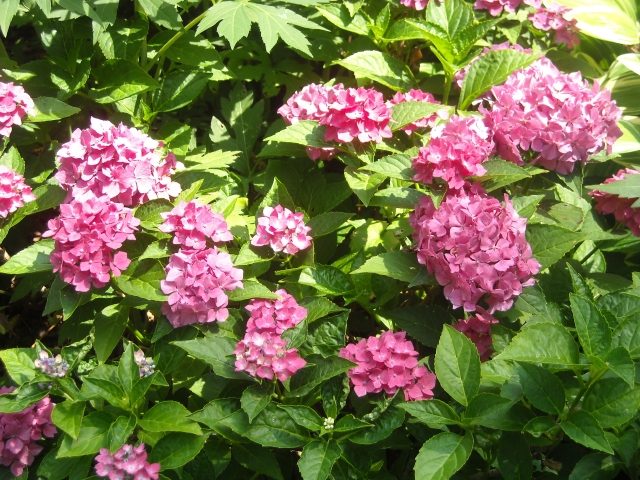
As it happens, our hydrangeas seem to accept and follow these rules with a minimum of rebellion. That is why we grow them. We grow all kinds of hydrangeas. Some of them are pictured here. Each one has its particular charms, and each has its particular preferences.

We never understood until it was too late that we had the perfect conditions for growing hydrangeas. Generally speaking, hydrangeas are woodland plants. They grow best in dappled shade, rich, humusy soil that holds moisture, with a welcome gift of mulch from the forest each fall.

Hydrangea paniculata ‘Pink Diamond’ reaches for the sky

Well, they were missing the good-soil part in our yard, except for those happy few planted in the remains of an old compost pile. But we worked hard to please the rest. We mixed good potting soil in with the slabs of clay and we planted them in wide but shallow  mounds to facilitate drainage. The less fortunate who found themselves in second-class soil seemed most grateful for this first-class treatment.

Even the sticks I bought one mid-November grew and bloomed the following spring. That’s the way hydrangeas look in winter, I said to Bob, when he asked me why I bought dead plants. (They really were sub-par plants but I wouldn’t admit that. Mislabeled, too, but I wouldn’t figure that out for a couple of years. They seemed like a good deal at the time.)

Anyway, we were proud of our hydrangeas.

Hydrangea macrophylla ‘Pia,’ a diminutive mophead to about three feet, maintains its bright red color over time

Pride goeth before a fall.

What fell were the trees that shaded those first hydrangeas, more than a hundred during Hurricane Isabel.

No more shade. Soggy boggy suck-a-muck soil because tree roots were no longer taking excess water up. Our perfect conditions for growing hydrangeas had sunk in mud during one wild day.

Hydrangea macrophylla ‘Mariesii’ was one of the first lacecaps we acquired

We didn’t know these consequences at the time. At first the plants seemed pretty perky, considering the roughhousing they had taken. It took some regrettable losses before we figured out what was going wrong. Then time and muscle-power to lift and pot about three dozen large plants. More time for the plants to recover while we searched for suitable places for them.

It took even longer for the plants to adapt to their new locations, many of which

Three Hydrangea serrata ‘Grayswood’ make a splash along our path with their lacecap blooms

had too much afternoon sun, too little moisture, too much moisture, competition from trees, and poor soil. Our tough-love rules still applied, but we lavished patient TLC on them: regular pruning, mulching, fertilizing, and watering. As the soil improved and they settled in—it took five or six years–they came around. There are some recalcitrants still hanging on because our bark is louder than our bite, but today, most of them give us quite a show.

Native to southeastern woodlands, Hydrangea quercifolia ‘Alice’ is a dependable bloomer in the right site

Our discussion of hydrangeas is a work in progress. As we go along, we’ll talk about the varieties of hydrangeas we have in our garden, how we care for them, how to pick and dry blooms, and what companion plants we use.   

Our Hydrangea Garden Today

Check out  our sidebar articles under the heading The Romantic Hydrangeas for a discussion of all the kinds of hydrangeas you can grow and for tips on getting the most out of your plants.

Posted in Creating a Garden, Hydrangeas | Tagged , , , , , , , , , , , , , | Leave a comment

Life at a birdfeeder can get complicated. . .

There are the regulars, and then there are the foul-weather visitors.

We don’t mean to boast, but the regulars who visit our birdfeeder have very good manners. Even in bad weather, when they must be hungry, they are patient. They take turns. They wait until the feeder is unoccupied before taking just one seed and flying off to wait for another turn. Occasionally a bird misjudges and only a deft change in course averts a near collision. There may be a momentary flutter, never aggressive moves.

Chickadees and titmice in particular have very good breeding. They must have

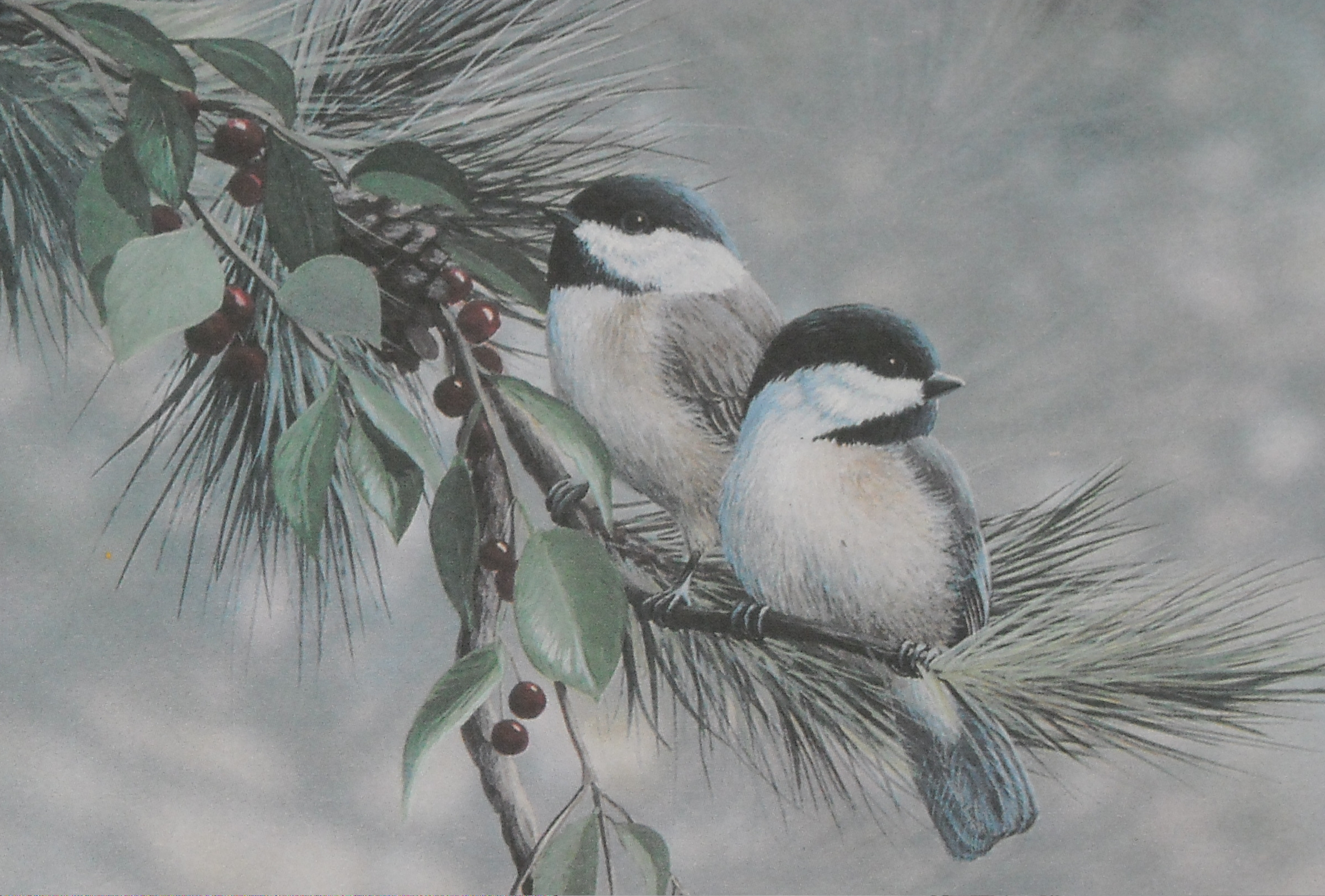
Black-capped Chickadees from artwork by Bradley Jackson

listened when their moms said not to push and shove. They come and go every day on schedule, arriving during lunch time (ours). They sit hidden in the fragrant osmanthus at the edge of the porch, content to wait until the feeder is free. The hairy woodpecker joins them, but he is more interested in the suet than in the seeds.

The regulars that work the floor beneath the feeder are an amiable bunch, even when the peckins’ are thin. Cardinals, juncos, sparrows, the Carolina wren, and sometimes mourning doves.

White throated sparrows scuff in the leaves. Groups of juncos seem to recognize personal space, stay out of each other’s way. The Carolina wren, just one, hops about from ground to feeder to suet, but he waits his turn. The plump mourning dove seems content to sit on the porch rail out in the open. Is he target practice for a hawk? Maybe he has an escape strategy we don’t know about.

Male and Female Cardinals from artwork by Russell Cobane

Often the cardinals crave seed from the feeder. It took them a few slips and flying-falls to figure out how to combine balancing on small perches and picking out the prize. They are reticent, so they usually try this act when other birds are not around.

Off and on a blue jay visits. He is a giant compared to small songbirds, but he is streamlined, so he can quickly pull off the seed heist before he loses his balance. In spite of his reputation as a scalawag, he does not fly in full of bluster. He waits his turn. Small birds darting around can make him skittish, but he seems to understand that he is bigger, and he makes no aggressive moves. But he is certainly not a pushover.

Which brings me to the foul-weather visitors. With unerring skill they find us

Blue Jays from artwork by Jerry Gademus

after a snowfall. They have very bad manners. Goldfinches and blackbirds, they are.

Goldfinches swoop in with everybody’s cousin in tow. They pounce on every perch, jostle for favored positions. Apparently their moms did not teach them to share. Having usurped the feeder, they sit…and sit…and sit…while our regulars wait…and…wait…and…wait.

If our regulars, who are bigger, are annoyed, they are usually too polite to challenge the newcomers. One day, however, we saw our considerate blue jay peck at the goldfinches. He must have been very irritated. Did he scare them? Doubtful.

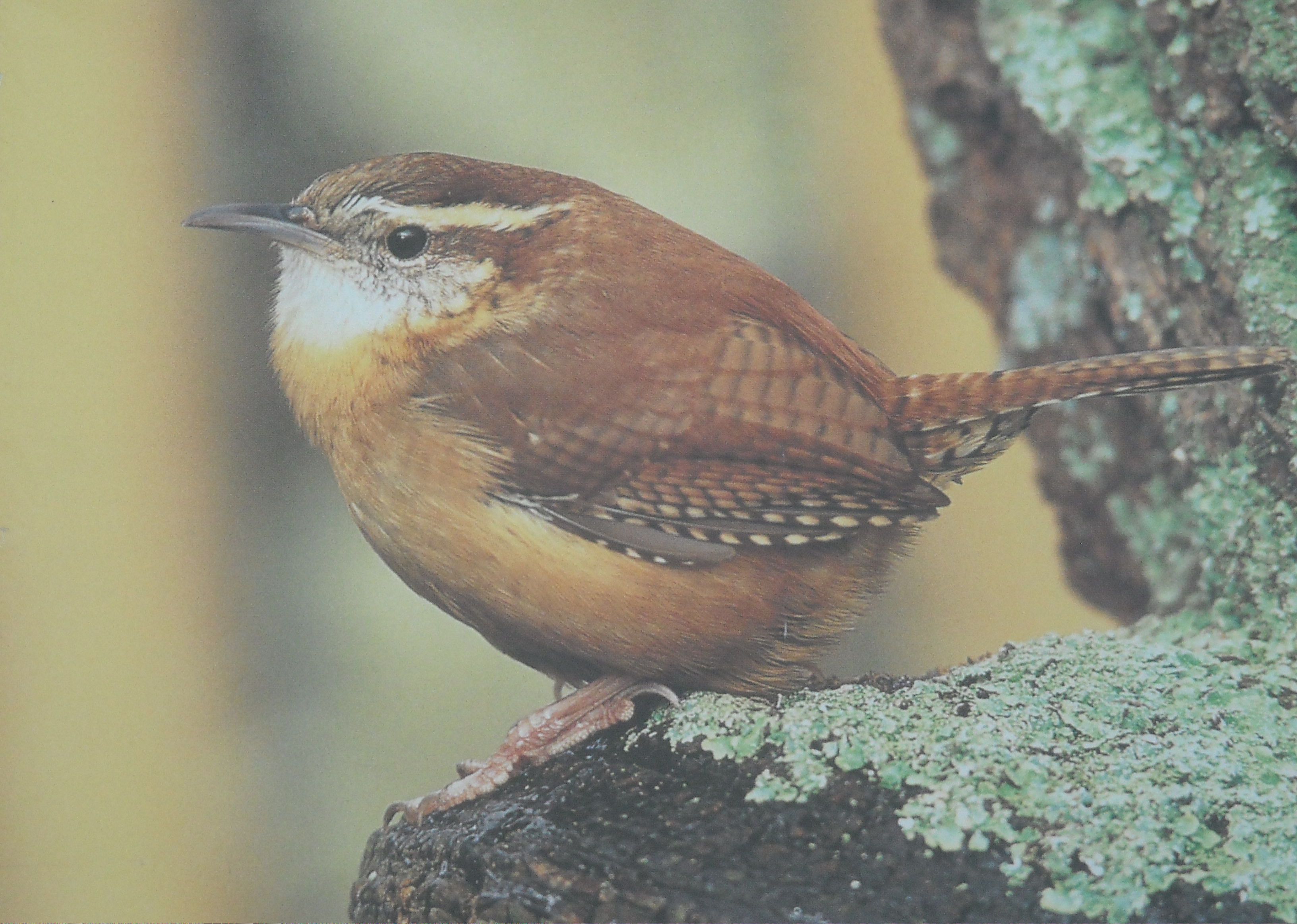
Carolina Wren from a photograph by Steve and David Maskowski

During one particularly cold day we saw a chickadee and titmouse fly at the finches, almost in unison. Enough waiting, they seemed to say. It’s time to share. They succeeded in reclaiming the feeder, temporarily.

Nothing much seems to bother goldfinches. Before the raccoons trashed it, we had a feeder that closed if there was too much weight on the perch. One snowy day so many goldfinches squeezed together in a frenzy of feeding that the weight of the last bird to land closed the feeder. Goldfinch heads disappeared, locked rigidly in place inside the trough until the startled newcomer left. When the trough opened, the finches continued feeding. They hardly noticed the interruption. All in a day’s feeding.

If goldfinches are greedy and unmindful, blackbirds are greedy and unmindful and noisy and big. They hover in the trees until the raucous flock is ready to swoop in. Birds scatter and retreat. Well, not the finches who hold their own on the feeder.

The blackbirds may hold court on the ground for an entire morning or afternoon, elbowing out the usual crowd, springing to life faster than a speeding bullet when new seed becomes available. Once they came zooming in out of a fog that had rolled in, and we thought we were restaging Hitchcock’s The Birds.  We can’t help but think that Four and Twenty Blackbirds Baked in a Pie might not be a bad idea. But what a noisy pie that would be.

Within a day or two the snow is usually gone, and our foul-weather friends are too, and life gets less complicated at our birdfeeder.

We are not wildlife artists or photographers. We have borrowed images from talented craftsmen to illustrate this post.

Reflections from A Heron’s Garden

Posted in Birds, Wildlife | Tagged , , , , , , , | Leave a comment