Top Tom Turkey Thinks He’s Rocky Balboa?

Today I watched a Tom turkey who was quite sure he was protecting his harem of six lovely hens.  He spied another male turkey and was going to make certain he was Top Turkey. He was determined to drive that other male

Female Turkeys spend a relaxing fall afternoon in Susan's New Hampshire garden

turkey away.  And so the battle began…

This bold and brave turkey circled his opponent.  He pecked at it.  He fluffed out his feathers. He gobbled.  He circled again.  He pecked again.  He fluffed again.  He gobbled again. And so the battle continued…

What Top Tom did not realize was that the other male turkey was just his reflection.  Yes, this bold and brave turkey was picking a fight with my car!  Each time he got to the wheel well the other turkey “disappeared.”  Clearly befuddled, Top Tom would peek under the car looking for the other turkey.

A handsome female doing the turkey trot

One would think that after just one time around the car, pecking at a metal object, Top Tom would conclude that this was not a “real” turkey and he had nothing to worry about.  Alas, he circled the car for two more rounds of battle.

After the third time circling the car and pecking at the turkey I guess he considered himself the winner by TKO.  He finally walked away.  So gallant was he.  That or the female turkey who came over to him said, “It’s your reflection, You Idiot!”  To which he puffed out his feathers and strutted his stuff for the female who promptly

On the road again. . .

proceeded to ignore him and eat.

This episode brought to mind one of my son’s (and my) favorite movies, Racing Stripes. In it there is a hit-man pelican named Goose who beats up a motor scooter.  Top Tom and his battle reminded me of Goose and his hard-fought motor scooter battle!  It’s a great movie and if you see it, remember my turkey friend.

–Reflections from Susan’s Garden in New Hampshire

Posted in Uncategorized, Wildlife | Tagged , , | Leave a comment

Rake Out the Old, Bring in the New

My New Year’s resolutions do not include promises to water wilted plants, keep up with weeding, prune and deadhead, divide and transplant, or mulch and fertilize on schedule. Nor do they include mounting bug patrols to rout out vicious marauders. These would be dandy resolutions and they would keep the place looking topnotch, but they are not mine. My resolution is less work, more loafing.

I’ve just finished reading the thousandth article titled, “What to Do in the
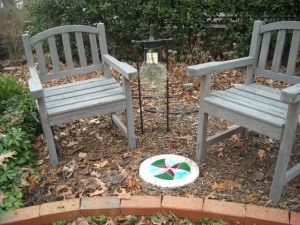
Two seats/wine

Empty seats. Still corked wine bottle

Garden this Month,” and I need a nap. I have never found a list that says, “Do whatever you feel like doing,” or “Just sit on a bench and enjoy your garden.”

Fortunately, most plants have not read the to-do lists so they do not know what they should complain about. Once in a while a plant gets overly dramatic and topples over in a desperate plea for help because, apparently, I neglected to do Number 5 on some list.
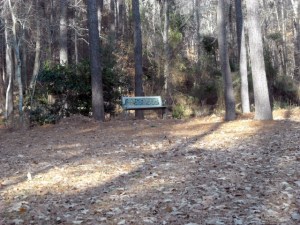
Judy's bench

Our neighbor's empty bench. But she has fun playing in her fish pond.

We have benches in our garden that get more use from squirrels than from people.

When my city sister and her husband visited many years ago, they loved sitting on the benches, maybe reading the newspapers, maybe not. They looked out over the blooming azaleas and they were at peace. They didn’t worry about weeds. They didn’t even see weeds. That got me to thinking.

Now we come to the tricky part: how to sit on a garden bench. Never mind, I can handle the bit about bending your knees and poking out your rump. It’s the part about keeping the garden looking good, maybe not top-notch, but good.

Once I visited a beautiful garden and an admirer asked the meticulously

azaleas front drive

Azaleas blooming under pines, easy-care eye appeal

groomed owner how she managed it all. “With my finger,” she said, extending her perfectly manicured pointer finger. Stunned silence. “Yes, I told the gardener to put that one there, this one here, and those over there,” she explained. At least she was honest.

Hiring a gardener is not for me. I’d be hovering over the honest soul, requesting, suggesting, sighing, gasping, though, I am sure, never in an obnoxious way. My nails would not be perfectly manicured and I would not be sitting on a bench.

Well, over the years I have learned a few tricks: notably, the Hierarchy of Plant Care, a fancy phrase that means choosing plants based on Loafing Potential. The hierarchy goes like this: trees, shrubs, perennials, annuals, lawn.

Trees: How often do you have to do anything for a tree? A little watering and fertilizing when it’s young, some pruning, and up it grows. A wide swathe of
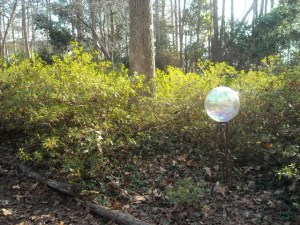
Azaleas w gazing globe

Azaleas in woodlands glow in winter sun with minimal care

mulch and a cluster of shrubs will keep weeds from growing underneath. If a tree gets too big for its britches (probably because it is healthy and happy) that means the gardener planted it in the wrong place. Location. Location. Location, in garden real estate. Eventually it may have to be cut down, but even this is a one-time-only obligation. (Very High Loafing Potential, particularly since trees support hammocks.)

Shrubs: Pretty much the same category, with some exceptions. Pruning big leaf hydrangeas can take time, and some roses can be demanding, though the Knockouts can be a joy. Otherwise, regular watering, fertilizing, mulching, and pruning to shape when they are young. Occasional pruning to rejuvenate when they are established. And what a show they can give us all year! (High Loafing Potential)

Perennials: Way too much work to keep them looking good: deadheading, dividing, transplanting, watering, fertilizing.

Mixed Hydrangea/Daylily

This bed, a mix of hydrangeas, azalea and daylilyies requires some care but is manageable

There are some exceptions. I remember seeing old, forgotten peonies blooming spectacularly in the flood plain of the Hudson River. Bleeding heart taking over a corner in a New England garden. But there is always The Weeding. (Medium Loafing Potential)

Annuals: Ditto the above, only more so, because they grow and bloom all

Double orange daylilies

Stunning. But this mixed bed with daylilies needs deadheading and watering to look topnotch. Note hose in background.

summer, as do The Weeds which flourish around them. Then they die in fall, giving The Weeds a head start for next year. Then someone has to tidy the mess and plant again in spring. If they reseed, the volunteers are never in quite the right place and have to be transplanted. (Low Loafing Potential)

Lawns: Even if you don’t need a velvet lawn in order to feel fulfilled in life, you have to mow once or twice a week to keep the neighbors happy. Count the hours. Add many more if you must eradicate The Weeds to soothe your soul. (Very Low Loafing Potential.)

Over the years we have whittled away at our lawn. We’ve added small trees and a variety of deciduous and evergreen shrubs. If there is space left in a bed, we mulch. Since I never

Den bed, lawn, azaleas

Easy care beds on the left, high maintenance bed to the right are slowly crowding out the lawn.

could manage a bed of perennials, we’ve limited them to only a few specimens spotted here and there. Now we may actually get to sit on a bench and loaf.

If I could only stop moving plants. . .Wish? Yes. Resolution? No.
Posted in Uncategorized | Leave a comment

This Land Is Our Land…?

We own this property. We really do. Our deed is registered with the County Clerk. We know our boundaries, which trees are ours, and which are not. The great white oak. The rugged pine. Two large beeches on a knoll.  The tulip tree we planted as a seedling the year we moved in. No question about it, we own this land. We’ve even made improvements: porch and gazebo, paths and fences.

Why then, do we still feel like trespassers?  Well. . .

If we dare approach the hawthorn tree in berry, birds explode, chattering about rude interruptions during dinner, probably gossiping about how the neighborhood has gone down hill since the gardeners have moved in.

The mockingbird owns the elderberry (but we own the rest of the trees, don’t we?). If we even think of elderberry jam, he’s there, scolding us. Well, we really prefer strawberry, but the box turtle already got those berries.

The great blue heron squawks till our ears are about to split, all because we innocently approached her. . . what? Eggs? Young? She turns out to be bigger up close than she looks in pictures. A hasty retreat seems in order.

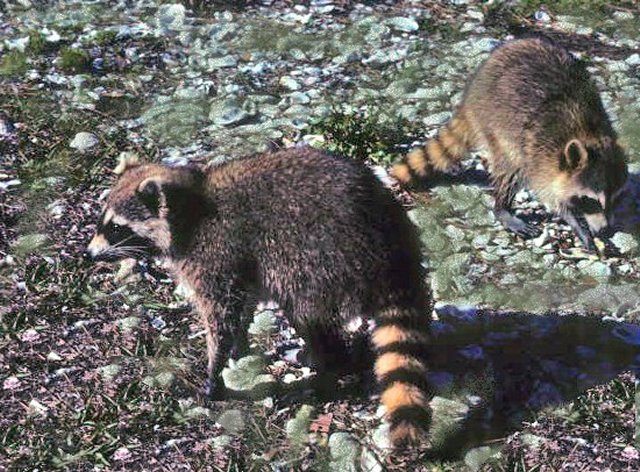
Then we have our regulars, Bonnie and Clyde. Under cover of darkness, this raccoon-duo gang up on our birdfeeder. One climbs on top and shakes while the other catches seeds that rain down. Enough is enough, we say. That’s it. We’re dismantling the feeder. So there. We won. Or did we?

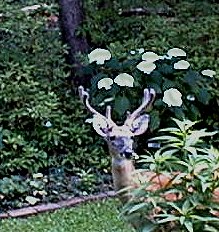
Bambi and his mom are so shy and polite. Surely they will heed our recommendations to try the gourmet daylilies at the four-star café in the next yard. Thanks for the tip, they nod, but first we’ll finish your azaleas. Would you mind moving? You’re standing in the way of that tender shoot. Oh, shall we serve it to you on a silver platter?

Caught in the act. Picture taken through a window.The Annabelle hydrangea had not yet been devoured

The gazebo belongs to us! No one would dare invade that sanctum. Would they? As soon as we sit to relax, a hummingbird zooms in, hovering and bossing. Can’t you see? There’s a problem with the feeder. Fix it. Okay. Okay. We, who were about to have lunch, are now fussing over your lunch, chasing ants or wasps, replacing three-day old syrup.

There’s more. Invisible voles tunnel underground, whacking roots out from under astilbe. Mother rabbit nips morning glory vines from the bottom up while her offspring climb swaying lily stalks for flower tidbits top down. The young black snake greets us with a flick of his tongue as we cast a shadow over his holly. Excuse me, are we intruding on your sunbathing?

Box turtles daily line up for the compost smorgasbord (Pray tell, what is she serving today?), then crash through netting for a dessert of strawberries. Nightly, possums gobble what the turtles discard. Once a hedgehog scoped out the garden, but he left after a few days. (Probably didn’t like the digs—too mucky and rooty for his tastes.)

But not too rooty for redbelly turtles who excavate multiple holes for trial

Repairing a web we disrupted in our meanderings

nests, invariably in paths—wonder we haven’t twisted our ankles. That nearby drumming is the pileated woodpecker pummeling away at logs we’ve so lovingly placed along the edges of paths. (Doesn’t he know he’s supposed to be wary?) Oh well, between turtle holes in spring and spider house parties festooned with curtains of webs  each fall, the paths are not so inviting.

We haven’t yet asked this crowd if any of them have deeds to the property, and if so, are said deeds registered with the County Clerk. We just bet they aren’t. If we took them to court, they would probably claim squatters’ rights. In which case, maybe we don’t truly own this land.

Posted in Wildlife | Leave a comment

Great Expectations

Wildlife, Woodlands, Two Gardeners, Two Decades
Reflections on discoveries that changed our ideas of gardening

We had great expectations for gardening when we moved to eastern North Carolina. Sunny skies, balmy winters, how could our garden not be a perfect example of the manicured photos we envied in garden magazines? Our experiences, we soon discovered, would turn out to be quite different.

We began our adventure by hurling heavy gray clods at trees. If they crumbled, we assumed they were clay; if not, they were probably chunks of concrete left over from building our house.  Sometimes we couldn’t be sure which was which, and sometimes we couldn’t be sure which was worse. In case you are wondering, the trees survived just fine. Our creaky pitching arms? Well that’s a different story.

There was no over-all plan. A year before we left Long Island, we had begun

Our finished path one sunny spring day

collecting plants for our new southern dream garden. We didn’t aim to do a remake of the Beverly Hillbillies’ move to California. But by the time we finished stuffing just one more plant into our capped truck, vainly capturing unruly tendrils and stems, we were doing a petty good imitation. The plants, aghast at having to spend the rest of their (short) lives in their new baked-clay sun-scalding environment soon looked like wilted spinach. We quickly developed Plan A: Keep those plants alive. There was no Plan B.

Creating a path to the front door seemed like a practical approach, especially since the back entry was five feet up from the ground and still needed a stairway. That would have to come later, assuming that neither of us, in a dithery moment, opened the kitchen door, stepped out into thin air and broke our necks.

We learned much later that we had built our new home near the tip of what was once a swamp finger, a small strand tied into an elegant network of swamp fingers that slowly drained higher land. To create our community, the developer scooped out swamp fingers and voila! canals and boat slips appeared.

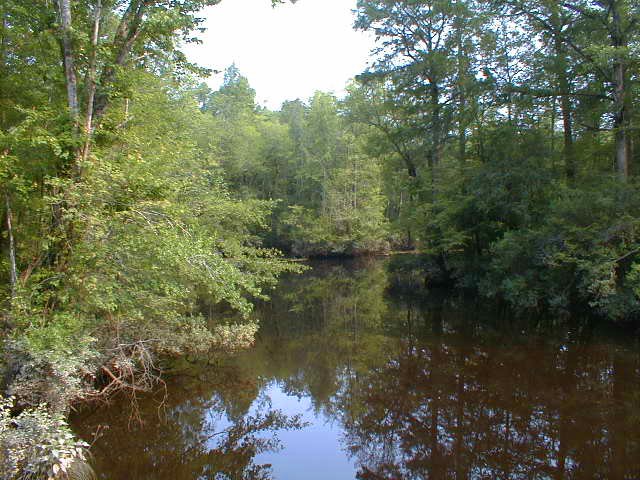
The wild banks along our canal

The wetland waste was dumped on the edges of the new canals. Bulldozers razed most of the woods and sculpted higher ground into building lots, roads, verges and ditches. All this was done in 1970, two years before the Clean Water Act passed in 1972. Such atrocities would not be permitted today. Perhaps.

Soil on higher ground turned out to be slippery silly putty after a rain. We learned this the hard way. No broken bones, though. In dry weather the putty turned to concrete; hence the pitching practice noted above.

The lay of the swampland didn’t encourage gardening, either. Except during extremely dry summers, the water table was high, maybe a foot or two below the surface, not especially appealing to plants without boots for their roots.

Apparently, in the years before our arrival, plants and animals were unaware of these stumbling blocks to land management. Self-sufficient, they carried on quite well without help from outsiders–once the bulldozers departed.

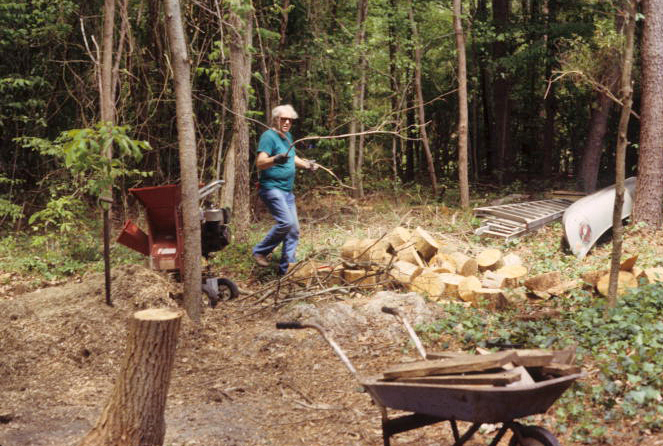
Bob clearing behind our house

By the time we took possession of our acre-plus plot in the mid-eighties a jumble of spindly pines had grown up, competing for sun with canopies of grapevines and brier. The woods seemed dark and lonely to us. Except for some scattered mussel shells and occasional unidentifiable bones that only reinforced the mystery, there seemed to be no sign of the living.

It would take time and patience before the wild secrets unfolded. Our first halting attempts to create a garden on land that should have been left to its prehistoric origins would keep us forever humble.

Posted in Creating a Garden | Tagged , , , , | 3 Comments