My Latest Plant Passion
Readers of this blog will know I am a fickle plant lover. In my defense, hydrangeas, camellias and viburnums are constants for me, but a flash of daylilies in July or a sea of ground-hugging asters in fall can give me such palpitations I will have to forego all weeding until I fully recover.
I was so enamoured with asters a couple of years ago I went down on my knees and transplanted a goodly part of that sea. When the transplants disappeared and the rest rewarded me with shriveled leaves and puny blooms after a summer of drowning and roasting, I jilted them, cruelly. This year, some chewing villains feasted on them, so asters are off the list – temporarily anyway.
Since past affairs have become blurred with time, I will go directly to the story of my latest infatuation, Rose Campion.
It all began years ago when we were living in North Carolina and I fell for a lovely stand of rose campion in a good friend’s garden. The combination of furry silver and silky fuschia wowed me. Linda offered to pass some along to me, and I accepted them happily.
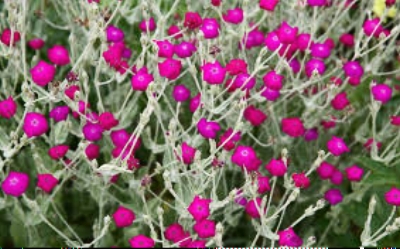
Photo of rose campion (Lychnis coronaria) at Mount Vernon, Virginia
They sulked in my garden. These easy growers were skimpy in bloom, spindly in growth, and they refused to set seed or establish rosettes of leaves that would bloom the following year.
Linda is a good friend so I asked her for more. She said Sure! and she didn’t make me feel bad about losing the first batch of no-brain growers.
When I lost the second batch, I was too embarrassed to ask for any more. Linda never asked how they were doing and I never told. Anyway, she probably forgot all about them, as we routinely exchanged plants and just as routinely forgot about the trades.
I suspect my blocky clay soil that was either terribly wet or terribly dry and a constant drip of pine-needles blanketing seeds was not to their liking, so I gave up on growing rose campion.
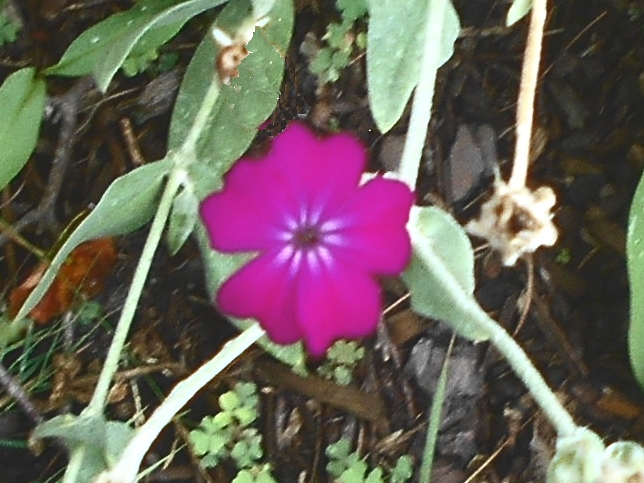
Do you suppose that brilliant color we see has its origins in combinations of colors reflected from each bloom? Many flowers also appear to have a subtle darker edging
When we moved up to New Hampshire I was tickled to have a second chance. That first spring, Lisa and Steven brought a raft of plants for the garden. Among them were rose campion. These passalong plants settled in like old timers in a comfortable rocking chair and bloomed as though they’d found heaven.
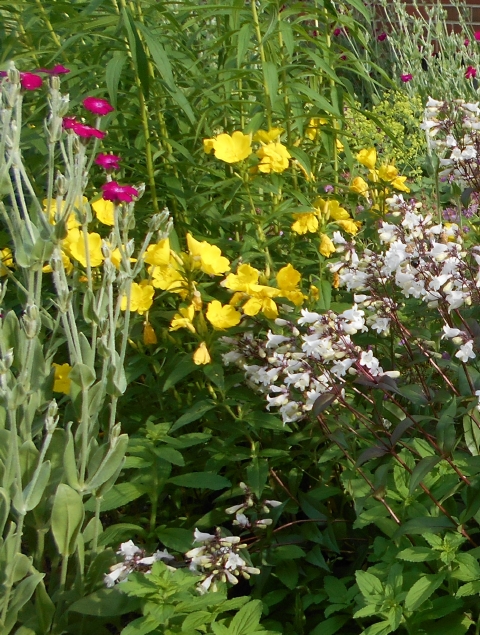
Rose campion sidling into Ozark sundrops (Oenothera missouriensis) and a ranging penstemon ‘Husker’s Red’
When Susan, who has been gardening here for thirty years, saw how happy they were, she predicted I would have a forest of campions next year if I didn’t cut them down.
Cut them down! I just got them to grow. I’ll take my chances, I said.
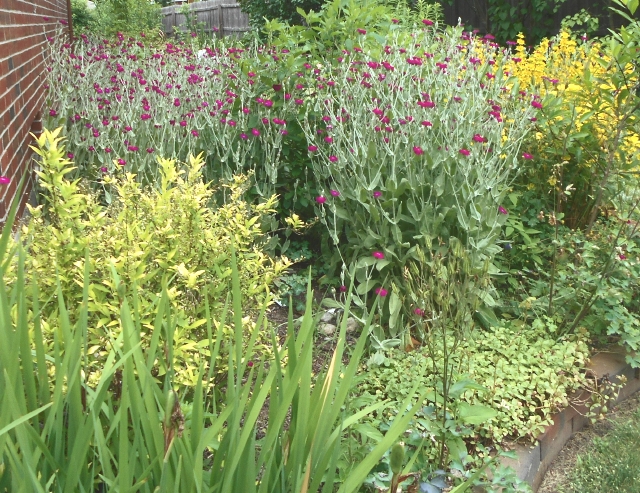
The forest! Healthy and happy rose campion fronted by deutzia ‘Chardonnay Pearls’ and spent white Japanese iris, with native lysimachia far right
The grouping pictured above ran almost half the length of the side of our house, poking up from landscape cloth that was supposed to prevent weeds. Rose campion trumped the landscape cloth, but after all, rose campion is not a weed.
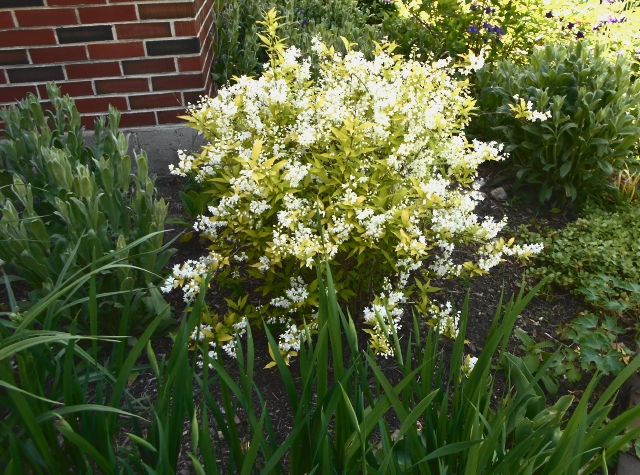
Upstaged by rose campion, nevertheless. deutzia ‘Chardonnay Pearls’ in bloom deserves a closer look. Readily available a few decades ago, it can be hard to find today and does best in partial shade
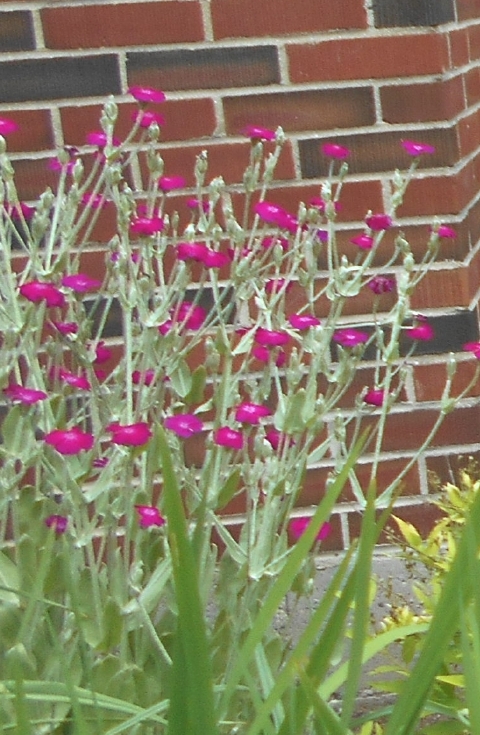
I would never have planted brilliant fuschia in front of a red brick wall, but when a shaft of sunshine slips in, the combination glows, complimented by fuzzy gray accessories.
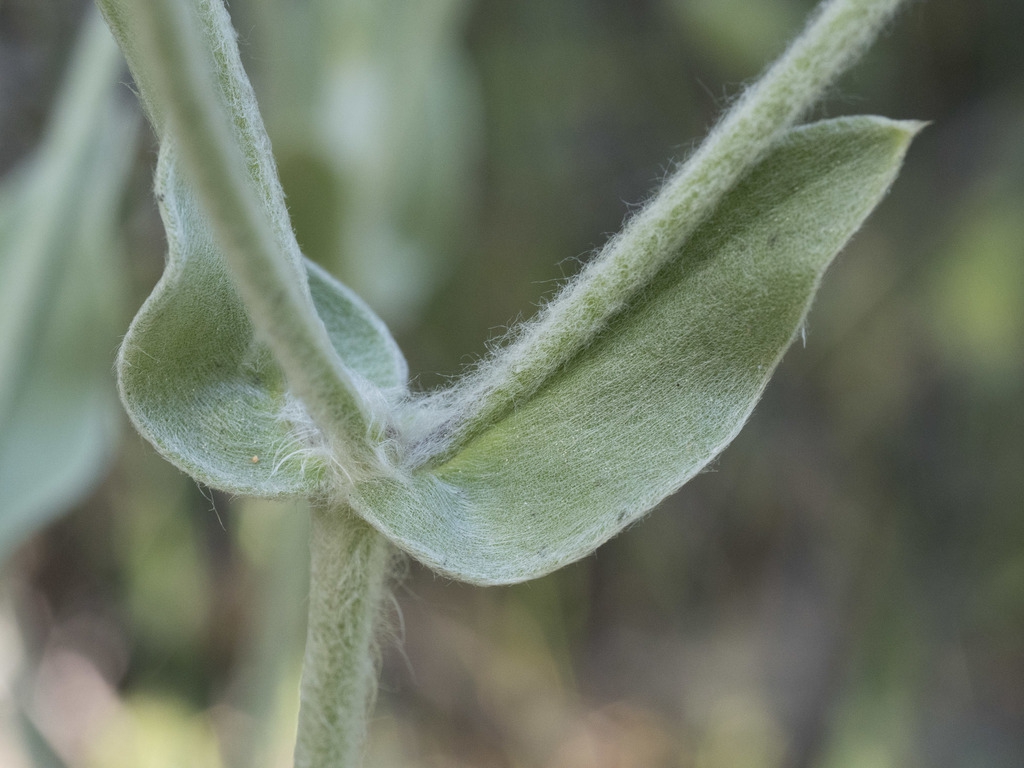
A lovely close up of the ‘fuzzy accessories’ taken by Tod Ramsden, North Carolina Extension Gardener Plant Toolbox
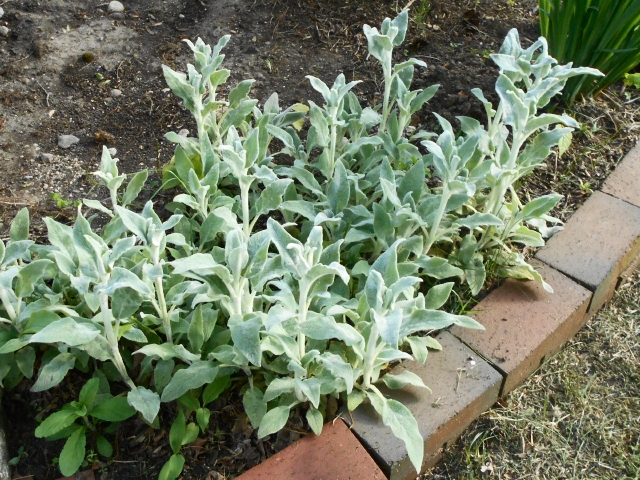
Sometimes lamb’s ears (Stachys byzantina) is mistaken for rose campion because of its furry foliage, but they are low growing with spikey flowers, not particularly attractive, often whacked off by gardeners as quickly as they appear. This bit of violence was unnecessary in our North Carolina garden as the entire plant died after blooming, another victim of muck. In our New Hampshire garden it flourishes in a slightly raised bed edged in brick.
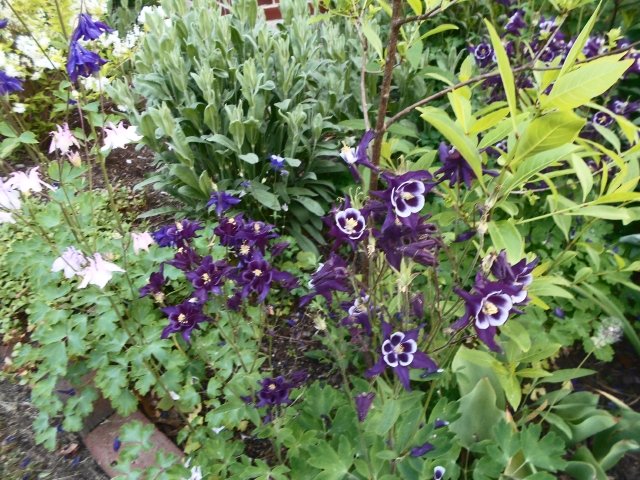
This stealer-of-shows managed to edge into a grouping of columbine grown from seed that Susan collected from her garden.
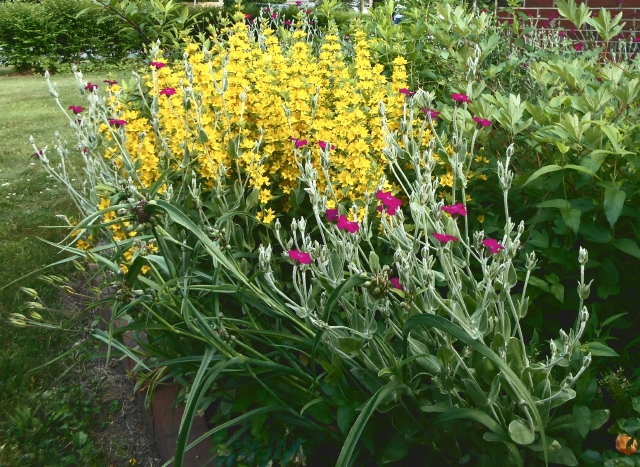
Look at me! Look at me! Rose campion edges out lysimachia
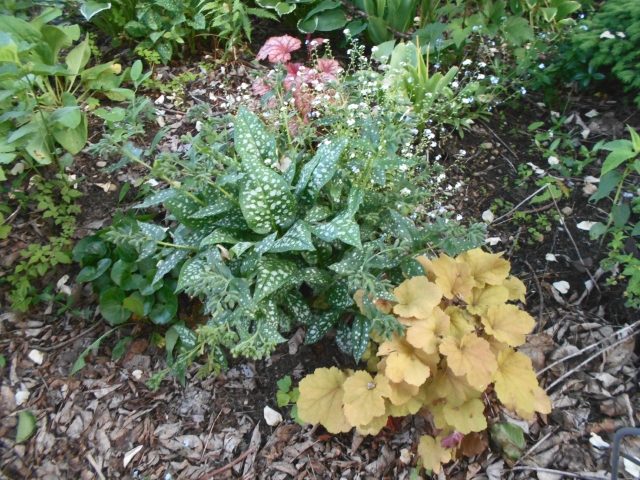
But it couldn’t find a niche among heuchera, brunnera and forgetmenots
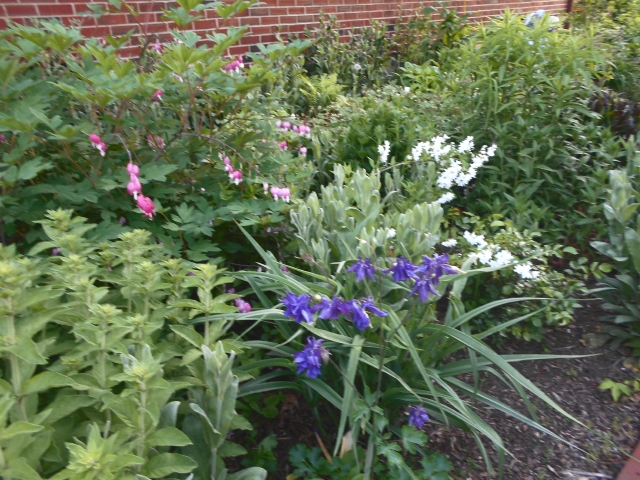
Here it is popping up next to deutzia, tradescantia, and bleeding heart with a variety of native mountain mint front left that will bloom much later but is so stalwart it will have to be removed
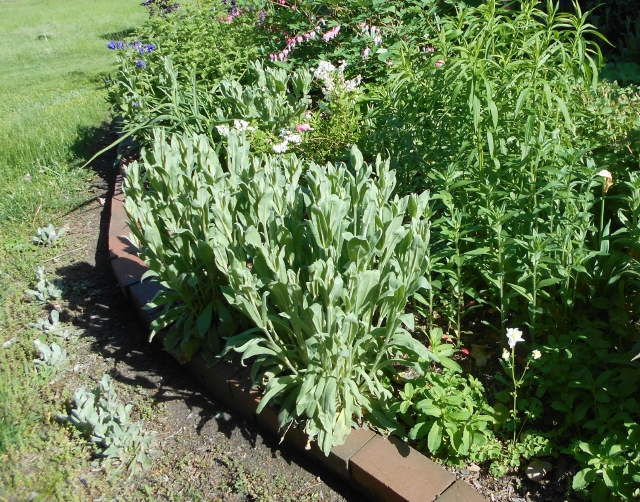
Here they’ve taken advantage of an empty patch, and while they are about it, they’ve spread out to the lawn. Certainly, a little mowing now and then won’t stop them
Now you know why rose campion is the ultimate passalong plant. A century or more ago, when gardeners grew hollyhock, money plant, and rose campion, spiderwort, yarrow and obedient plant, calico aster, cosmos, and bouncing bet in relaxed beds and borders, and then collected and saved seeds, and passed them on, rose campion was a prize.
If nicknames are a measure of popularity, rose campion wins the race: Bloody William, Catch Fly, Mullein Pink, and Lampflower (ancient Greeks supposedly used the hairs as wicks for lamps).
Botanists, too, must love this plant, because they’ve been bandying Latin names about in the name of science and, incidentally, to confuse gardeners. I ‘ve always used Lychnis coronaria and will continue to do so. There’s a nice lilt to it. For those who want to stay current, the new name is Silene coronaria. But over the years the plant’s name has been Agrostemma coronaria and Coronaria coriacea.
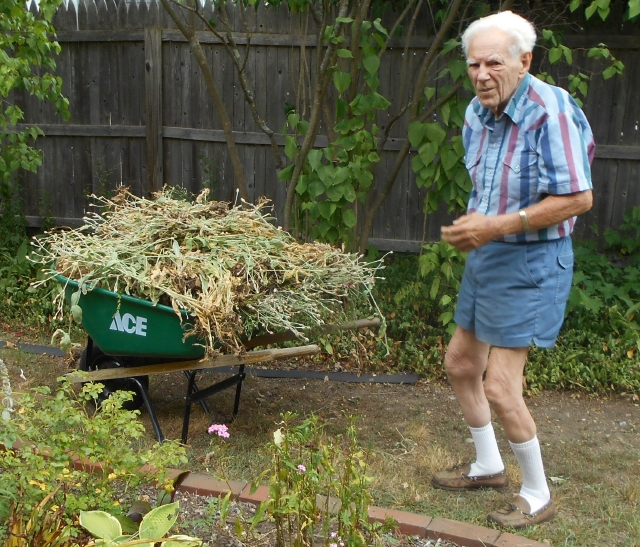
Do you really expect me to pass these plants along? Bob asks. Yes! Eventually, the campion forest looked seedy, which they were, so I pulled them up and asked Bob to dispose of them, anywhere he wanted, but not in the compost pile.
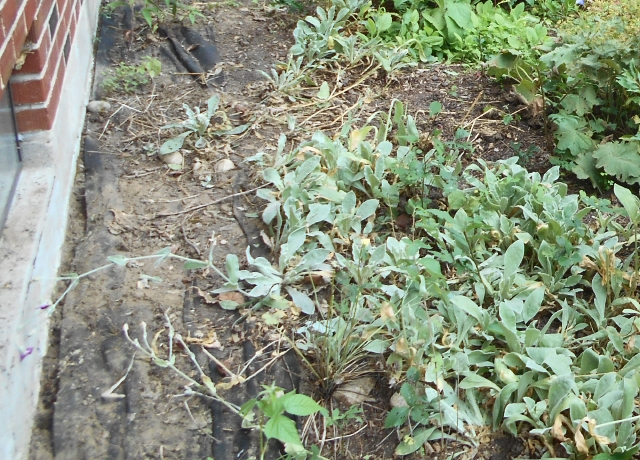
Here are the rosettes that were left underneath the oldtimers that were cut down. I’ll transplantsome of these, they will sulk for a couple of weeks and then sigh and settle in
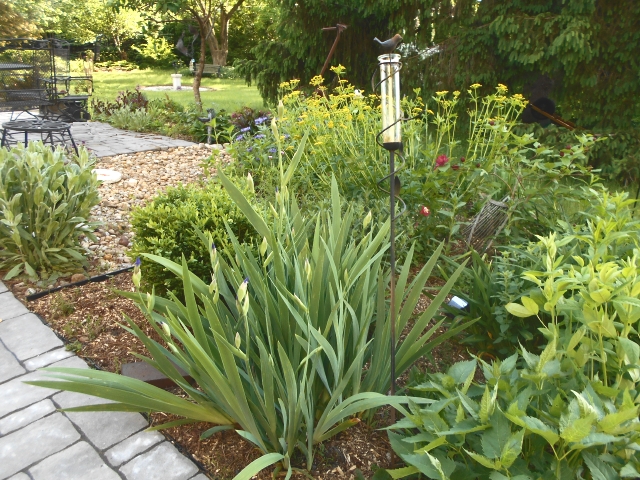
One of our healthiest rose campion plants took up residence in an area of river rock to the left, (almost out of the photo). I was more interested in photographing the iris, foreground, and the yellow zizia toward the back, so I took the rose campion for granted
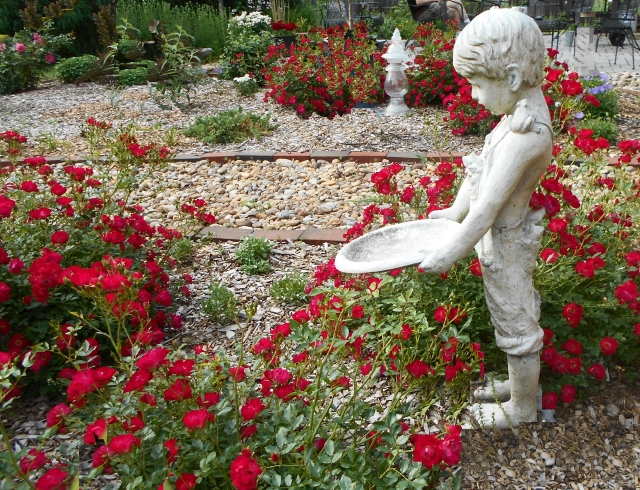
But rose campion never did make it into my garden of red drift roses
 A Heron's Garden
It is naturalized within some of our landscapes, but is polite about it. I would not consider it to be a weed. It grows and bloom where it is not a problem. I would like to find some blooming white, even though their seed would not likely be true to type.